Logo Futurismo
Day Tours
Travel Agency
About Us
The Azores
Blog
Gift Shop
Futurismo Azores Adventures - Search
en
  • FR
  • DE
  • IT
  • PT
  • ES
Islands
  • São Miguel island Arrow Right
  • Pico island Arrow Right
Land
Jeep tours
Bike tours
Hiking tours
Van tours
Water
Whale Watching
Kayaking & SUP
Canyoning
Coasteering
Best Sellers
  • Whale Watching in Ponta Delgada
  • Whale Watching in Rabo de Peixe
  • Van Tour to Furnas
  • Jeep Tour Sete Cidades & Lagoa do Fogo
  • Kayak Rental in Sete Cidades (double)
  • Bike Rental in Sete Cidades
Land
Hiking tours
Van tours
Water
Whale Watching
Best Sellers
  • Whale Watching in Lajes do Pico
  • Pico Island Van Tour
  • Hiking Unesco Heritage
Contacts Why Futurismo
Our DMC
  • Contact Forms Arrow Right
Contact Forms
I'm a Traveler
I'm a Travel Agency
Your Journey Awaits

Welcome to Futurismo Azores Adventures Travel Agency, an avant-garde and innovative travel agency in the stunning Azorean archipelago

know more
Our Projects Why Futurismo
About Us
  • The Brand Arrow Right
  • Our Fundamentals Arrow Right
  • Our Projects Arrow Right
  • Our Commitments Arrow Right
  • Our Policies Arrow Right
  • Honors & Alliances Arrow Right
  • Collab with Us Arrow Right
  • Contacts
The Brand
Our Fleet
Who We Are
- Our Motto
- The Guardians
Our Story
Why Futurismo
Mission & Vision
Our Purpose
Our Values
Categories
All Projects
- People
- Planet
- Wildlife
United Nations Global Goals
Protecting Azores through projects

We generate awareness and protection through passionate and meaningful projects

see projects
Our Commitments
Ceased Swimming with Dolphins
Mindful & Transformational Travel
Responsible Whale Watching
Responsible Travel
Hiking Conduct Code
Animal Welfare Policy
Environmental Policy
Sustainability Policy
Honors & Alliances
Associativism
Media Highlights
Awards
Certifications
Noteworthy Achievements in Travel Excellence

Global acclaim spotlights Futurismo Azores Adventures’ sustainable excellence, boosting tourism and community impact!

know more
B2B Partnerships
Content Creators
Media
Whale Watching Scientific Investigations
Contact Forms
  • Islands Arrow Right
  • Whale Watching Arrow Right
  • Cetacean Species Arrow Right
Islands
Corvo
Faial
Flores
Graciosa
Pico
Santa Maria
São Miguel
São Jorge
Terceira
The hidden paradise

With its deep green valleys, dramatic volcanic lakes, breathtaking waterfalls, and hypnotizing ocean rich in biodiversity, the Azores have all you can dream of for a memorable holiday.

search tours
About
Best Island
Best Season
Complete Guide
History
Preservation
Sighting Statistics
What to Wear
Why Futurismo
Educational Projects
Our Fleet
Our Story
Responsible Operator
Scientific Publications
The Marine Biologists
The Lookouts
WCA Certification
Why Futurismo
15 Years of Scientific Publications: Unveiling Azores' Aquatic Enigmas

Immerse yourself in pioneering Azorean whales & dolphins research and scientific discoveries

read more
Dolphins
Atlantic Spotted Dolphin
Bottlenose Dolphin
Common Dolphin
False Killer Whale
Orca / Killer Whale
Risso's Dolphin
Striped Dolphin
Whales
Blainville's Beaked Whale
Blue Whale
Bryde's Whale
Cuvier's Beaked Whale
Fin Whale
Humpback Whale
Minke Whale
Nothern Bottlenose Whale
Pilot Whale
Sei Whale
Sowerby's Beaked Whale
Sperm Whale
Resident & Migratory Species

Comprehensive fact sheets on Azorean cetacean species

read more
Our Projects Why Futurismo
Blog
  • Categories Arrow Right
Categories
All Articles
- People
- Planet
- Travel
- Wildlife
Copywriters & Guest-bloggers
Photographers
Our Projects Why Futurismo
Shop
  • Books Arrow Right
Books
O Canto dos Açores
O Canto dos Açores​

The end of whaling, a family saga among black basalt, loss and reconciliation – a unique love story in the Azores.

read more
Our Projects Why Futurismo
  • Tours & Activities
  • Blog & News
  • Scientific Publications
  • Tours & Activities
  • Blog & News
  • Scientific Publications

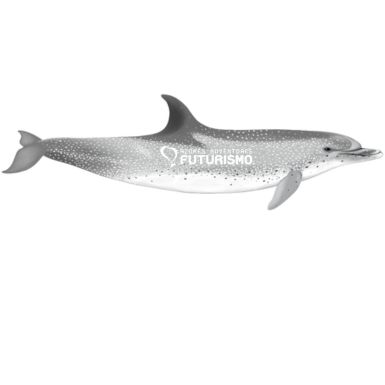
Atlantic Spotted Dolphin

Stenella Frontalis

Highly social, with distinct spots and a wide range of complex behaviors and vocalizations.

Atlantic Spotted Dolphins are distinguished by their dynamic spotting patterns that evolve with age, showcasing a range of from virtually unspotted juveniles to heavily spotted adults. This variation in spotting is not just a unique aesthetic trait but serves as a visual indicator of the dolphin’s age and maturity, contributing to their identification and study in the wild. They thrive in the tropical to warm temperate waters of the Atlantic, preferring environments that balance between the open ocean and the shallower coastal areas, which influences their group dynamics and social structures.

Typically, these dolphins form medium to large groups, which vary significantly in size depending on their proximity to shore and the availability of food resources, indicating a flexible social structure that adapts to the changing oceanic conditions and prey availability. This adaptability is key to their survival, allowing them to exploit different ecological niches within their Atlantic habitat.

Quick facts

Length

Adults: 2,3m

Calves: 1,2m

Weight

Adults: 140 kg

Calves: 15 kg

Habits

Dive Time

2-4 mins

Dive Depth

<60m

Reproduction

Reproduction

<50 years

Life Span:

11-12 mths

Gestation period:

IUCN RED LIST STATUS: Least Concern
Common and widespread, low vulnerability.
DD
LC
NT
VU
EN
CR
EW
EX
DATA DEFICIENT
EXTINCT

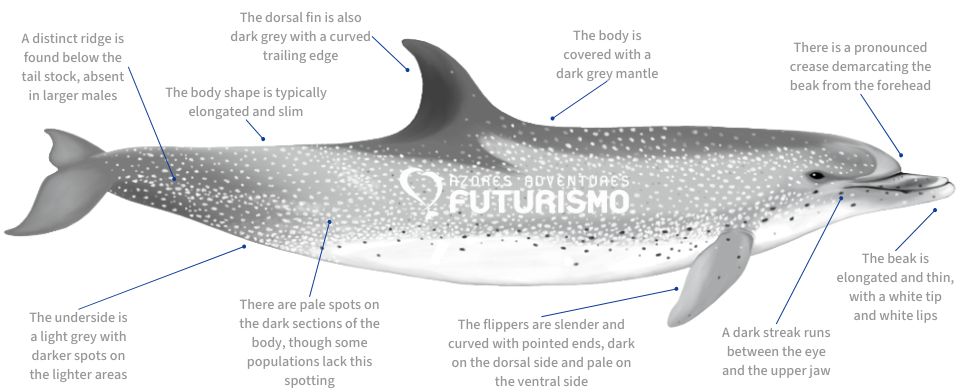
Physical characteristics

Atlantic Spotted illustrations with characteristics

Group Structure

Atlantic spotted dolphins display a versatile group structure, adjusting to environmental and social demands. Groups typically range up to 50 individuals but vary significantly depending on factors like proximity to shore. Coastal groups tend to be smaller, possibly due to resource availability or predator pressure, while offshore pods can be vast, sometimes comprising hundreds. Age and sex segregation within these pods optimize social roles and interactions, though this structure remains flexible, shaped by environmental conditions and social bonds. This adaptability underscores the complexity of Atlantic spotted dolphins’ social dynamics and the significance of their interactions.

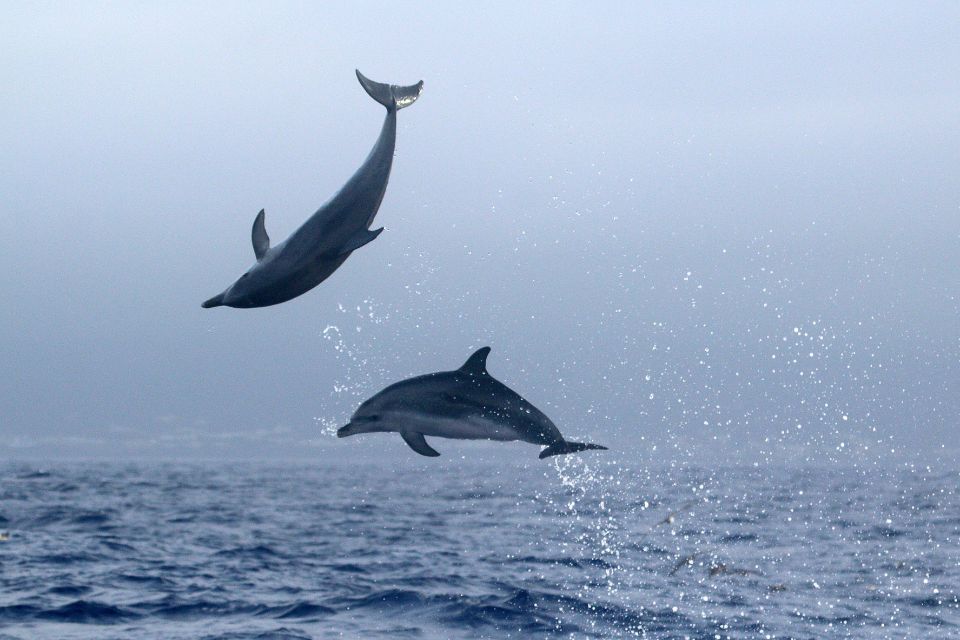
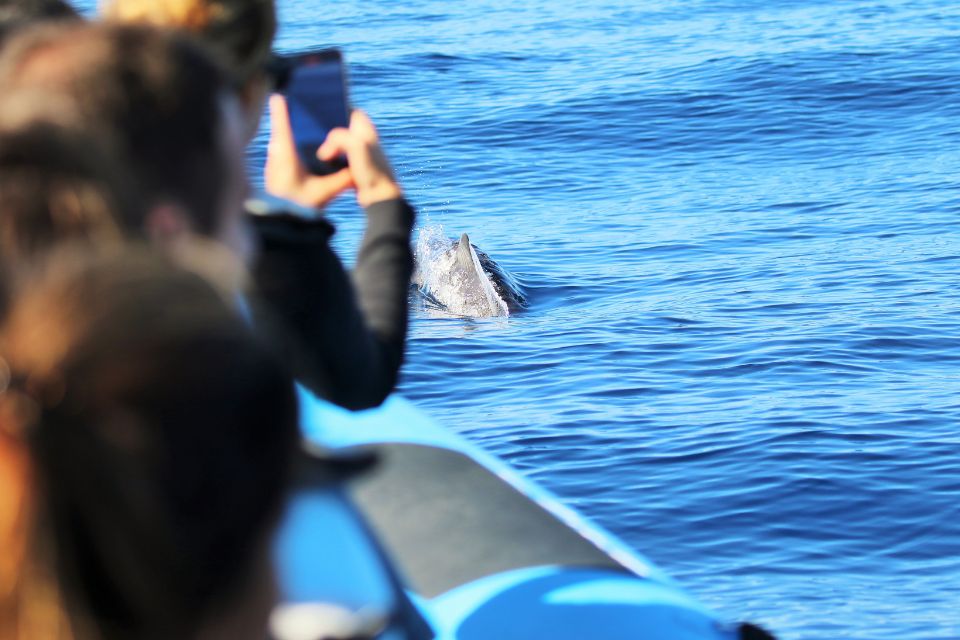
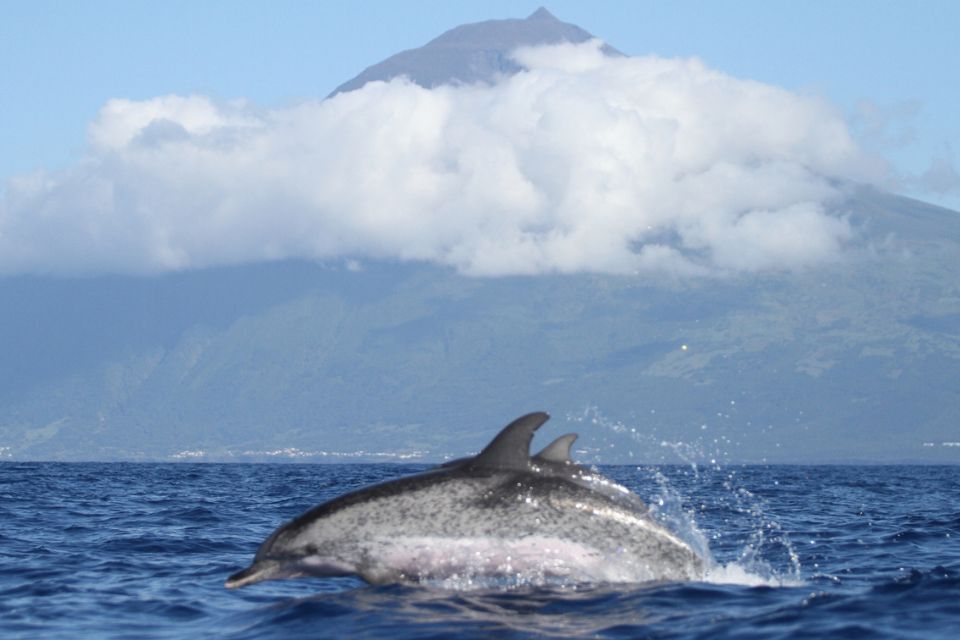
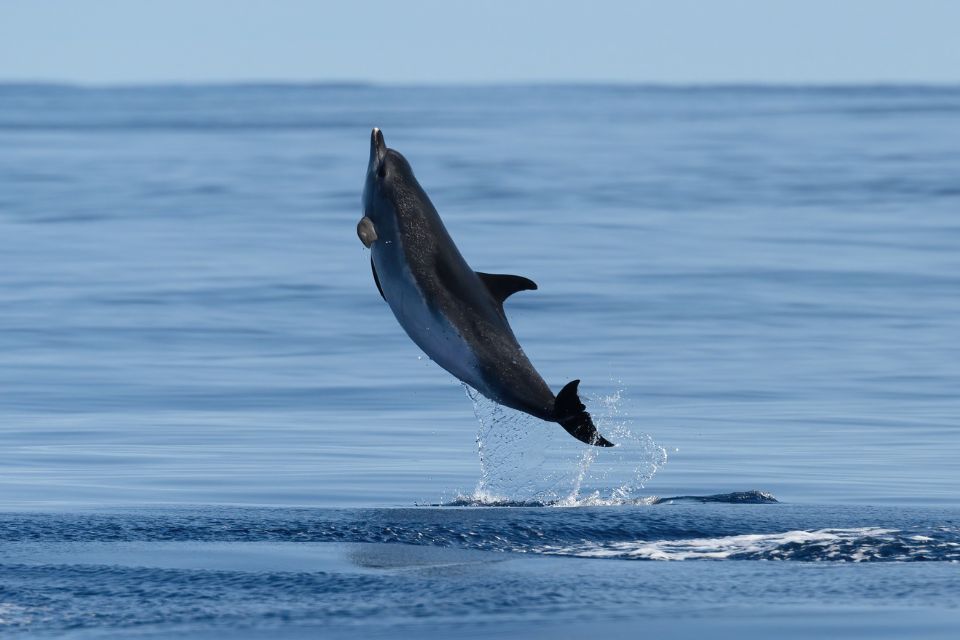
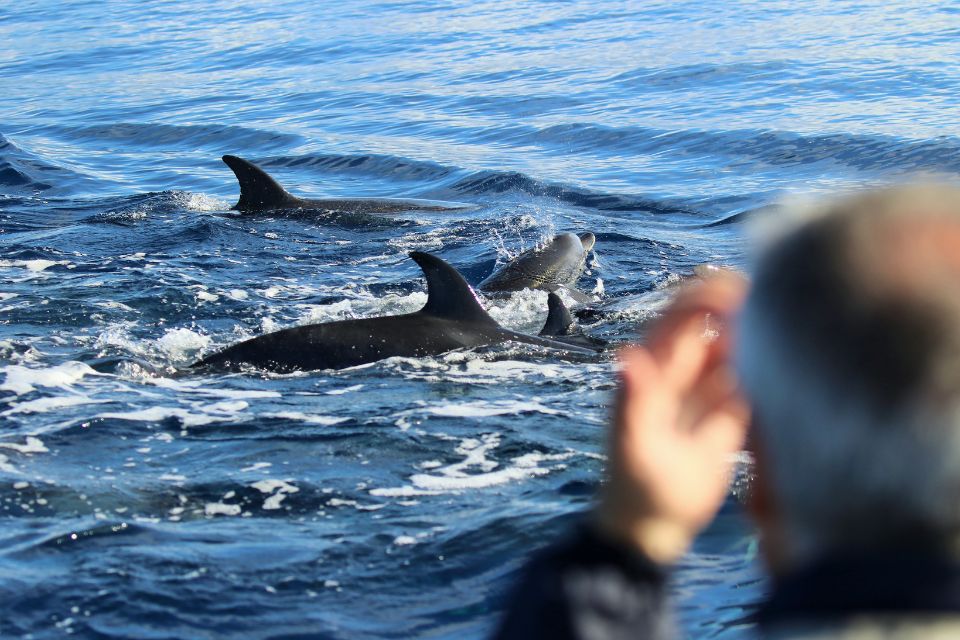
Atlantic Spotted Dolphin photo Azores
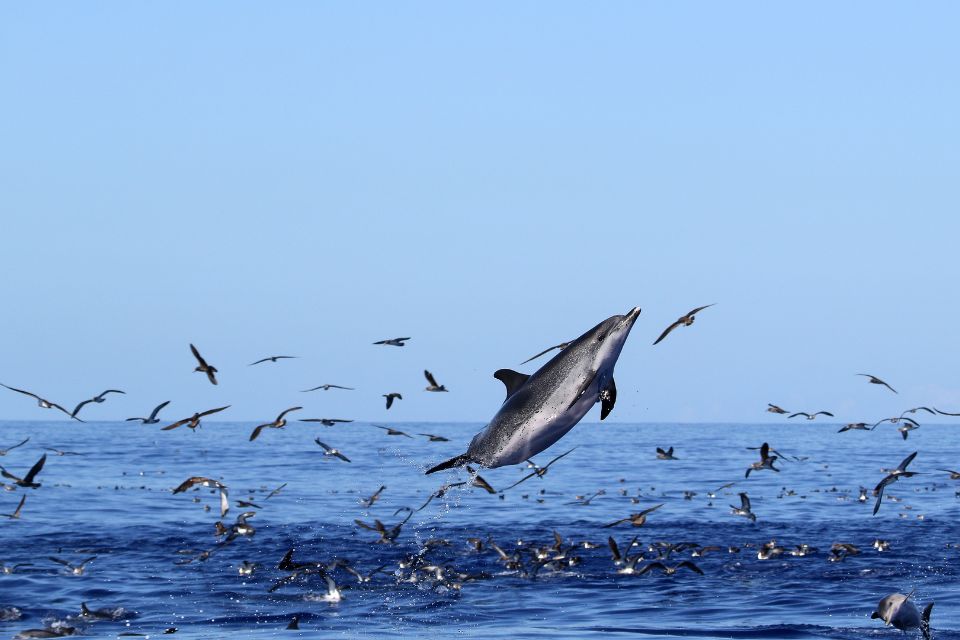
Atlantic Spotted Dolphin photo Azores56
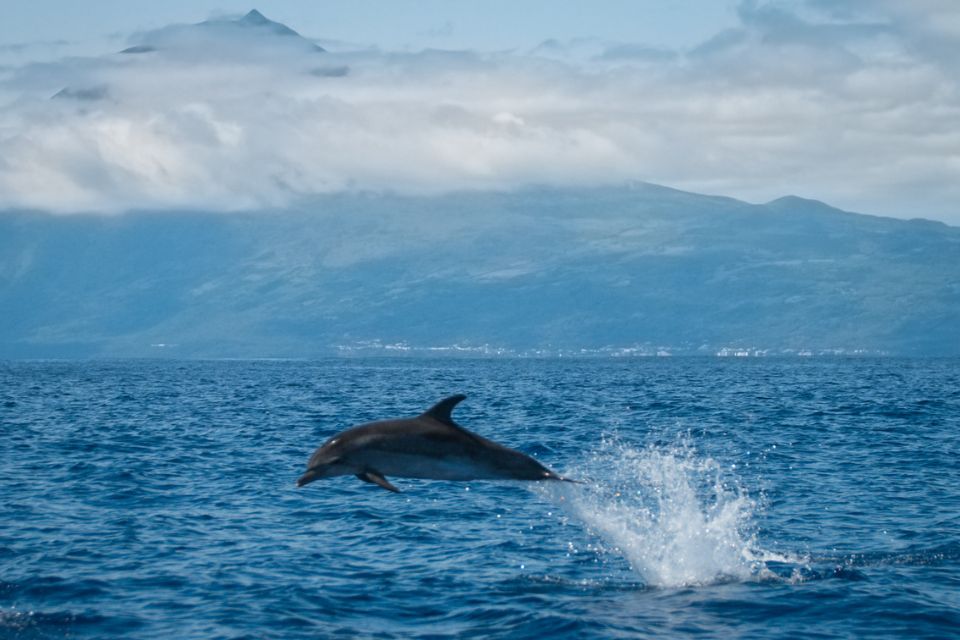
Atlantic Spotted Dolphin photo Azores60
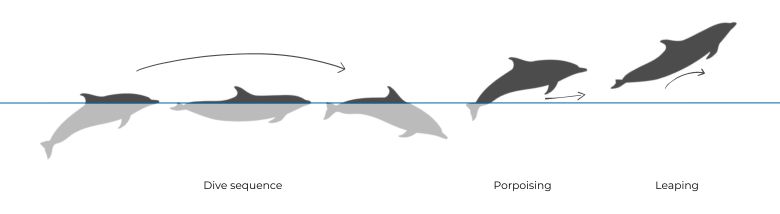
Atlantic Spotted Dolphin illustration dive sequence

Dive sequence

@Georgina Cabayol

Behavior & Feeding

Socializing +

Atlantic Spotted Dolphins are highly social creatures, engaging in intricate vocalizations and physical interactions that facilitate strong social bonds within their groups. Their communication repertoire includes a wide range of sounds, from clicks and whistles to more complex sequences, allowing for sophisticated interaction and coordination among pod members. These behaviors are not just for communication; they also play a crucial role in maintaining social structures and hierarchies within the pod.

Resting +

While specific details on their resting behavior are not provided, like many cetaceans, Atlantic Spotted Dolphins likely have periods of lower activity where they engage in slow swimming or floating at or near the surface. This behavior allows them to rest while still maintaining some level of vigilance for predators or other threats.

Foraging & Diet +

Their diet is diverse, consisting of small to large fish and squid, indicative of their opportunistic feeding strategies. Atlantic Spotted Dolphins employ a variety of foraging techniques, including the use of echolocation to locate prey and complex hunting strategies like herding fish into tight balls or searching the seabed. This versatility in feeding ensures they can exploit a range of prey types, adapting their methods based on availability and environmental conditions.

Predators

Atlantic spotted dolphins’ most common predators include sharks and killer whales. This species may also be preyed upon by other species of blackfish. Being one of the smallest dolphin species in the Atlantic Ocean, it can be somewhat more susceptible to predation, hence often relying on “strength in numbers” in order to deter potential predatory attempts.

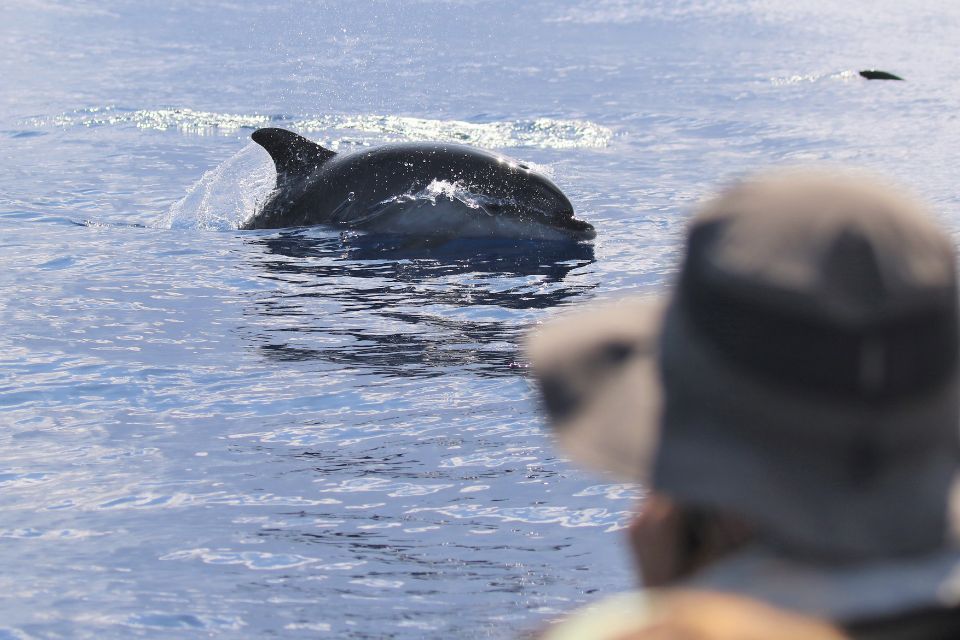
Atlantic Spotted Dolphin photo Azores55
David Rodrigues | Atlantic Spotted Dolphin photo Azores
Atlantic Spotted Dolphin photo Azores60
https://wwhandbook.iwc.int/en/species/spotted-dolphin

Distribution & Movements

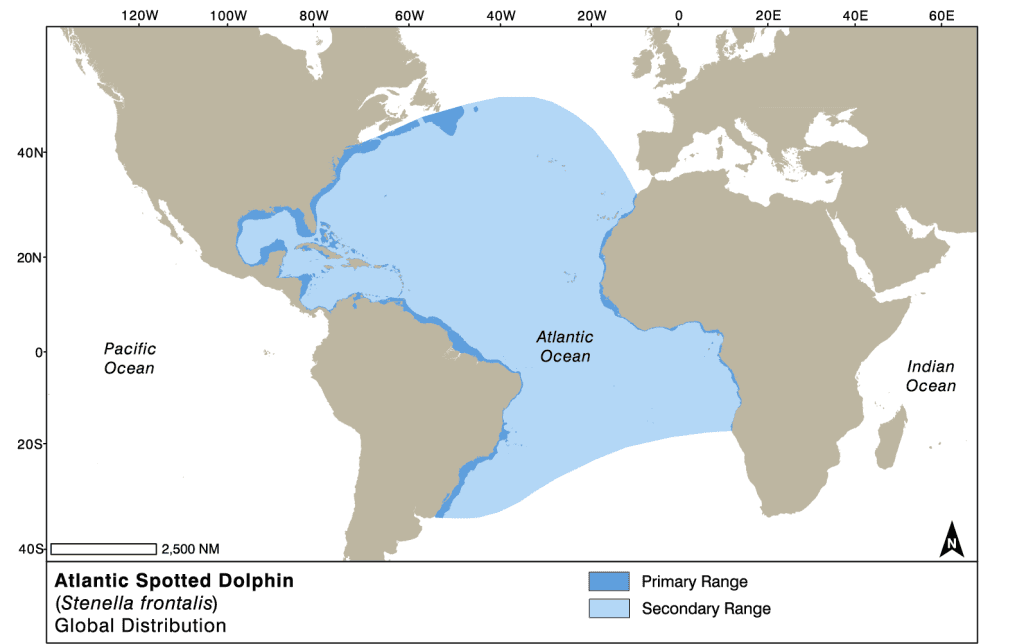
As the name implies, the Atlantic spotted dolphin occurs in tropical to warm waters in the Atlantic Ocean, in both hemispheres, between c. 50ºN and 33ºS. In the west, this species can be found from, at least, southern Brazil, all the way up to New England, although this distribution is discontinuous. In the east, these animals can be found from at least Gabon, up until Mauritania. They can also be found around oceanic islands, such as the Azores and the Bahamas. Present in the Gulf of Mexico, a marginal sea, but absent from the Mediterranean. The heavily spotted form is generally found within the continental shelf, whereas the lightly spotted form is less common in nearshore waters, although exceptions exist.

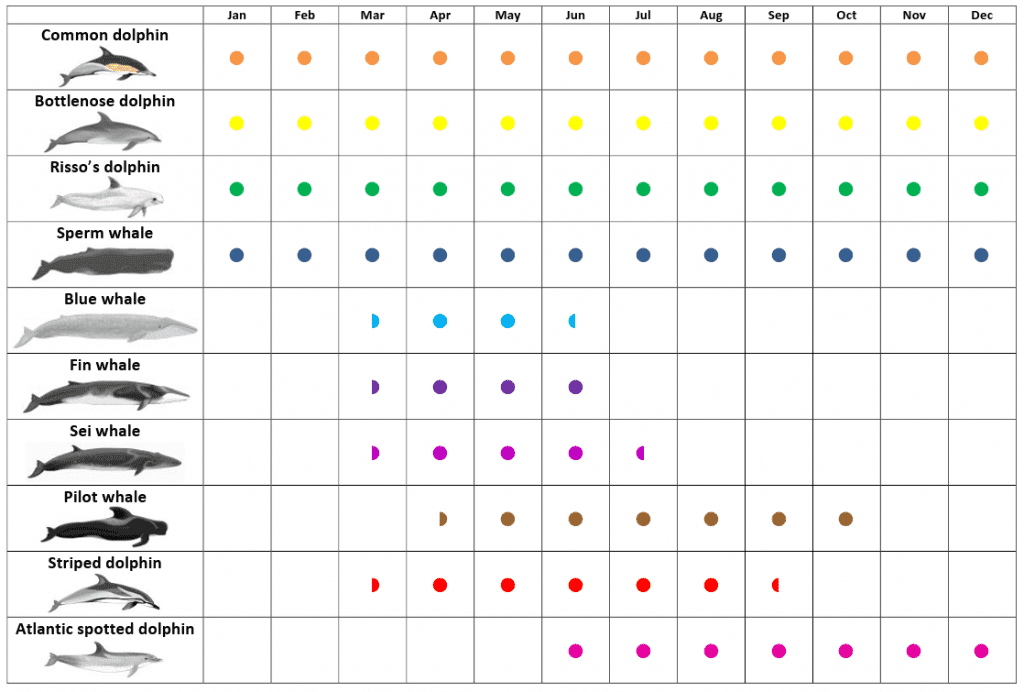
Occurrence of this species in the Azores is seasonal, and contingent on water temperatures. However, it is yet somewhat unclear where exactly these animals come from. They might be part of the offshore, lightly spotted, morphotype, also present in other archipelagos such as the Canary islands, or western North Atlantic oceanic waters, although this possibility is still being studied.

Reproduction & Life History

Sexual Maturity

8-12 years
Males reach sexual maturity at approximately 12 years of age, while females become sexually mature earlier, between 8 and 11 years.

Gestation Period

11 to 12 months
Reflects a significant investment in each offspring, which is typical for cetaceans. This period allows for the full development of the calf in utero, ensuring it is well-prepared for life in the ocean.

Number of Calves

Every 2-3 years
Females typically give birth to a single calf every 2-3 years, a frequency that balances the demands of nursing and care with the need for population maintenance.

Suckling Period & Nursing

Up to 5 years
The calves gradually transition to solid food over time. This extended period of maternal care is essential for calf development, providing both nutrition and necessary socialization within the pod.

Lifespan

50 years or more
This longevity contributes to the species’ complex social structures and allows for the accumulation of knowledge and experience within pods.

Mating Strategy

Polygamous mating system
Both males and females may have multiple partners throughout their lives. This strategy contributes to genetic diversity within populations and reflects the complex social dynamics of dolphin communities.

Species in the Azores

Whale-watching-azores-cetacean-species-temporal-distribution

Sighting frequency
Filter
Odontoceti Misticeti
loader
Your browser does not support the canvas element.
Species Frequency

Sighting frequency
Filter
BY SPECIES
loader
Your browser does not support the canvas element.

Sighting frequency

BY SPECIES
Species
▲
▼
Departure Points
Dates
icon dates
icon dates
VIEW ALL CHARTS

Related Scientific Articles

González, L. (2018): Spatio-temporal distribution of the order Cetacea in the Azores: relationship between biotic and abiotic variables

Read Now

Fernandez, M. (2009): Differences in spatial distribution of two small delphinids in two islands of the Azores Archipelago

Read Now

González, L. et al (2014): Temporal and spatial distribution of common dolphins off São Miguel

Read Now

González, L. et al (2014): Assessing the distribution of Atlantic spotted dolphins off São Miguel

Read Now

Sousa, A. et al (2021): Climate change vulnerability of cetaceans in Macaronesia

Read Now

Sousa, B. et al (2009): Spatial and temporal distribution patterns of Delphinus delphis and Stenella frontalis in São Miguel Island, Azores

Read Now

Al Abbar, F. et al (2019): Observations of a leucistic Cory’s Shearwater off São Miguel Island

Read Now

Specimen that you can see in Azores sea

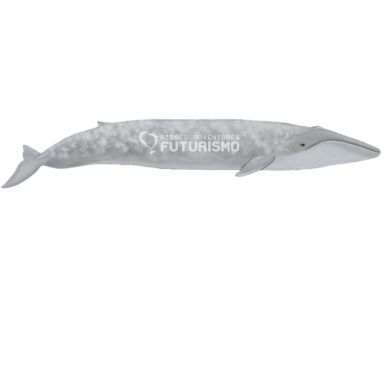
Blue Whale

Blue Whale

Balaenoptera musculus

Blue whales are the largest animals in the world and can easily be detected from a great distance.
Blue Whale

Balaenoptera musculus
View profile
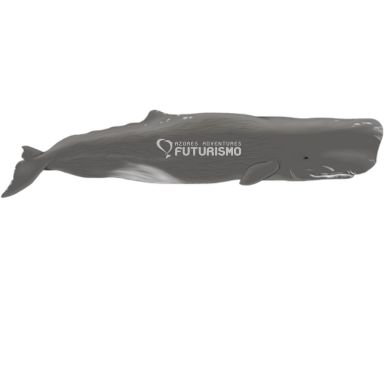
Sperm Whale

Sperm Whale

Physeter macrocephalus

Sperm whales hold the title of largest predator on Earth eating mostly giant squids from the deep oceans.
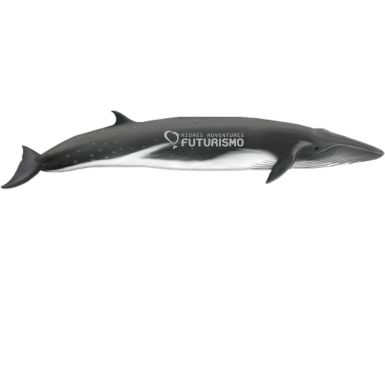
Sperm Whale

Physeter macrocephalus
View profile
Bryde’s Whale

Bryde’s Whale

Balaenoptera edeni

The Bryde's whale live in the tropical waters, are agile filter feeders and love to perform acrobatic displays.
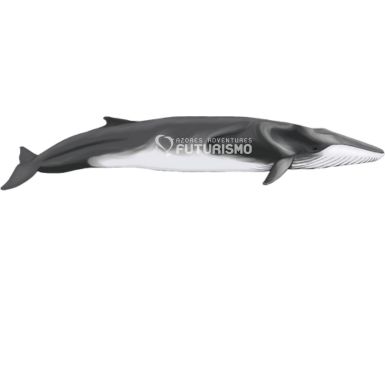
Bryde’s Whale

Balaenoptera edeni
View profile
Fin Whale

Fin Whale

Balaenoptera physalus

The second-largest whales, swift and streamlined ocean roamers.
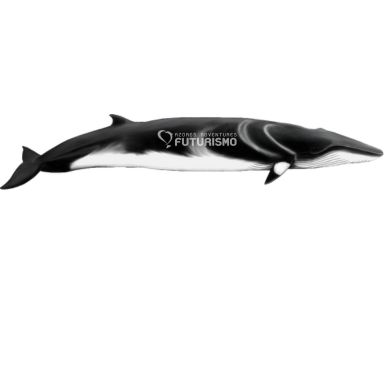
Fin Whale

Balaenoptera physalus
View profile
Minke Whale

Minke Whale

Balaenoptera acutorostrata

Agile mid-sized baleen whales, known for their elusive nature.
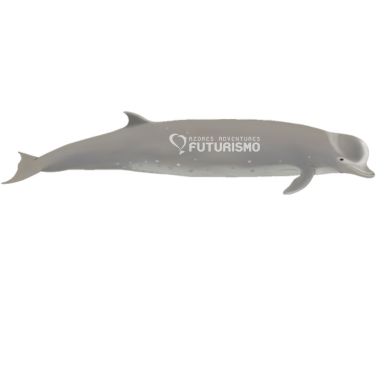
Minke Whale

Balaenoptera acutorostrata
View profile
Nothern Bottlenose Whale

Nothern Bottlenose Whale

Hyperoodon ampullatus

Nothern Bottlenose Whale

Hyperoodon ampullatus
View profile
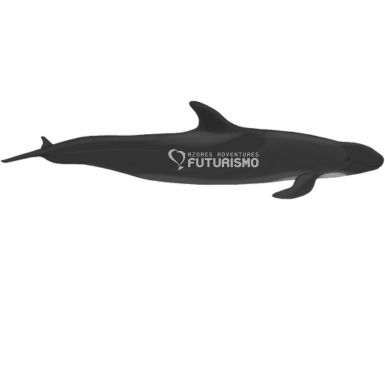
Pilot Whale (Long & Short-finned)

Pilot Whale (Long & Short-finned)

Globicephala melas | Globicephala macrorhynchus

Highly social, intelligent & deep divers.

Pilot Whale (Long & Short-finned)

Globicephala melas | Globicephala macrorhynchus
View profile
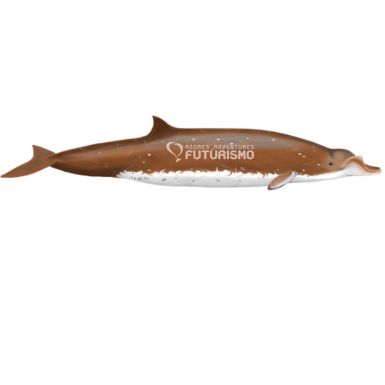
Blainville’s Beaked Whale

Blainville’s Beaked Whale

Mesoplodon densirostris

Elusive deep-divers known for their unique foraging behavior.

Blainville’s Beaked Whale

Mesoplodon densirostris
View profile
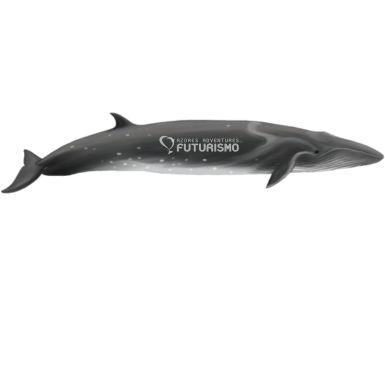
Sei Whale

Sei Whale

Balaenoptera borealis

Third-largest whale species on Earth, fast swimmers and deep-divers.

Sei Whale

Balaenoptera borealis
View profile
Cuvier’s Beaked Whale

Cuvier’s Beaked Whale

Ziphius cavirostris

Noted for extraordinary deep-diving, setting mammalian records in depth and duration

Cuvier’s Beaked Whale

Ziphius cavirostris
View profile
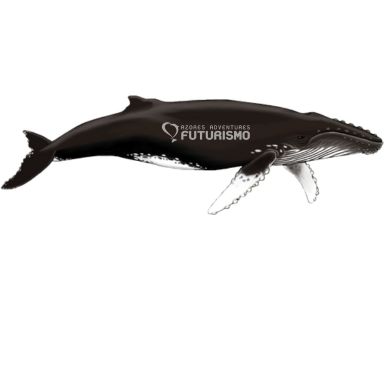
Humpback Whale

Humpback Whale

Megaptera novaeangliae

Melodic giants with acrobatic displays, known for their haunting songs and intricate social behaviors. Know more!

Humpback Whale

Megaptera novaeangliae
View profile
Atlantic Spotted Dolphin

Atlantic Spotted Dolphin

Stenella Frontalis

Highly social, with distinct spots and a wide range of complex behaviors and vocalizations.

Atlantic Spotted Dolphin

Stenella Frontalis
View profile
Striped Dolphin

Striped Dolphin

Stenella coeruleoalba

Notable for their striking body patterns and acrobatic prowess.

Striped Dolphin

Stenella coeruleoalba
View profile
Bottlenose Dolphin

Bottlenose Dolphin

Tursiops truncatus

Bottlenose Dolphins are highly intelligent and social creatures, famous for their playful behavior and remarkable cognitive abilities.

Bottlenose Dolphin

Tursiops truncatus
View profile
Orca (Killer Whale)

Orca (Killer Whale)

Orcinus orca

Orcas are the apex predators of the marine world, known for their distinctive black and white coloring and complex social structures.

Orca (Killer Whale)

Orcinus orca
View profile
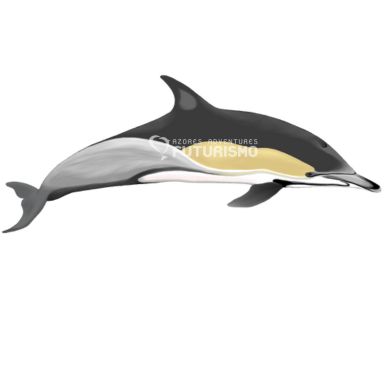
Common Dolphin

Common Dolphin

Delphinus delphis

Large groups of common dolphins, whipping the ocean's surface into a froth, are a familiar and thrilling sight in many parts of the world.

Common Dolphin

Delphinus delphis
View profile
False Killer Whale

False Killer Whale

Pseudorca crassidens

Despite its name, the false killer whale belongs taxonomically to the dolphin family and it often behaves more like one of its energetic and sprightly smaller relatives.

False Killer Whale

Pseudorca crassidens
View profile
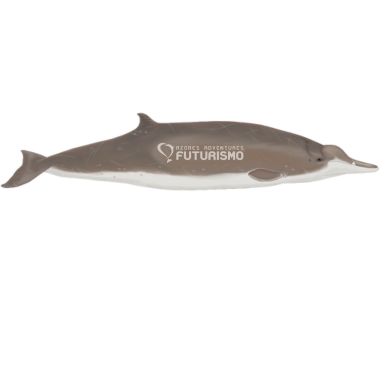
Sowerby’s Beaked Whale

Sowerby’s Beaked Whale

Mesoplodon bidens

Sowerby’s Beaked Whales are elusive denizens of the North Atlantic, recognized by their slender beaks and distinctive forehead bulges.

Sowerby’s Beaked Whale

Mesoplodon bidens
View profile
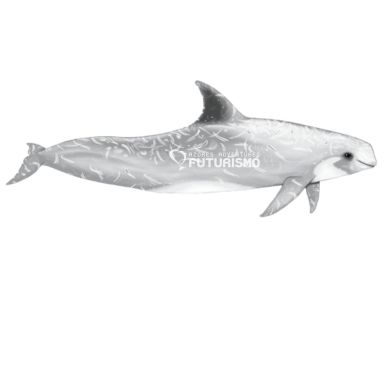
Risso’s Dolphin

Risso’s Dolphin

Grampus griseus

Risso's dolphin is renowned for its heavily scarred appearance and significant size among species referred to as dolphins.

Risso’s Dolphin

Grampus griseus
View profile
Dragoeiro

Dragoeiro

Dracaena draco

Dragoeiro

Dracaena draco
View profile
Sanguinho

Sanguinho

Frangula azorica

Sanguinho

Frangula azorica
View profile
Gingeira Brava

Gingeira Brava

Prunus azorica

Gingeira Brava

Prunus azorica
View profile
Atlantic Spotted Dolphin

Atlantic Spotted Dolphin

Stenella Frontalis

Highly social, with distinct spots and a wide range of complex behaviors and vocalizations.

Atlantic Spotted Dolphin

Stenella Frontalis
View profile
Blainville’s Beaked Whale

Blainville’s Beaked Whale

Mesoplodon densirostris

Elusive deep-divers known for their unique foraging behavior.

Blainville’s Beaked Whale

Mesoplodon densirostris
View profile
Bottlenose Dolphin

Bottlenose Dolphin

Tursiops truncatus

Bottlenose Dolphins are highly intelligent and social creatures, famous for their playful behavior and remarkable cognitive abilities.

Bottlenose Dolphin

Tursiops truncatus
View profile
Common Dolphin

Common Dolphin

Delphinus delphis

Large groups of common dolphins, whipping the ocean's surface into a froth, are a familiar and thrilling sight in many parts of the world.

Common Dolphin

Delphinus delphis
View profile
Cuvier’s Beaked Whale

Cuvier’s Beaked Whale

Ziphius cavirostris

Noted for extraordinary deep-diving, setting mammalian records in depth and duration

Cuvier’s Beaked Whale

Ziphius cavirostris
View profile
False Killer Whale

False Killer Whale

Pseudorca crassidens

Despite its name, the false killer whale belongs taxonomically to the dolphin family and it often behaves more like one of its energetic and sprightly smaller relatives.

False Killer Whale

Pseudorca crassidens
View profile
Nothern Bottlenose Whale

Nothern Bottlenose Whale

Hyperoodon ampullatus

Nothern Bottlenose Whale

Hyperoodon ampullatus
View profile
Orca (Killer Whale)

Orca (Killer Whale)

Orcinus orca

Orcas are the apex predators of the marine world, known for their distinctive black and white coloring and complex social structures.

Orca (Killer Whale)

Orcinus orca
View profile
Pilot Whale (Long & Short-finned)

Pilot Whale (Long & Short-finned)

Globicephala melas | Globicephala macrorhynchus

Highly social, intelligent & deep divers.

Pilot Whale (Long & Short-finned)

Globicephala melas | Globicephala macrorhynchus
View profile
Risso’s Dolphin

Risso’s Dolphin

Grampus griseus

Risso's dolphin is renowned for its heavily scarred appearance and significant size among species referred to as dolphins.

Risso’s Dolphin

Grampus griseus
View profile
Blue Whale

Blue Whale

Balaenoptera musculus

Blue whales are the largest animals in the world and can easily be detected from a great distance.

Blue Whale

Balaenoptera musculus
View profile
Bryde’s Whale

Bryde’s Whale

Balaenoptera edeni

The Bryde's whale live in the tropical waters, are agile filter feeders and love to perform acrobatic displays.

Bryde’s Whale

Balaenoptera edeni
View profile
Fin Whale

Fin Whale

Balaenoptera physalus

The second-largest whales, swift and streamlined ocean roamers.

Fin Whale

Balaenoptera physalus
View profile
Humpback Whale

Humpback Whale

Megaptera novaeangliae

Melodic giants with acrobatic displays, known for their haunting songs and intricate social behaviors. Know more!

Humpback Whale

Megaptera novaeangliae
View profile
Minke Whale

Minke Whale

Balaenoptera acutorostrata

Agile mid-sized baleen whales, known for their elusive nature.
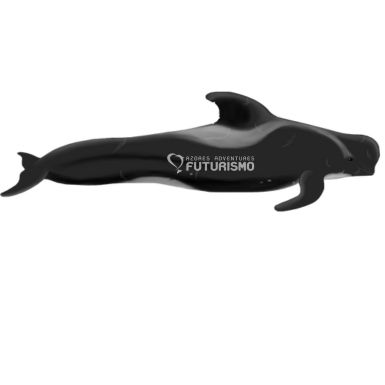
Minke Whale

Balaenoptera acutorostrata
View profile
Sei Whale

Sei Whale

Balaenoptera borealis

Third-largest whale species on Earth, fast swimmers and deep-divers.
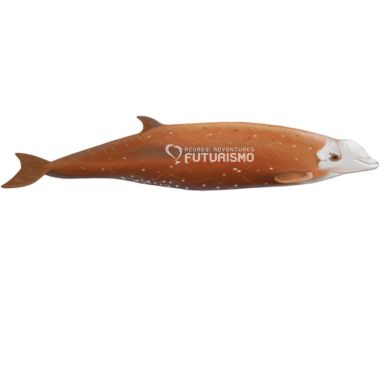
Sei Whale

Balaenoptera borealis
View profile

Whale Watching Azores Essentials

Explore, Love, and Protect: Unveiling the essence of Whale Watching in the Azores

Responsible Whale Watching

History & Culture

Whale Watching Handbook

More information

Best Azores island for Whale Watching

Best Azores island for Whale Watching

Our Scientific Publications

Our Scientific Publications

What to wear

What to wear

Preservation & Threats

Preservation & Threats

Explore Azores

Adventure awaits

Book your experience
SITEMAP
TERMS & CONDITIONS
PRIVACY POLICY
COMPLAINTS BOOK
About Us
OUR PURPOSE
OUR STORY
WHO WE ARE
WHY FUTURISMO
Honors & Alliances
ASSOCIATIVISM
AWARDS & DISTINCTIONS
CERTIFICATIONS
MEDIA HIGHLIGHTS
Social Media
Facebook Youtube Instagram Twitter Tripadvisor
Info & Reservations

info@futurismo.pt
Tel. (+351) 296 628 522
Mobile. (+351) 967 805 101

Licences

MT 22/2009 (Açores)
AT 09/2011/RA (Açores)

Tours & Islands

SITEMAP
TERMS & CONDITIONS
B2B PARTNERS
PRIVACY POLICY
COMPLAINTS BOOK

Partners
Info & Reservations

info@futurismo.pt
Tel. (+351) 296 628 522
Mobile. (+351) 967 805 101

Licences

MT 22/2009 (Açores)
AT 09/2011/RA (Açores)

Facebook Youtube Instagram Twitter Tripadvisor

Certifications

All rights reserved. Copyright © 2022 - Futurismo
|
design by: WEBOOST.PT
LAST NEWS
Earlybird Discount: Enjoy a 10% discount if booking with 30 days in advance by using the Promo code EARLYBIRD on the checkout of your Whale Watching tour Mix & Save: Enjoy a 10% Discount on your Second Tour operated by Futurismo and 15% on the next ones Contact us via chat (working days only) or the +351 296 628 522
x
Manage Consent

We use technologies like cookies to store and/or access device information to enhance your experience. Some tools, such as the live chat, may still be active to assist with navigation and offer promotional messages, even without explicit consent. You can manage your preferences at any time.

Functional Always active
The technical storage or access is strictly necessary for the legitimate purpose of enabling the use of a specific service explicitly requested by the subscriber or user, or for the sole purpose of carrying out the transmission of a communication over an electronic communications network.
Preferences
The technical storage or access is necessary for the legitimate purpose of storing preferences that are not requested by the subscriber or user.
Statistics
The technical storage or access that is used exclusively for statistical purposes. The technical storage or access that is used exclusively for anonymous statistical purposes. Without a subpoena, voluntary compliance on the part of your Internet Service Provider, or additional records from a third party, information stored or retrieved for this purpose alone cannot usually be used to identify you.
Marketing
The technical storage or access is required to create user profiles to send advertising, or to track the user on a website or across several websites for similar marketing purposes.
  • Manage options
  • Manage services
  • Manage {vendor_count} vendors
  • Read more about these purposes
View preferences
  • {title}
  • {title}
  • {title}
Search
Day Tours +
+ São Miguel island
Bike Tours
Canyoning
Coasteering
Kayaking & SUP Best seller
Hiking Tours
Jeep Tours Best seller
Van Tours
Whale Watching Best seller
+ Pico island
Hiking Tours
Jeep Tours Best seller
Van Tours
Whale Watching Best seller
Travel Agency
Futurismo +
+ The Brand
Our Story
Who We Are
Why Futurismo
+ Our Fundamentals
Mission & Vision
Our Purpose
Our Values
+ Our Projects
All Projects
> People
> Planet
> Wildlife
United Nations Global Goals
+ Our Commitments
Ethical Swimming with Dolphins
Hiking Conduct Code
Mindful & Transformational Travel
Responsible Travel
Responsible Whale Watching
+ Our Policies
Animal Welfare Policy
Environmental Policy
Sustainability Policy
+ Honors & Alliances
Awards
Associativism
Certifications
Media Highlights
+ Collab with Us
B2B Partnerships
Content Creators
Media
Contact Us
The Azores +
+ Islands
Corvo
Faial
Flores
Graciosa
Pico
Santa Maria
São Miguel
São Jorge
Terceira
+ Whale Watching
About
> Complete Guide
> Best Island
> Best Season
> History & Culture
> Preservation & Threats
> Sightings Statistics
> What to wear
Why Futurismo
> Educational Projects
> Our Fleet
> Our Scientific Publications
> Scientific Publications
> The Marine Biologists
> The Lookouts
> Responsible Operator
> WCA Certification
+ Species
Dolphins' Species
> Atlantic Spotted Dolphin
> Bottlenose Dolphin
> Common Dolphin
> False Killer Whale
> Orca
> Risso's Dolphin
> Striped Dolphin
Whales' Species
> Blainville's Beaked Whale
> Blue Whale
> Bryde's Whale
> Cuvier's Beaked Whale
> Fin Whale
> Humback Whale
> Minke Whale
> Nothern Bottlenose Whale
> Pilot Whale
> Sei Whale
> Sowerby's Beaked Whale
> Sperm Whale popular
Blog +
+ All articles
All articles
> People
> Planet
> Travel
> Wildlife
+ Contributors
Copywriters & Guest-bloggers
Photographers & Videographers
Gift Shop +
+ Books
O Canto dos Açores
Day tours

SITEMAP
TERMS & CONDITIONS
B2B PARTNERS
PRIVACY POLICY
COMPLAINTS BOOK

Multiday tours
About Us
Travel Agency
The Azores
Blog

Get in touch

EN
FR
DE
IT
PT
ES
Rubens Rodrigues

Ruben Rodrigues

Owner & General Director

Lorem ipsum dolor sit amet, consectetur adipiscing elit. Ut elit tellus, luctus nec ullamcorper mattis, pulvinar dapibus leo.

The iron-rich water of this spa at open air is naturally warm at any time. This green jungle classified as Natural Regional Monument will transport you to another planet. Enjoy the unique scenery straight out of a Jurassic Park movie.

What to take?
Best Season to Visit
Read Complete Guide