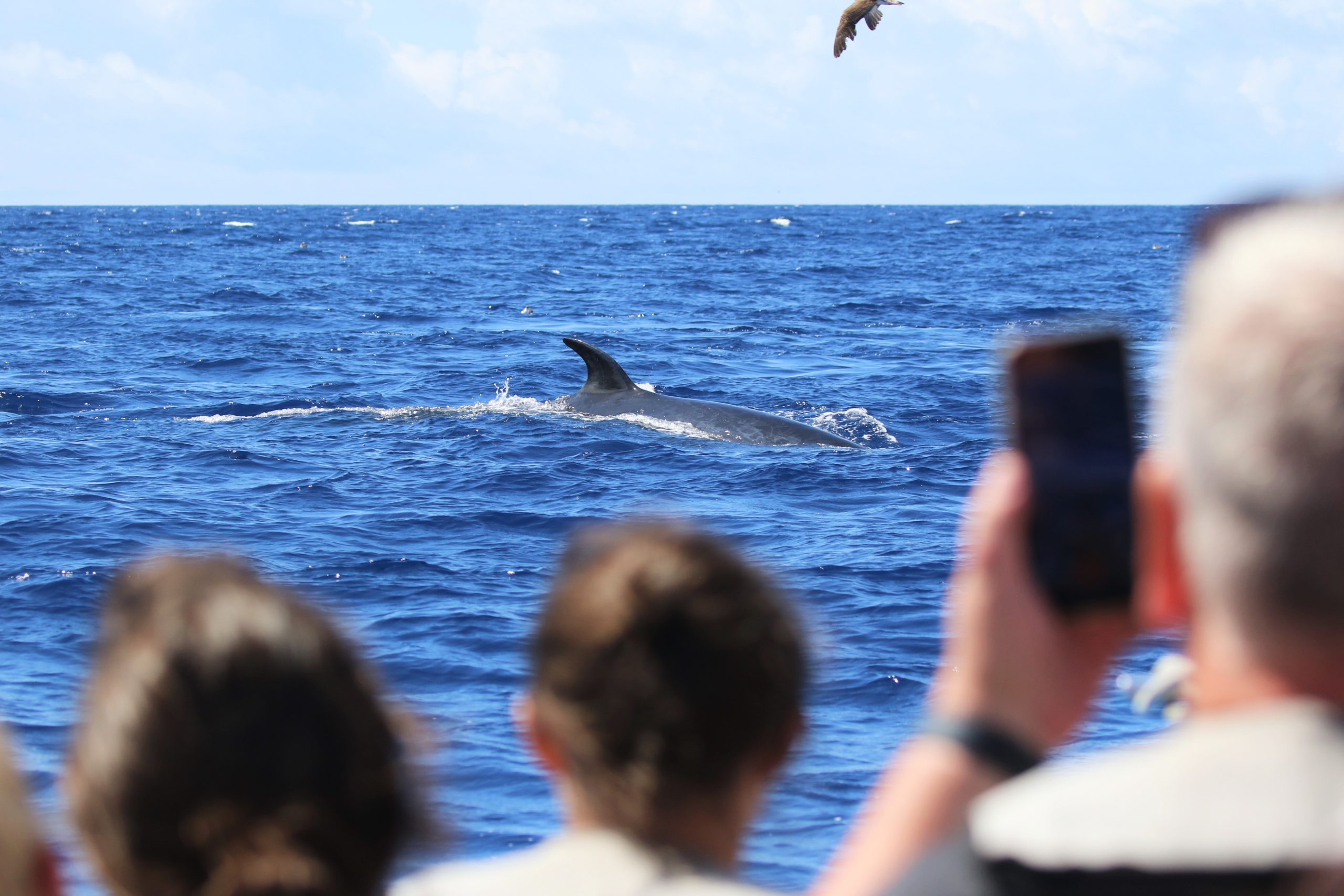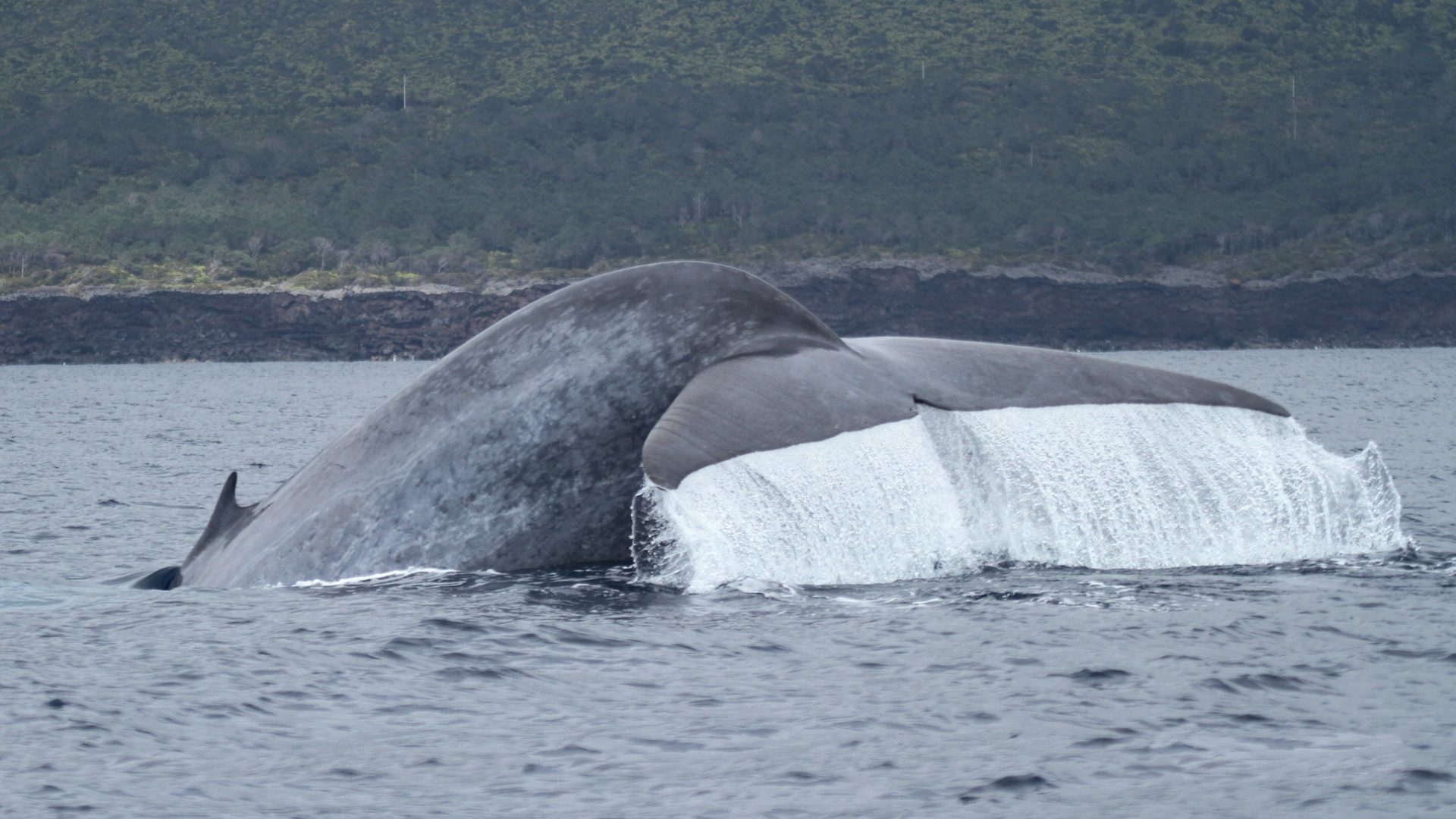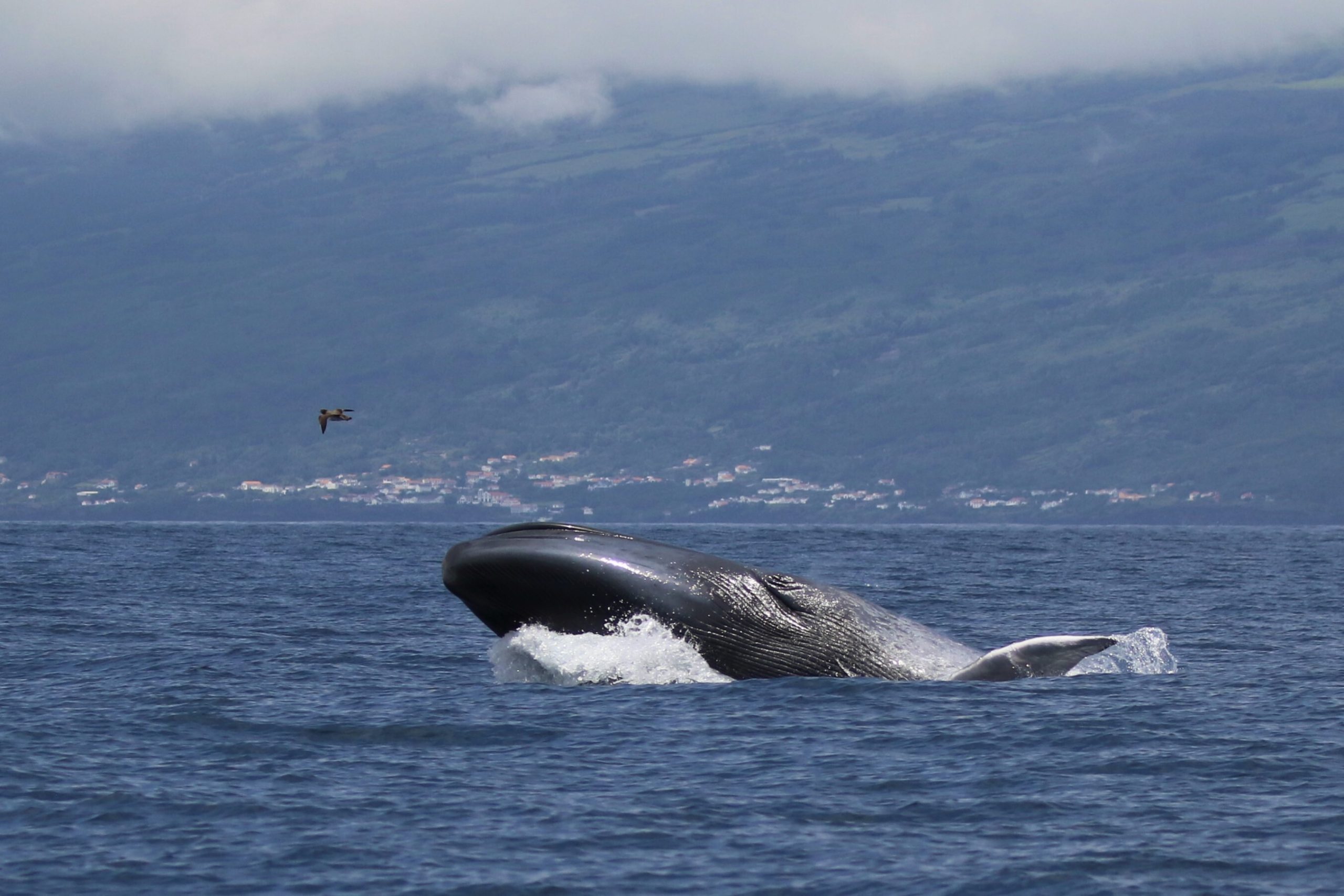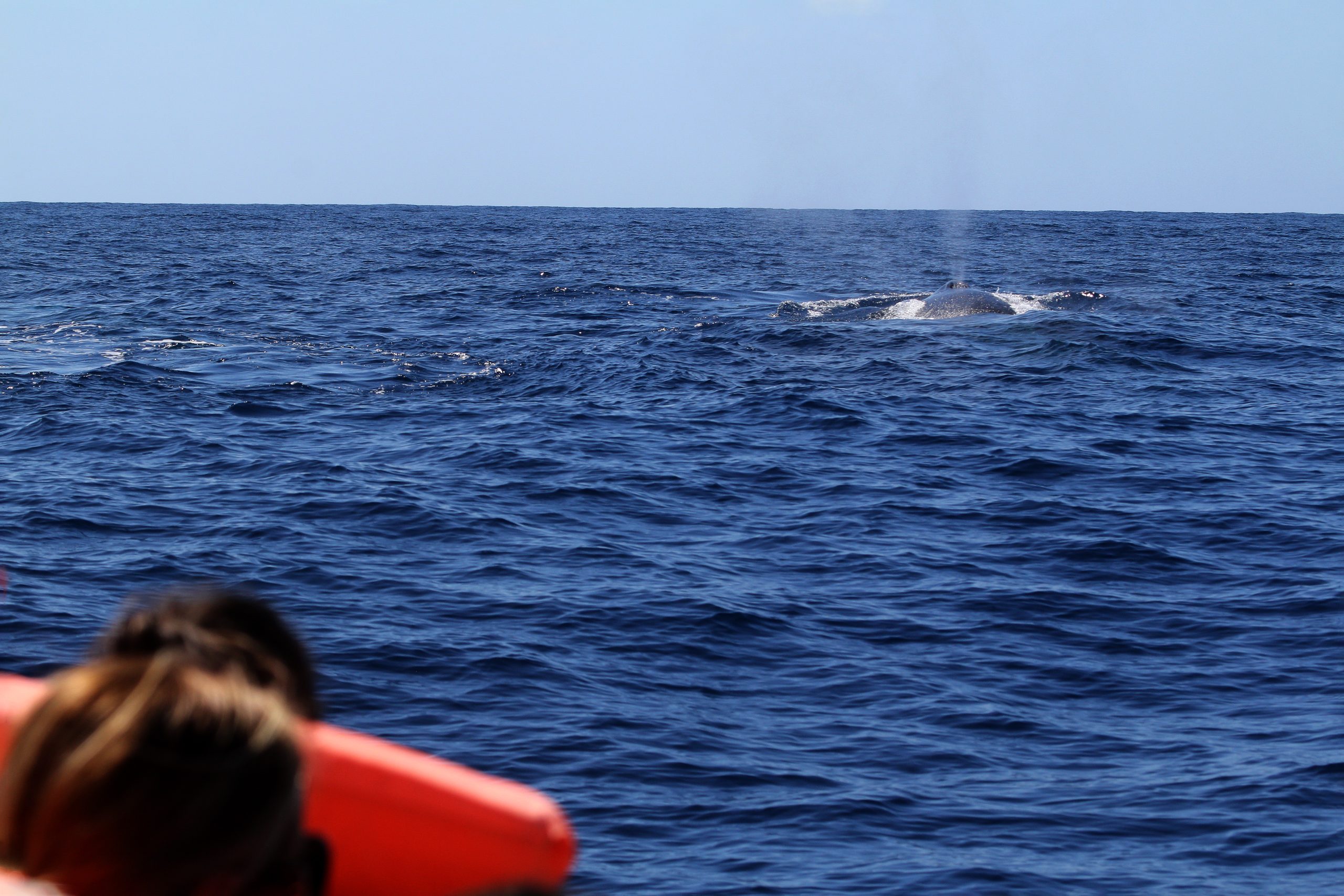


Yes, whales are carnivores. Whales belong to the order cetacean, which is divided into two suborders: toothed cetaceans and baleen cetaceans, although this taxonomic classification is still under review.
This order shares a common ancestor with hippos, which belong to the order artiodactyl (even-toed ungulates). This order is composed, for the most part, of land-dwelling herbivores and omnivores.
Despite this evolutionary relatedness, however, and unlike even-toed ungulates, whales (and all cetaceans) are carnivorous. This means that cetaceans eat other animals to meet their nutritional requirements.

Whale Gut Microbiome

However, despite being carnivorous, whales (particularly baleen whales) host a microbiome akin to that of both herbivores and carnivores, especially at a functional level.
One component of the baleen whales’ microbiome retained characteristics from their herbivorous ancestor, allowing them to digest polysaccharides. Instead of plant-based polysaccharides, such as cellulose, these now function to digest animal-based polysaccharides, such as chitin, a significant component of krill, a primary food source for baleen whales.
Another component of the baleen whale gut microbiome is a product of the evolutionary history of these animals, which enabled them to adapt to a fully carnivorous diet. This aspect of the whales’ microbiome shows significant similarities to that of land-dwelling carnivores. This is only natural, as both groups require an efficient digestive system to support their animal-based diets.
Related articles: Do whales and dolphins lay eggs? | Mating Behaviors and Social Bonds in Dolphins | Maximum Swimming Speeds of Whales | Communication Systems Between Whales and Dolphins | Global Conservation Status of Fin Whales | Portuguese Man-o-war (Physalia physalis) | Collective Nouns for Different Dolphin Groups | What Do Dolphins Eat? | Are Whales Mammals?
Baleen Cetacean Diet

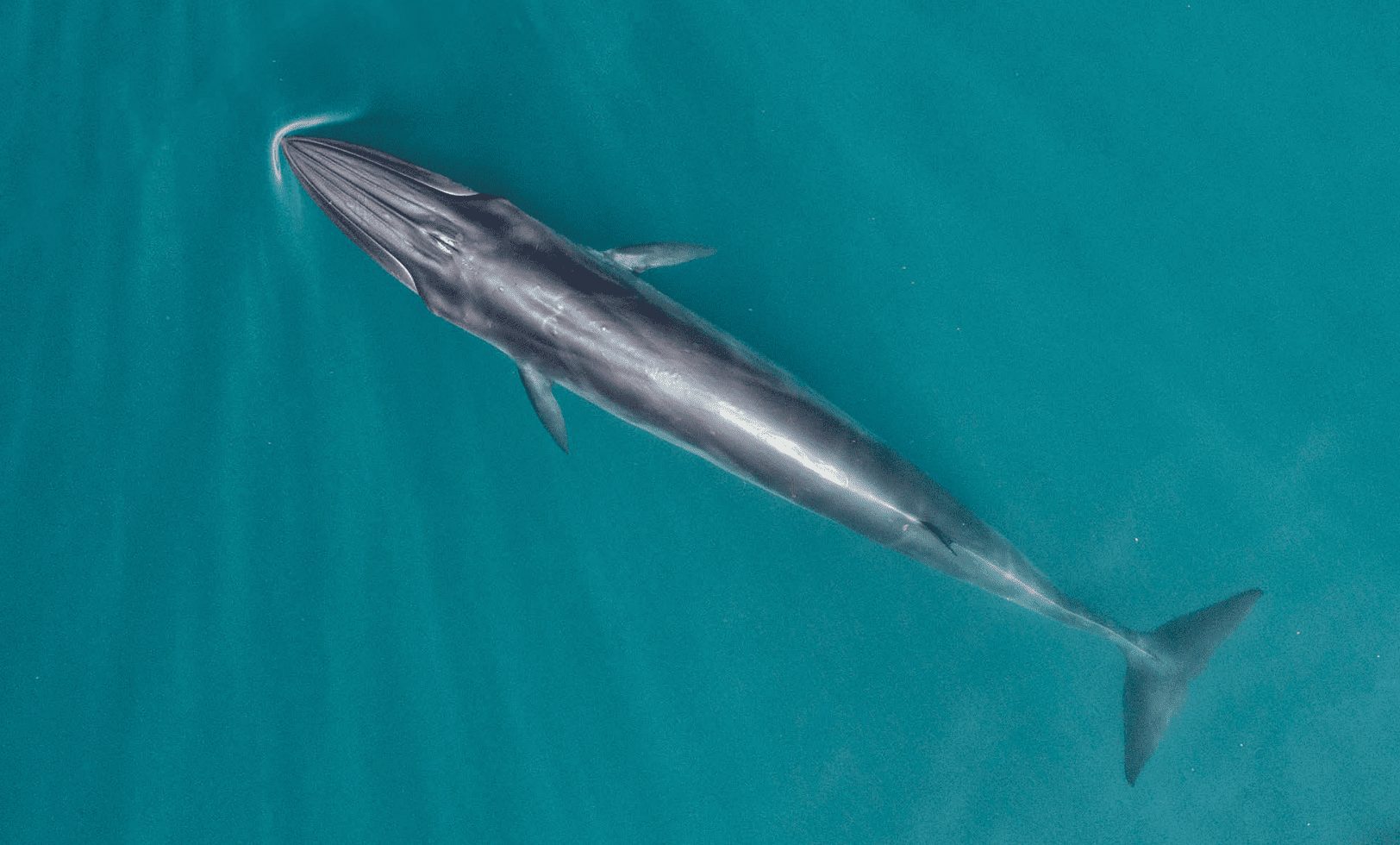
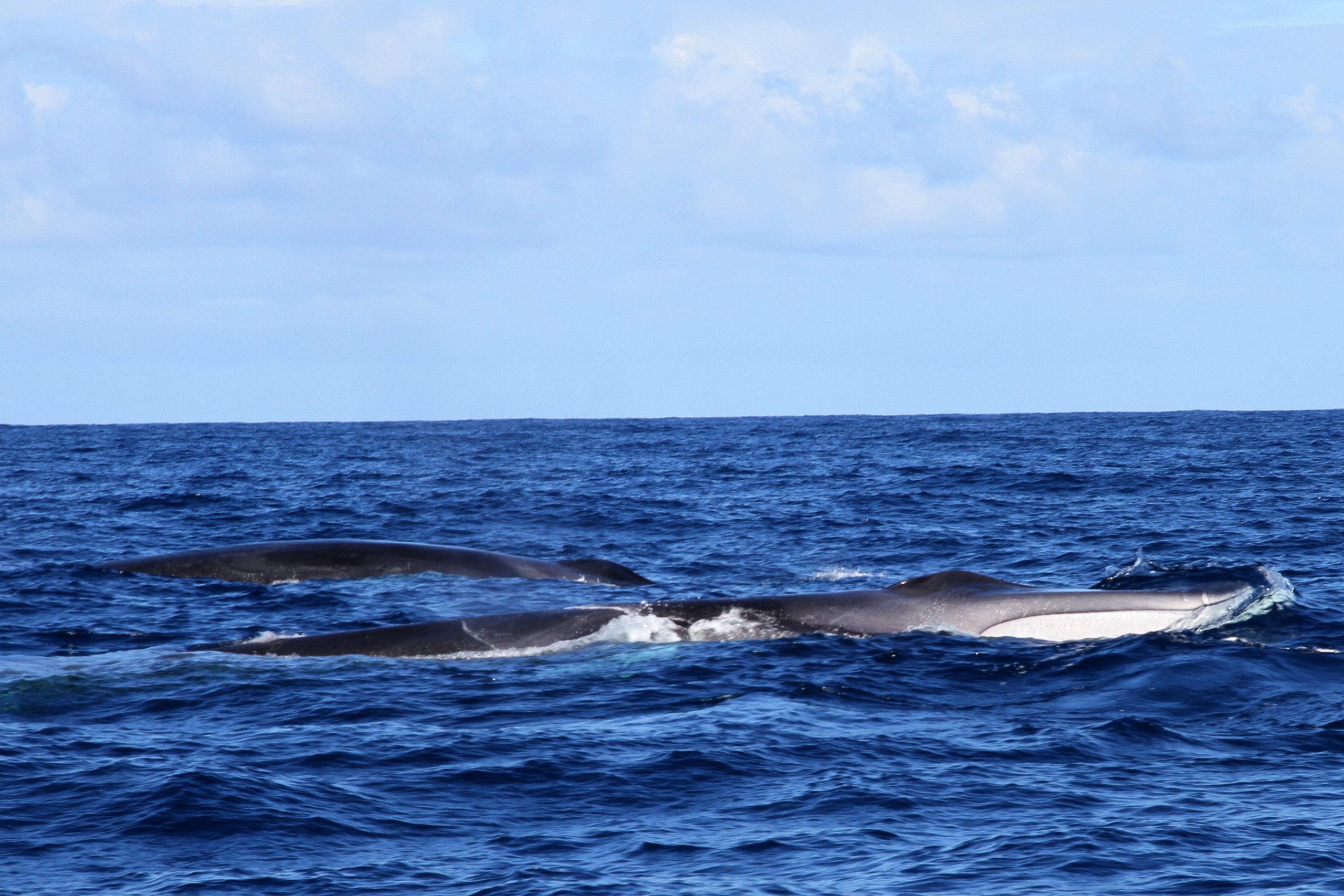
Despite all cetaceans being carnivorous, they differ in their diet preferences. Baleen whales feed mainly on small animals, such as krill or small schooling fish. Instead of teeth, these cetaceans possess baleen plates in their mouths, allowing them to ingest large amounts of prey at once while filtering out water.
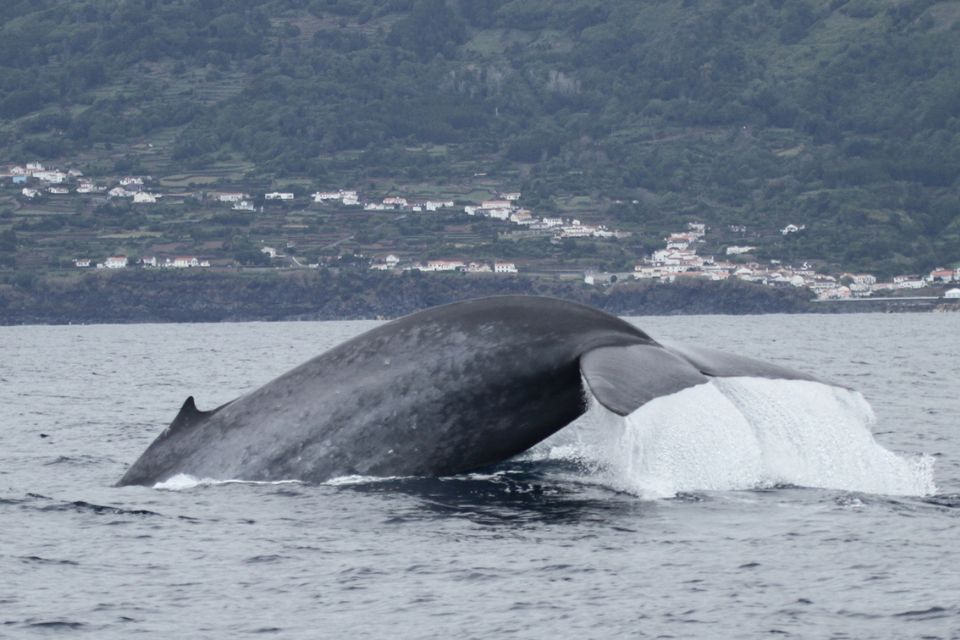
Animals such as the blue whale belong to this group. Yet, despite being the largest being to have ever existed, it feeds on tiny prey. Despite its size and energetic requirements, blue whales (and other baleen cetaceans) can survive for months without feeding. This is because they can store massive amounts of energy via fat reserves!
Related articles: Is the Fin Whale endangered? | Sperm Whale Diet | Sperm Whale’s Scars | Peak Seasons for Whale Watching in Azores| What does a whale’s penis look like? | Characteristics and Flavor of Whale Milk
Toothed Cetacean Diet

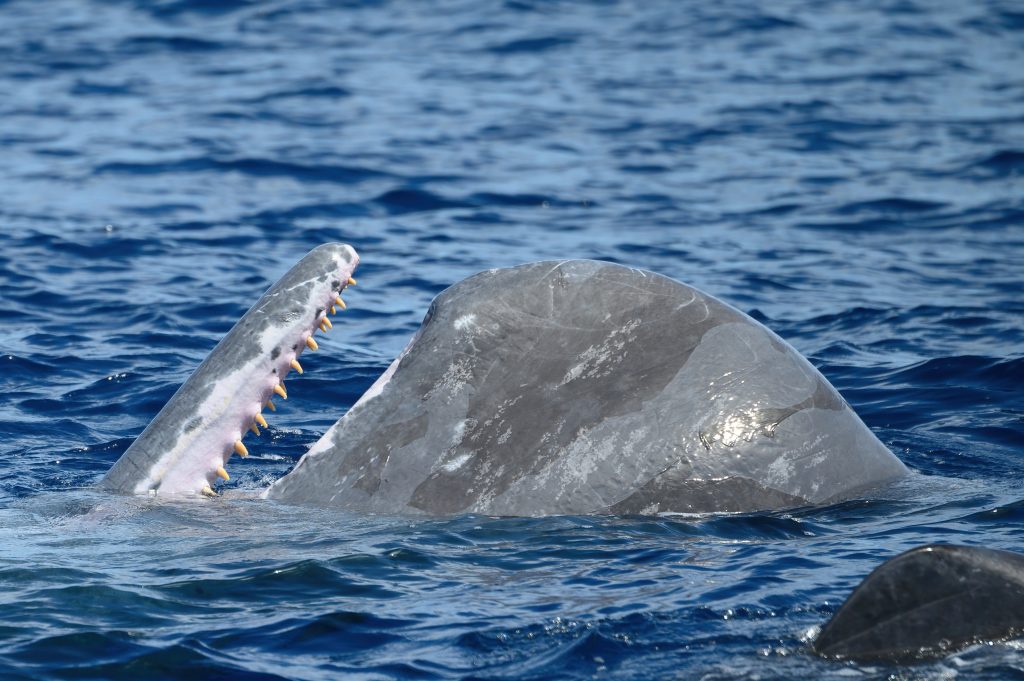
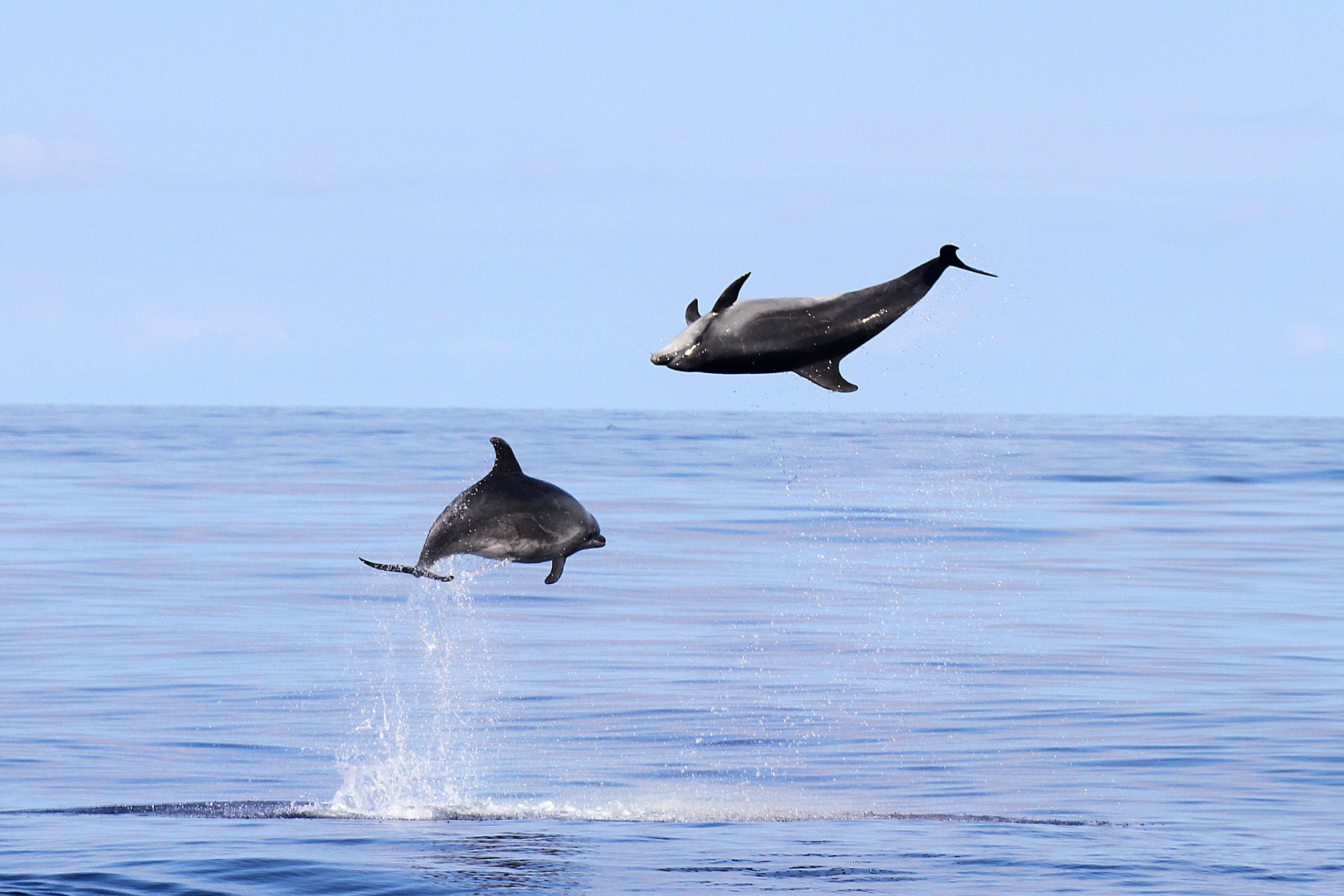
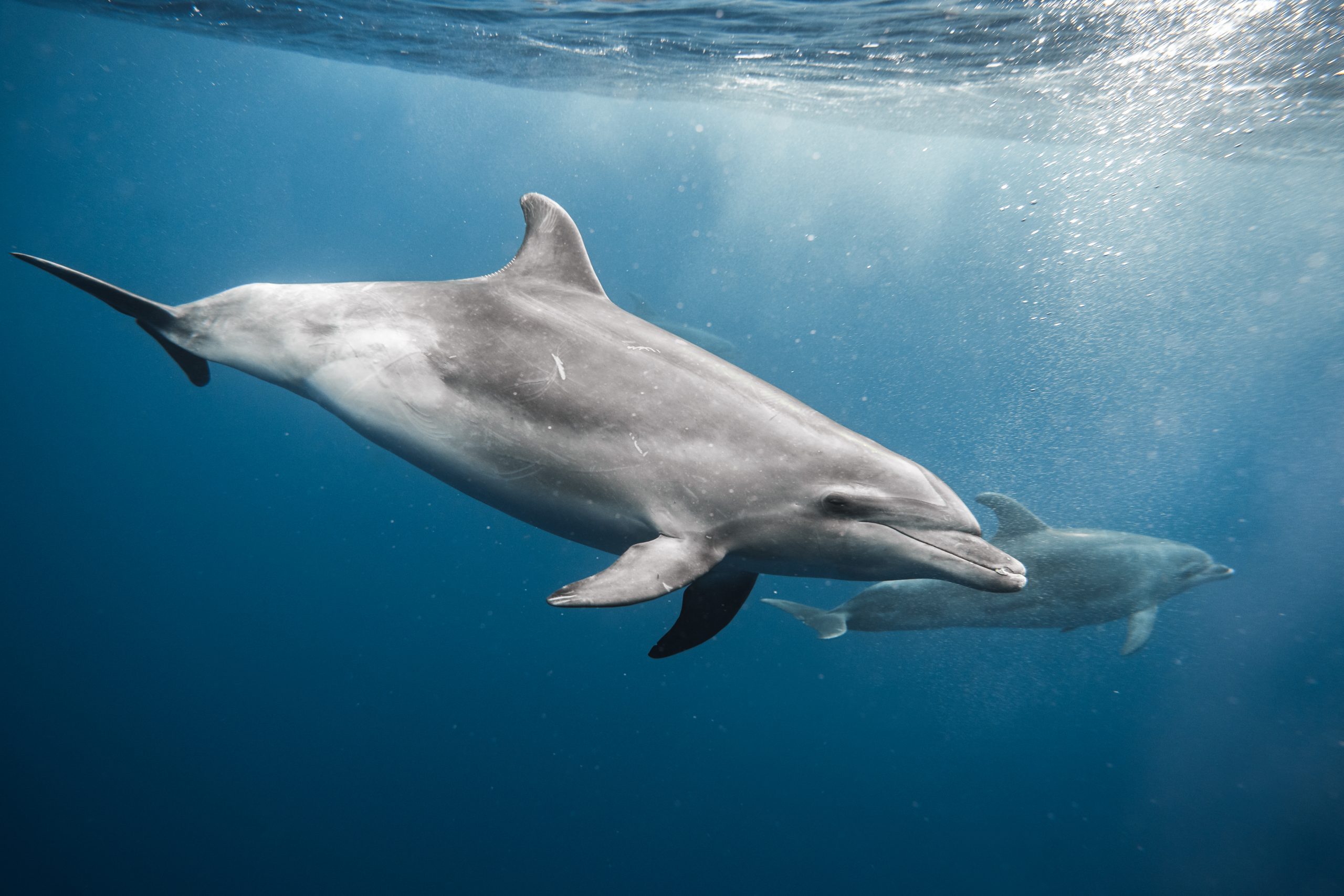
Toothed cetaceans are predators, possess teeth, and, as such, hunt for individual prey items of varying sizes. Animals in this group prey on various species, including fish, crustaceans, molluscs, and even other cetaceans!
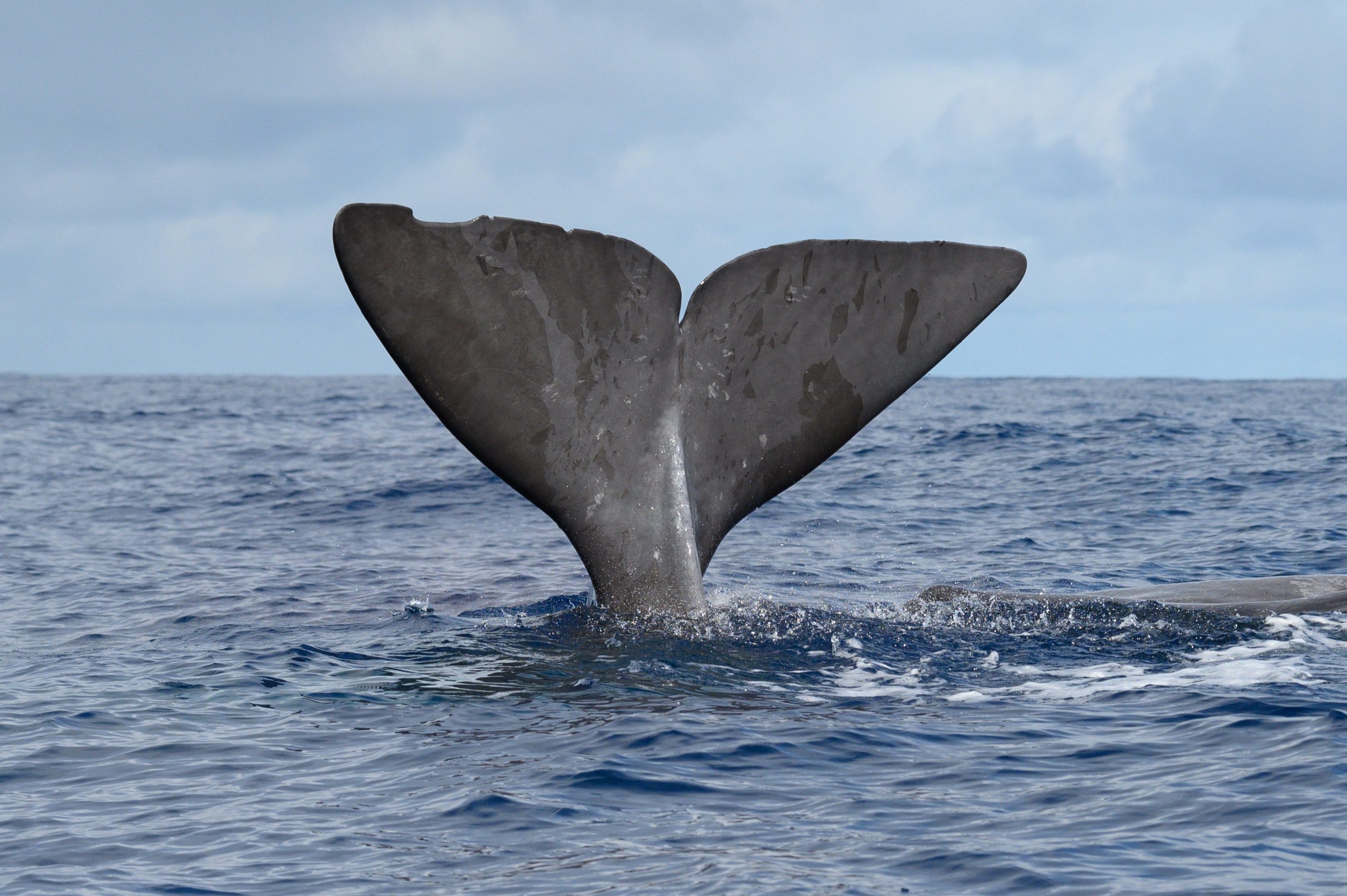
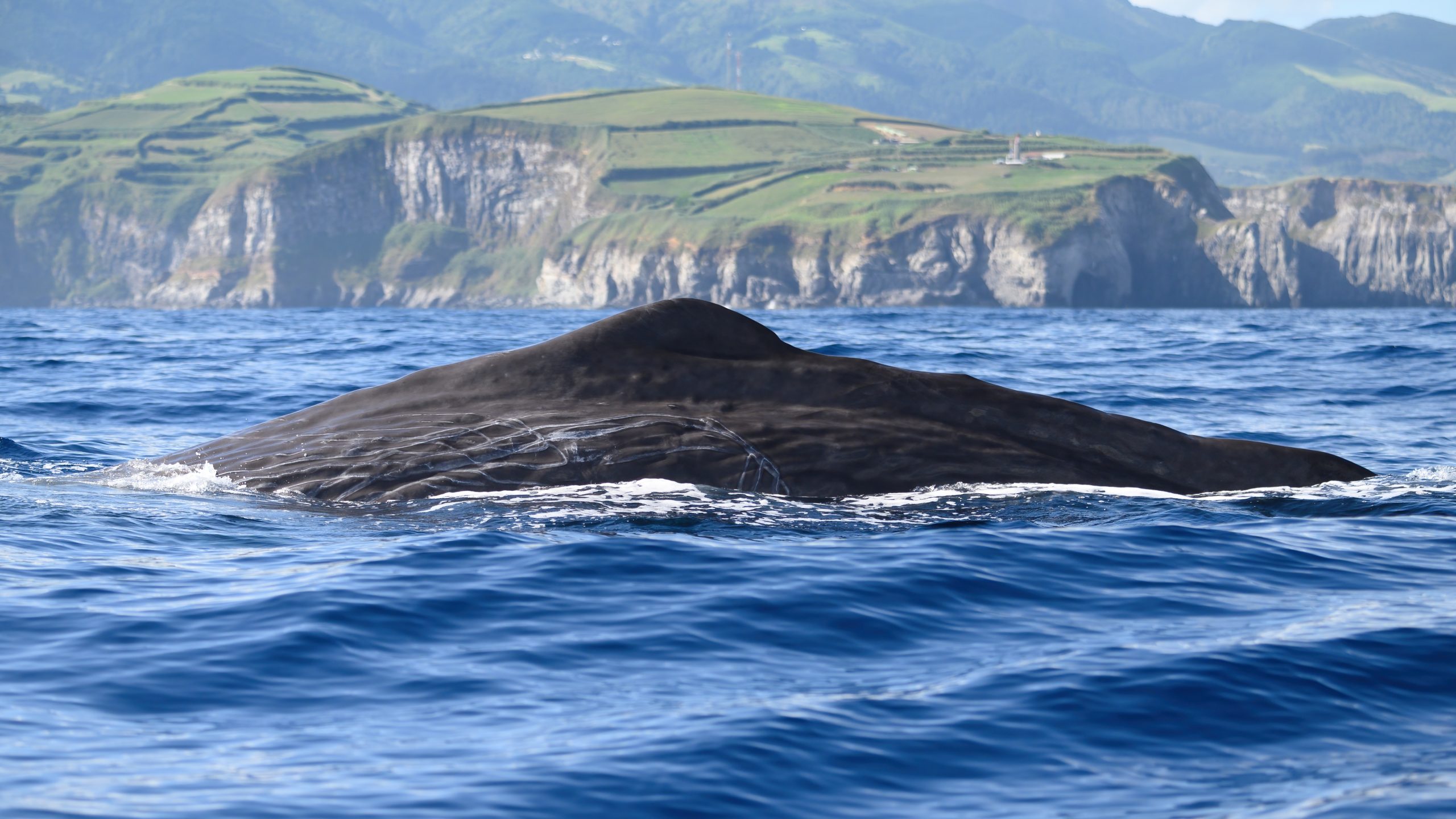
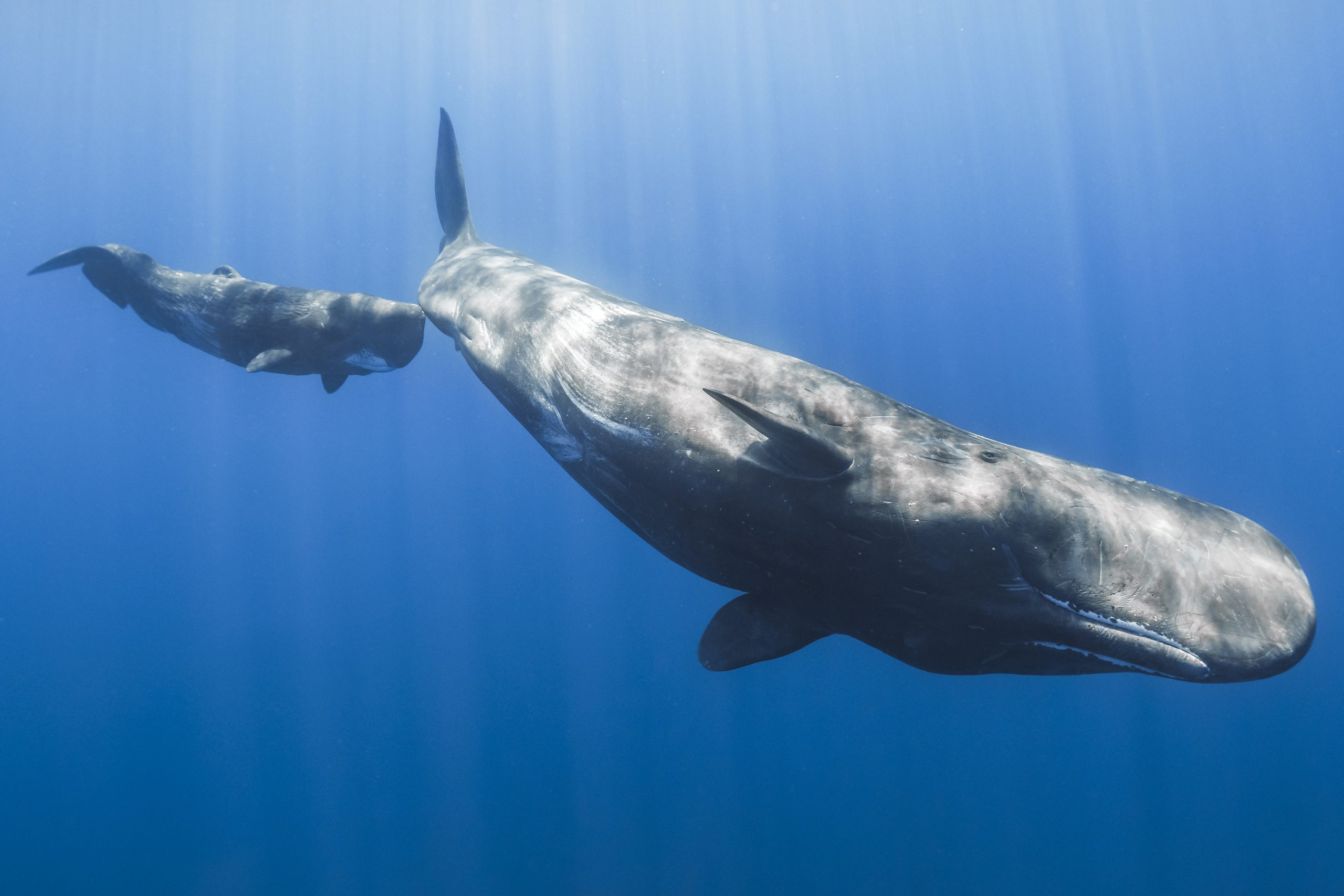
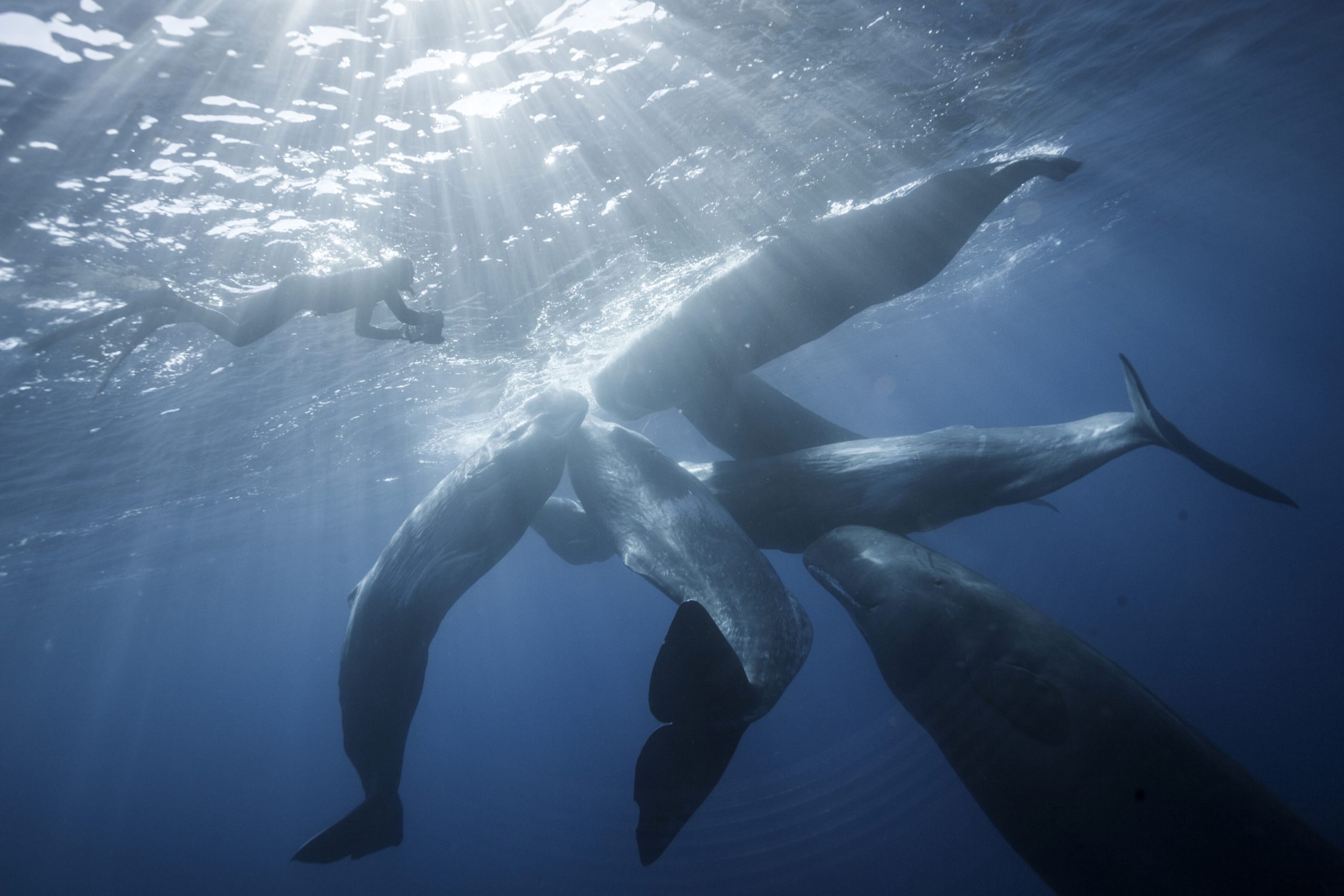
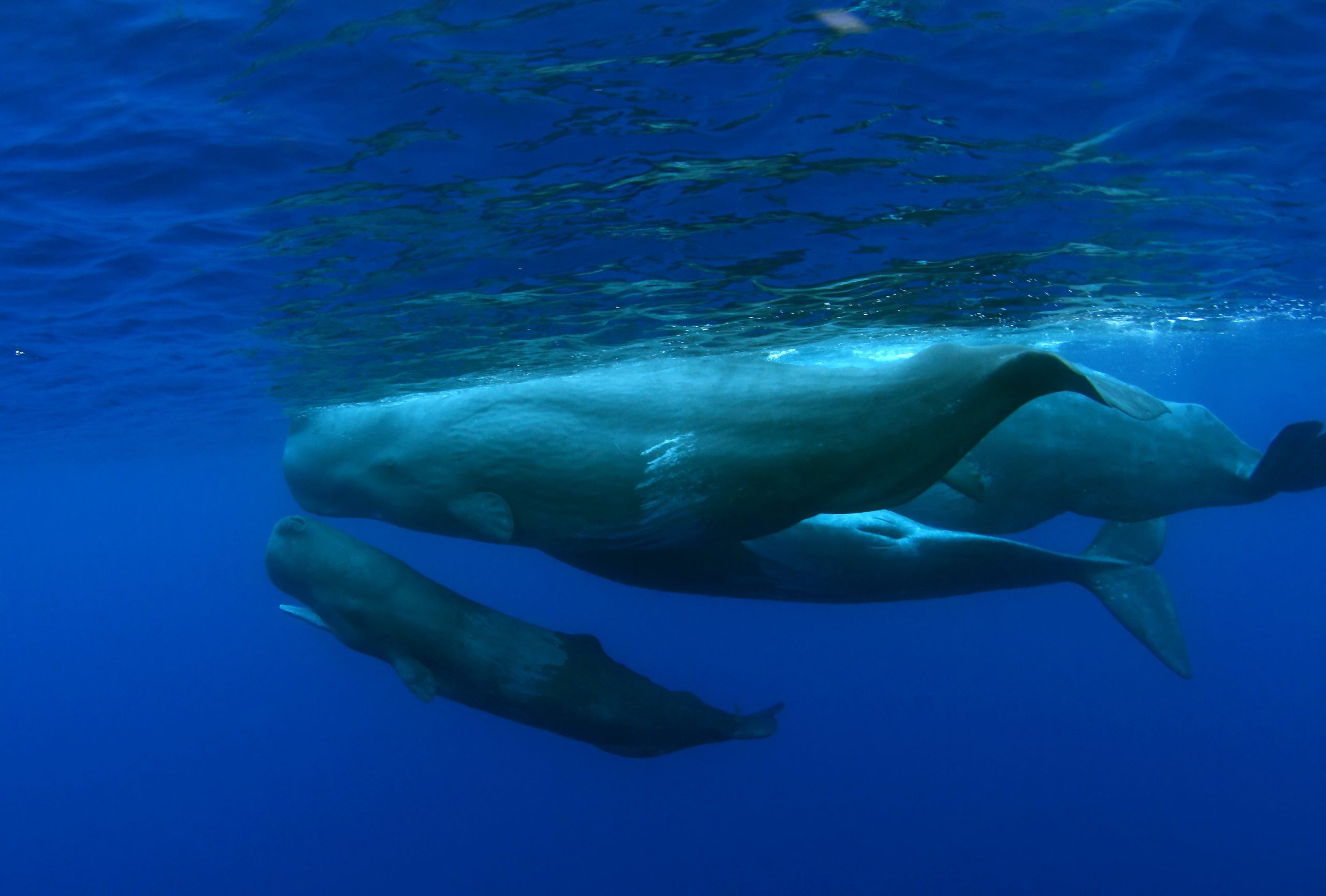
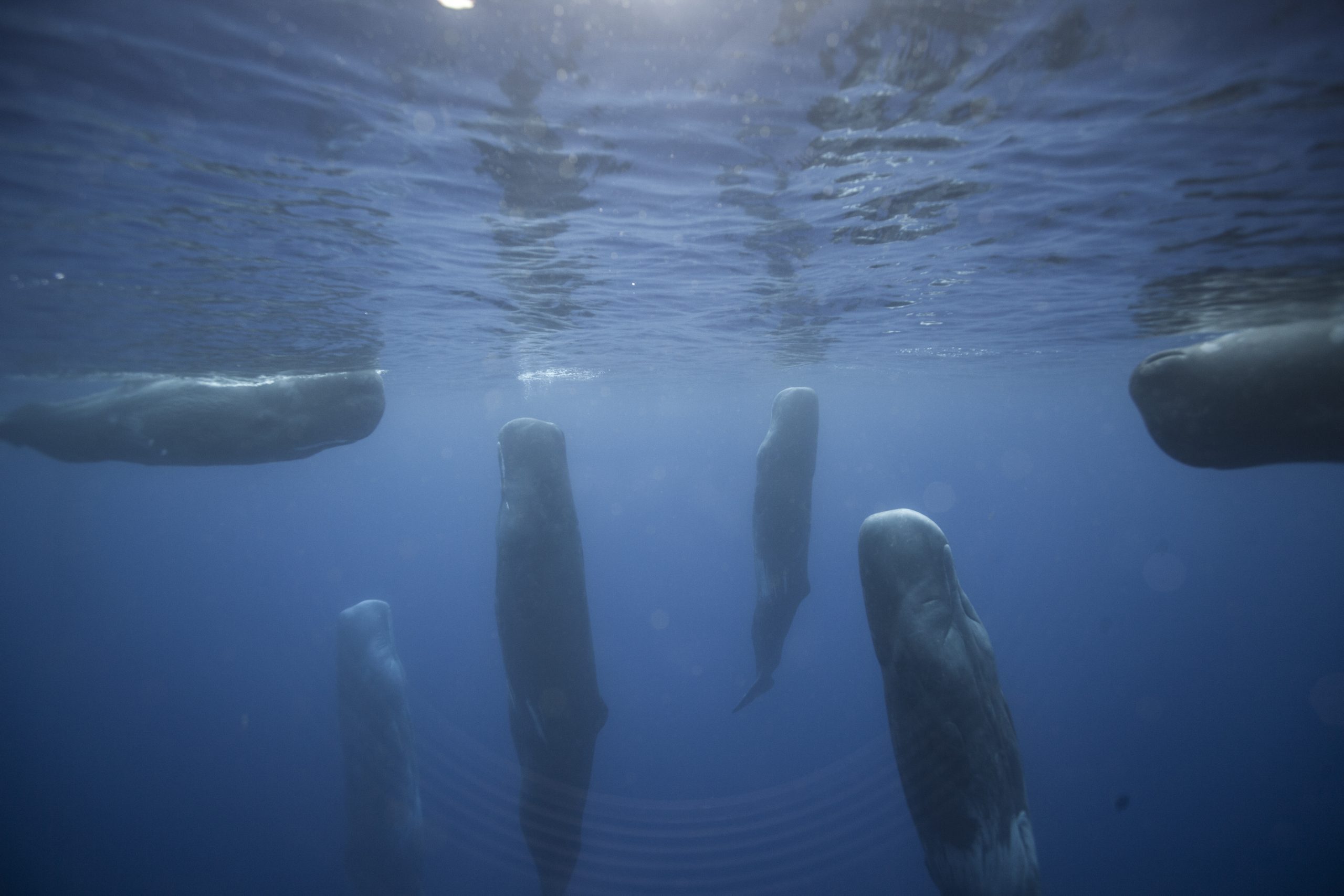
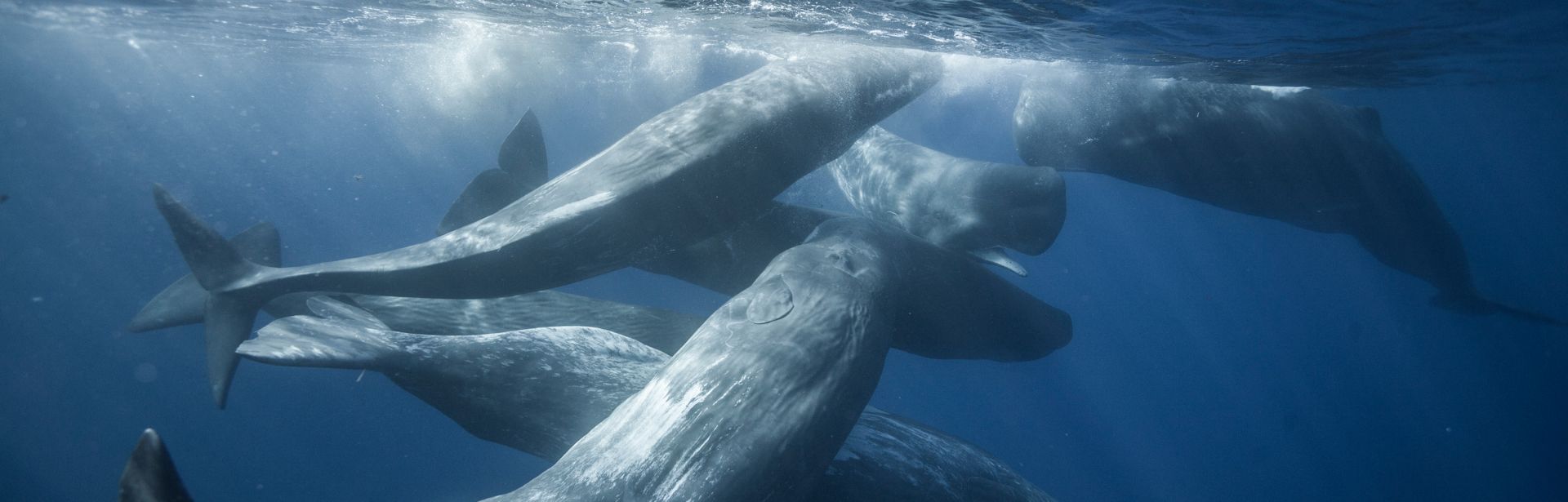
Sperm whales, the largest toothed cetaceans in the world, typically feed on large, deep-sea squid, ingesting up to 750 squids in one day!
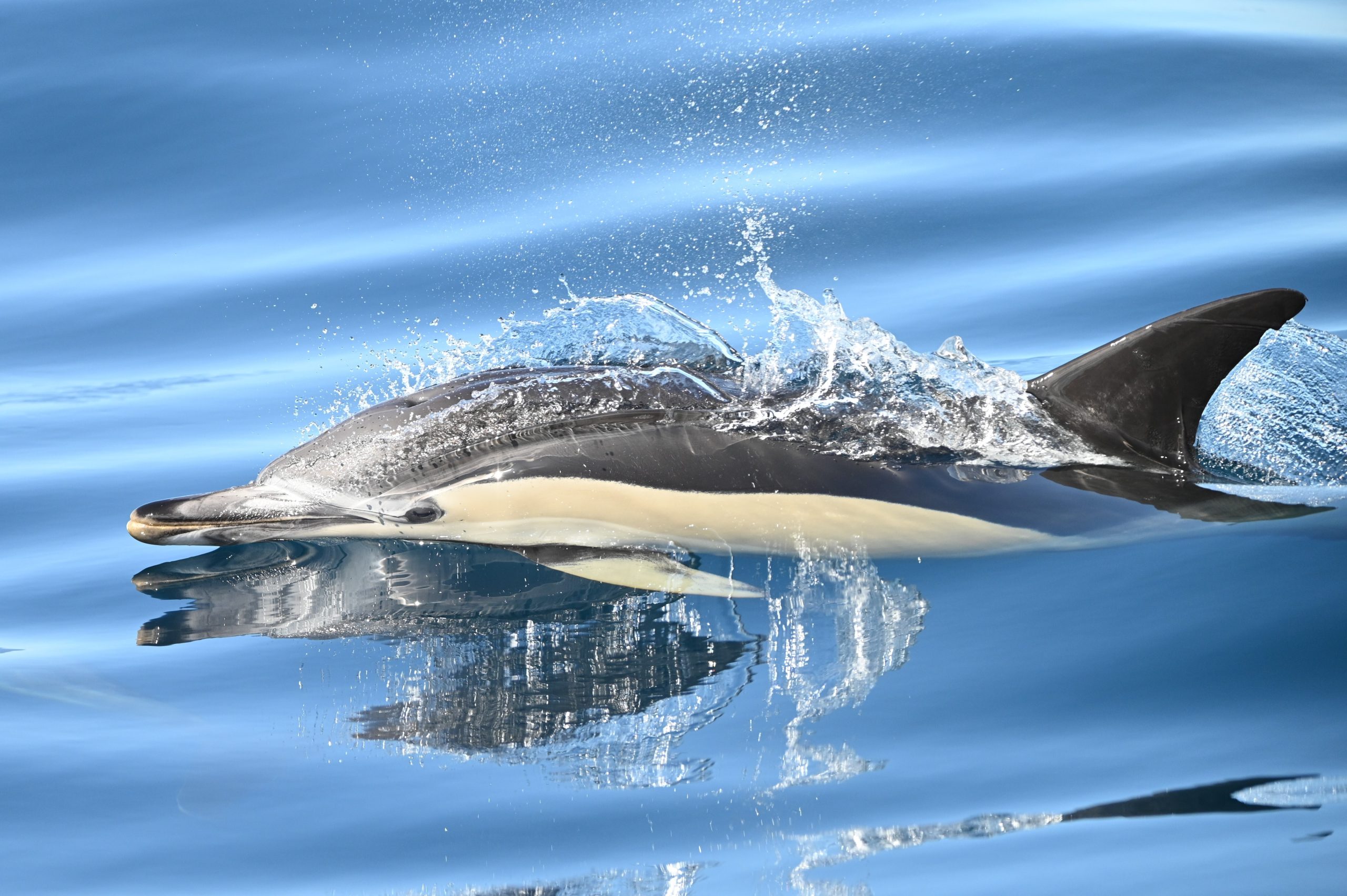
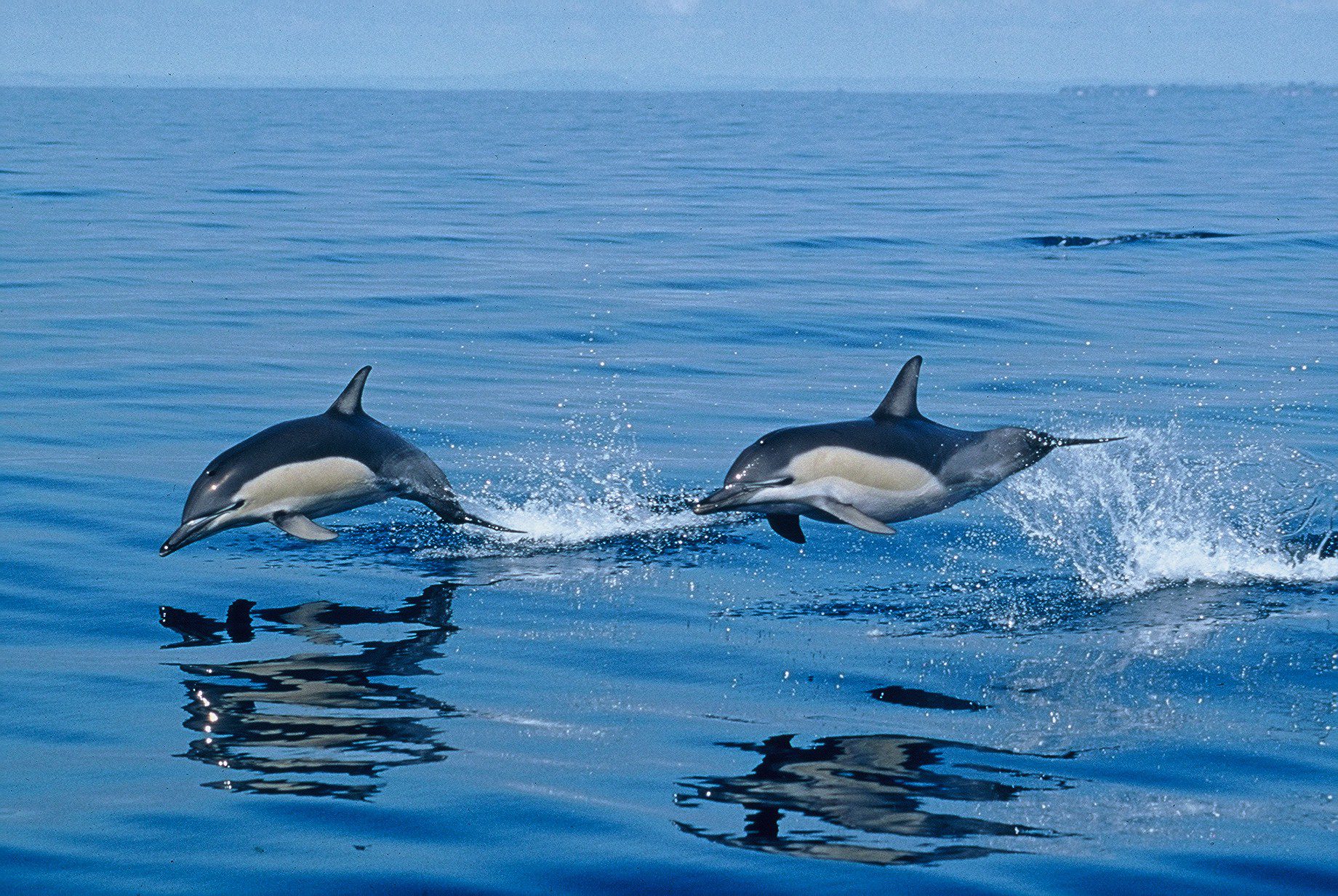
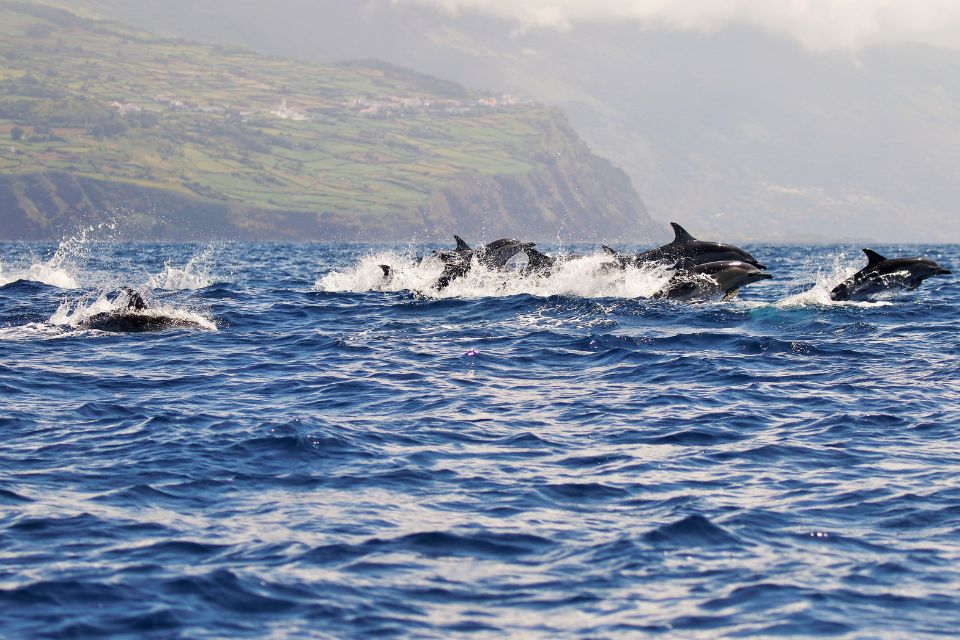
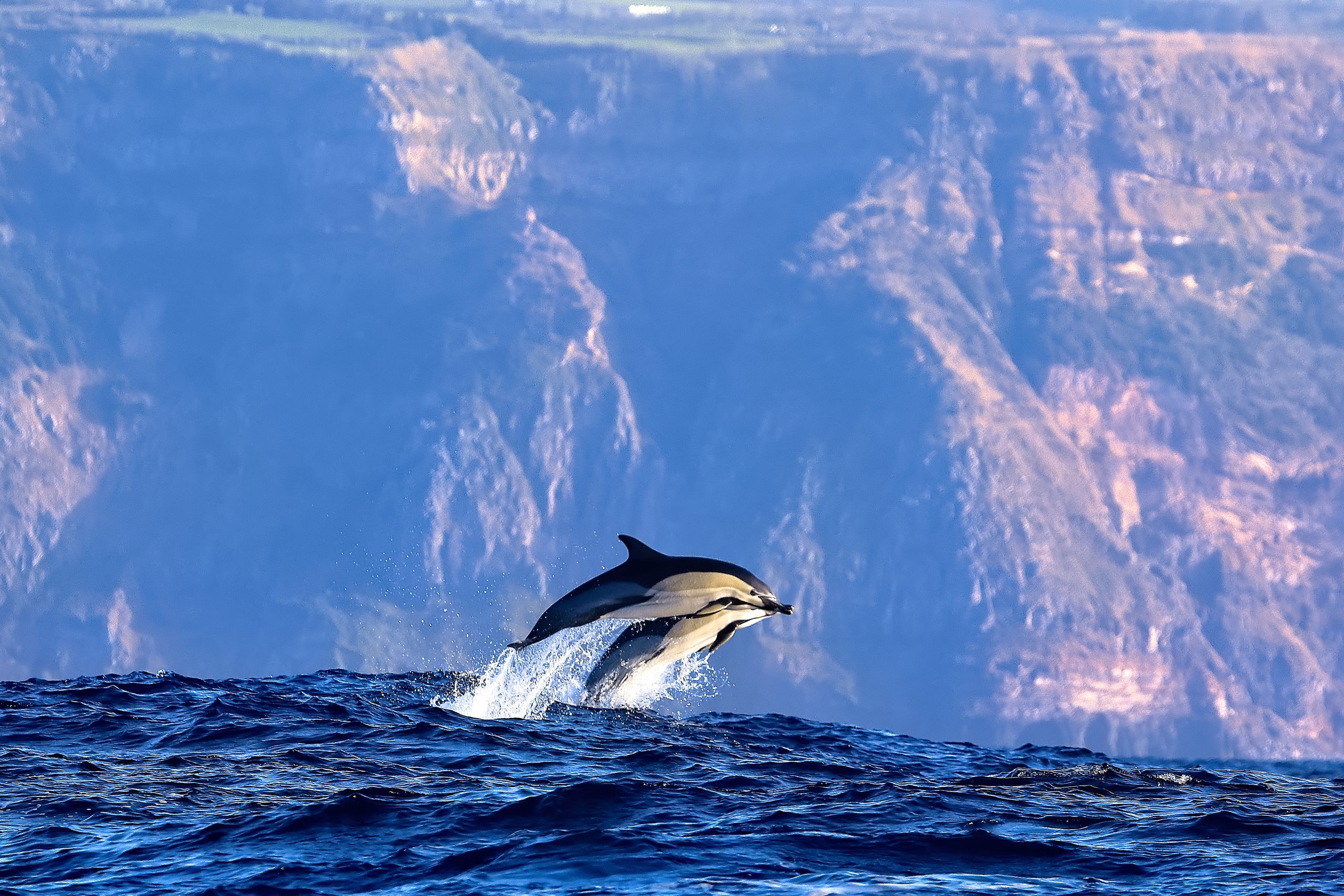
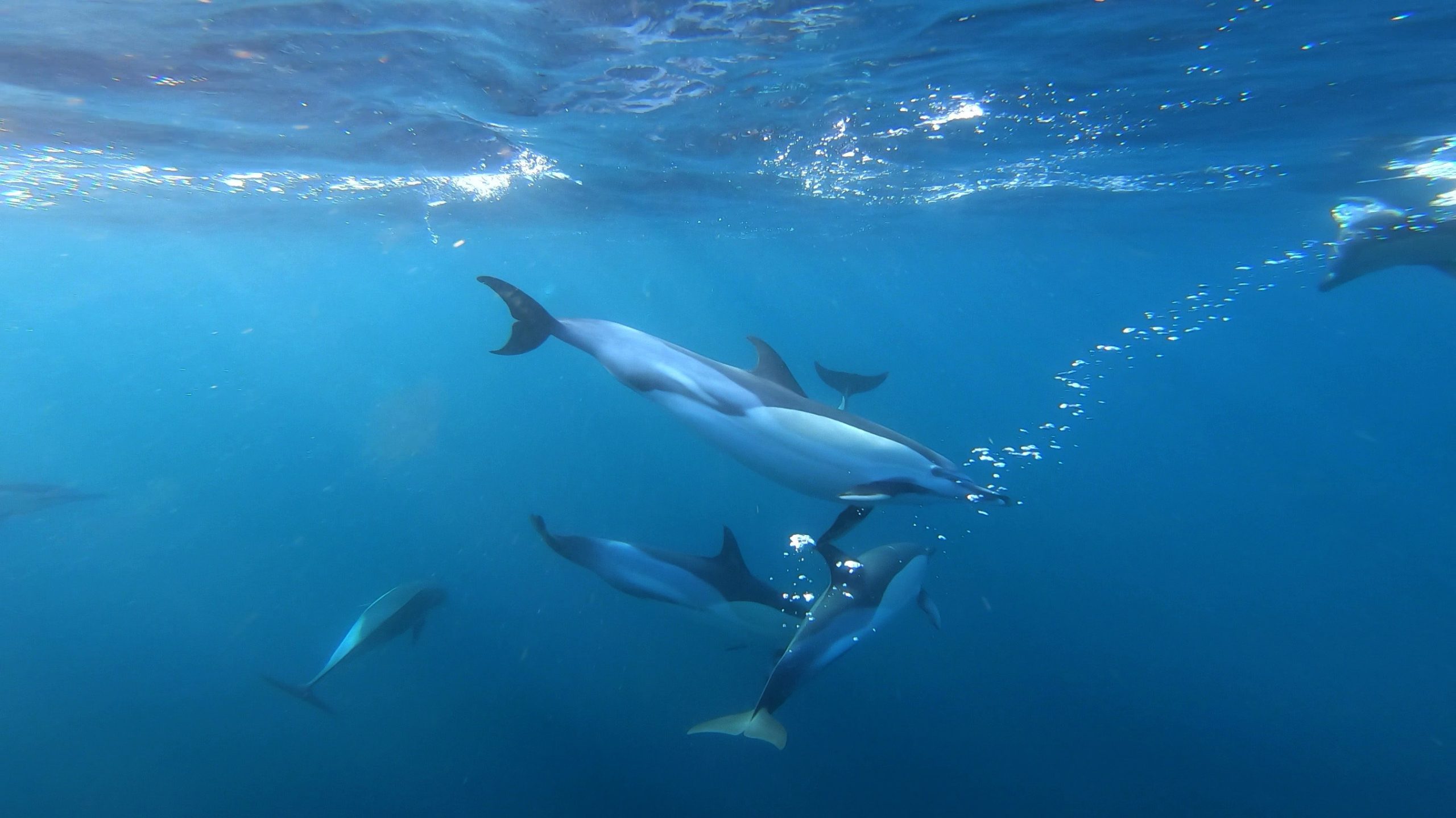
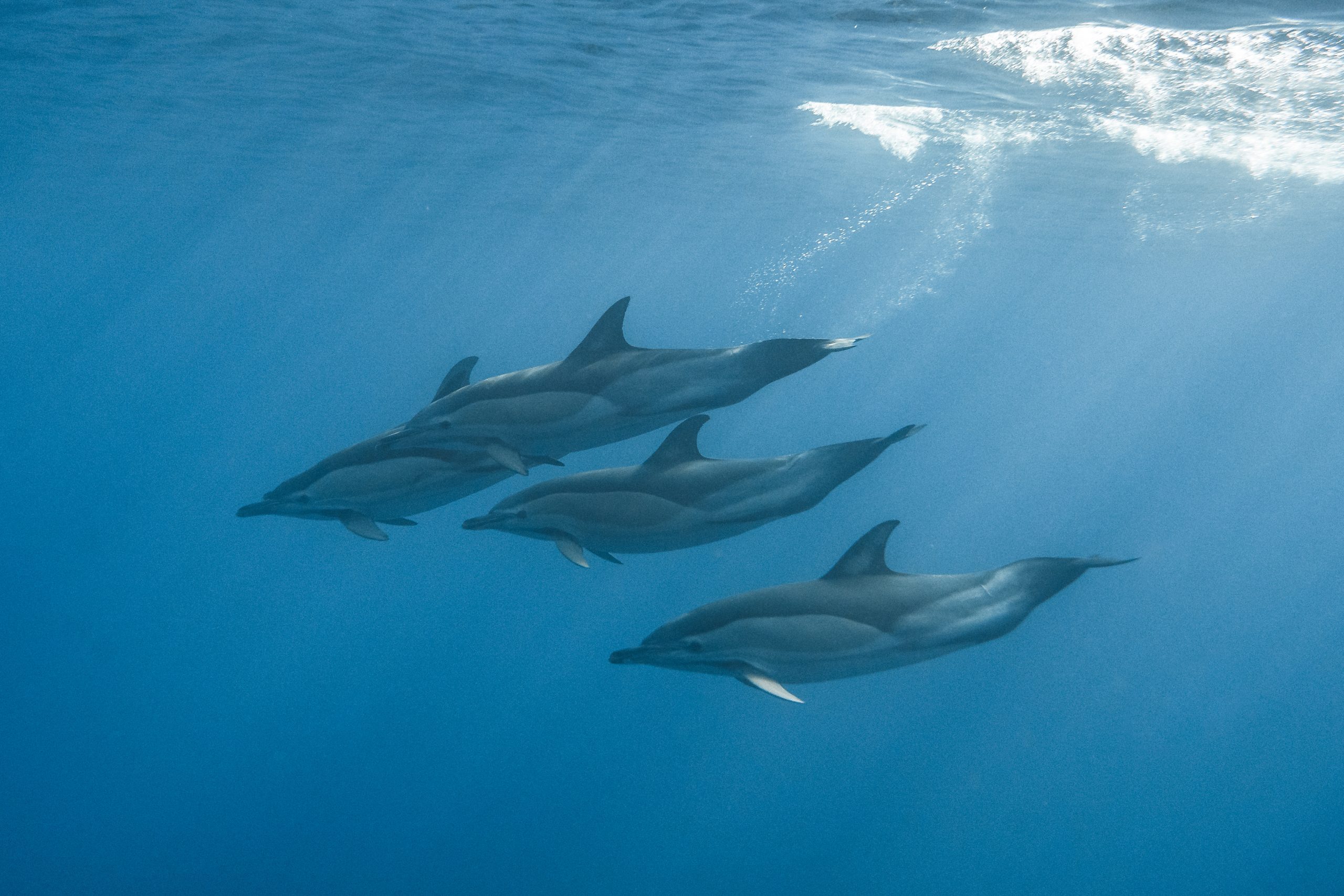
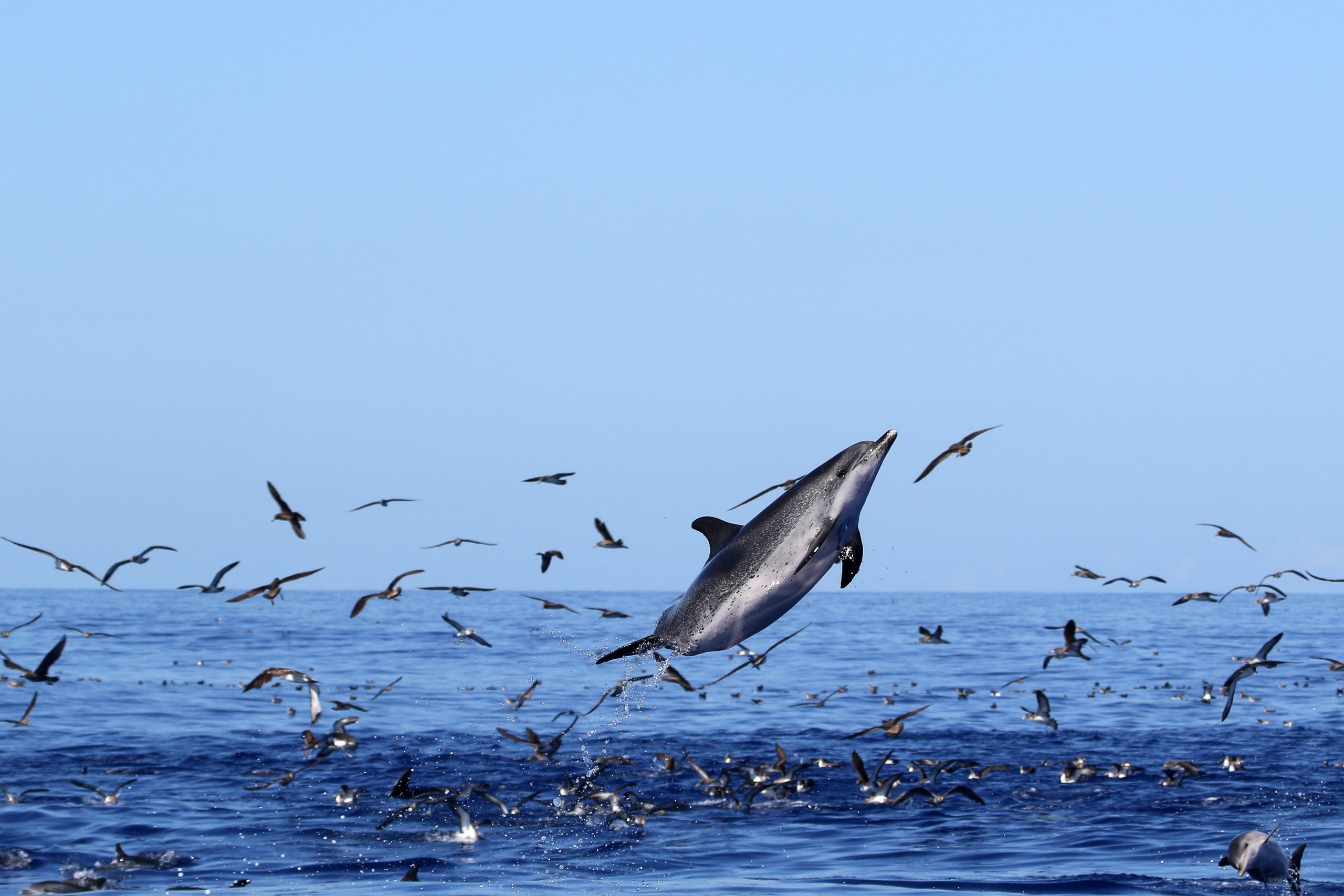
Small and medium-sized dolphin species, such as common dolphins or bottlenose dolphins, feed mainly on small schooling fish. However, the largest dolphin species in the world, the killer whale, is also the ocean’s apex predator. Orcas have been known to hunt even the largest of animals: blue whales!
Want to learn more about what dolphins eat, as well as about their hunting strategies? Check this article!
Whales in the Azores

With over 26 registered sightings of cetaceans across the Azorean archipelago, it is only natural that these islands are known as whale-watching hotspots. Given their volcanic origin and geographical location, the Azores are the perfect home for many species and, in the right season, the ideal place to visit for numerous others as well.
Local prey abundance supports the year-round presence of giant predators such as sperm whales and various dolphin species. Furthermore, being located in the middle of the Atlantic Ocean and with favorable bathymetric conditions, the archipelago also often attracts numerous other visitors, including the world’s largest baleen cetaceans, such as fin and blue whales.
Would you like to know the best times for whale watching?
Take a look at our whale watching calendar and plan your next adventure! Don’t miss the chance to spot these majestic creatures in Azorean waters. 🐋 🌊
Conclusion
In summary, the answer to the original question is a resounding YES! As a matter of fact, Futurismo invites you to take a chance and see for yourself how these marine-dwelling mammals feed on other animals. Because, in essence, that is what all cetaceans are: carnivores!

Bibliographical References
- Carwardine, M. (2019). Handbook of whales, dolphins, and porpoises. Bloomsbury Publishing.
- Geisler, J. H., & Theodor, J. M. (2009). Hippopotamus and whale phylogeny. Nature, 458(7236), E1-E4.
- Glaeser, S. P., Silva, L. M., Prieto, R., Silva, M. A., Franco, A., Kämpfer, P., … & Eisenberg, T. (2022). A preliminary comparison on faecal microbiomes of free-ranging large baleen (Balaenoptera musculus, B. physalus, B. borealis) and toothed (Physeter macrocephalus) whales. Microbial ecology, 83(1), 18-33.
- Sanders, J. G., Beichman, A. C., Roman, J., Scott, J. J., Emerson, D., McCarthy, J. J., & Girguis, P. R. (2015). Baleen whales host a unique gut microbiome that shares features with both carnivores and herbivores. Nature Communications, 6(1), 1-8.
- Marx, F. G., Lambert, O., & Uhen, M. D. (2016). Cetacean paleobiology. John Wiley & Sons.
- Spaulding, M., O’Leary, M. A., & Gatesy, J. (2009). Relationships of Cetacea (Artiodactyla) among mammals: increased taxon sampling alters interpretations of key fossils and character evolution. Plos one, 4(9), e7062.