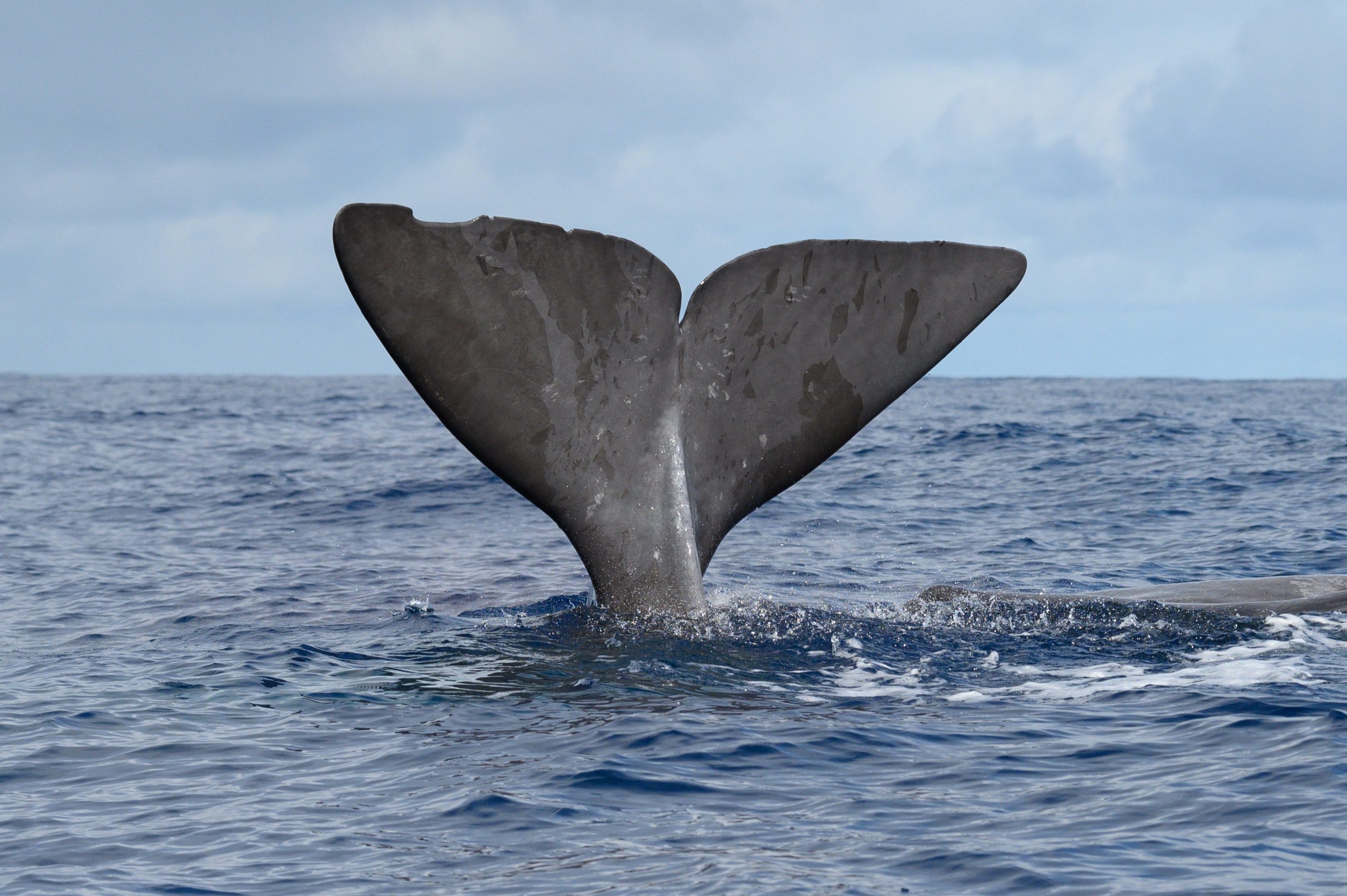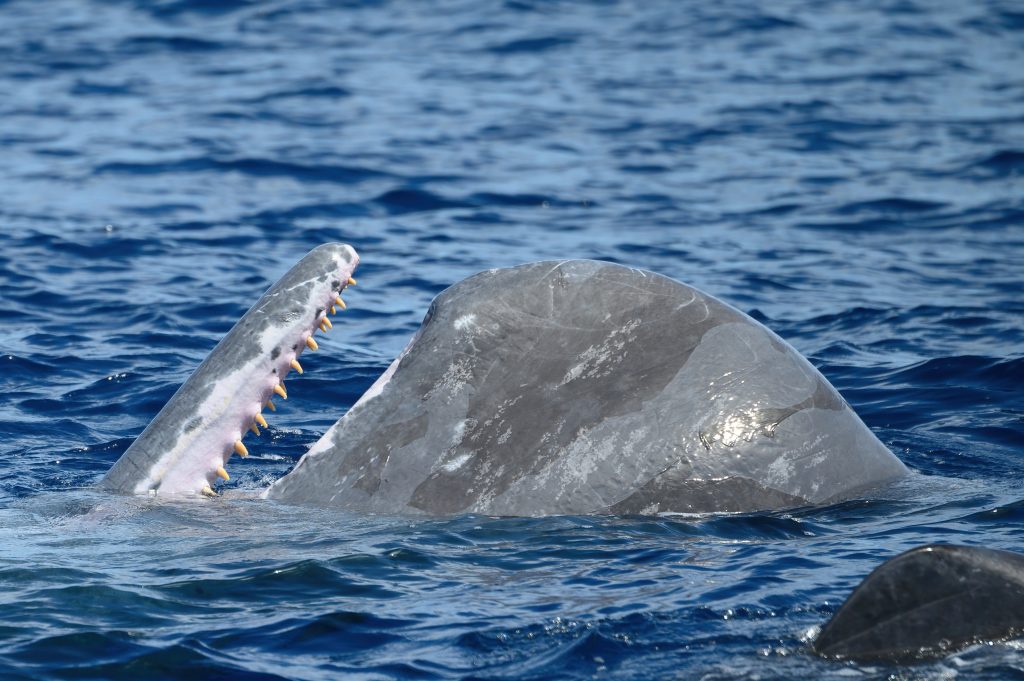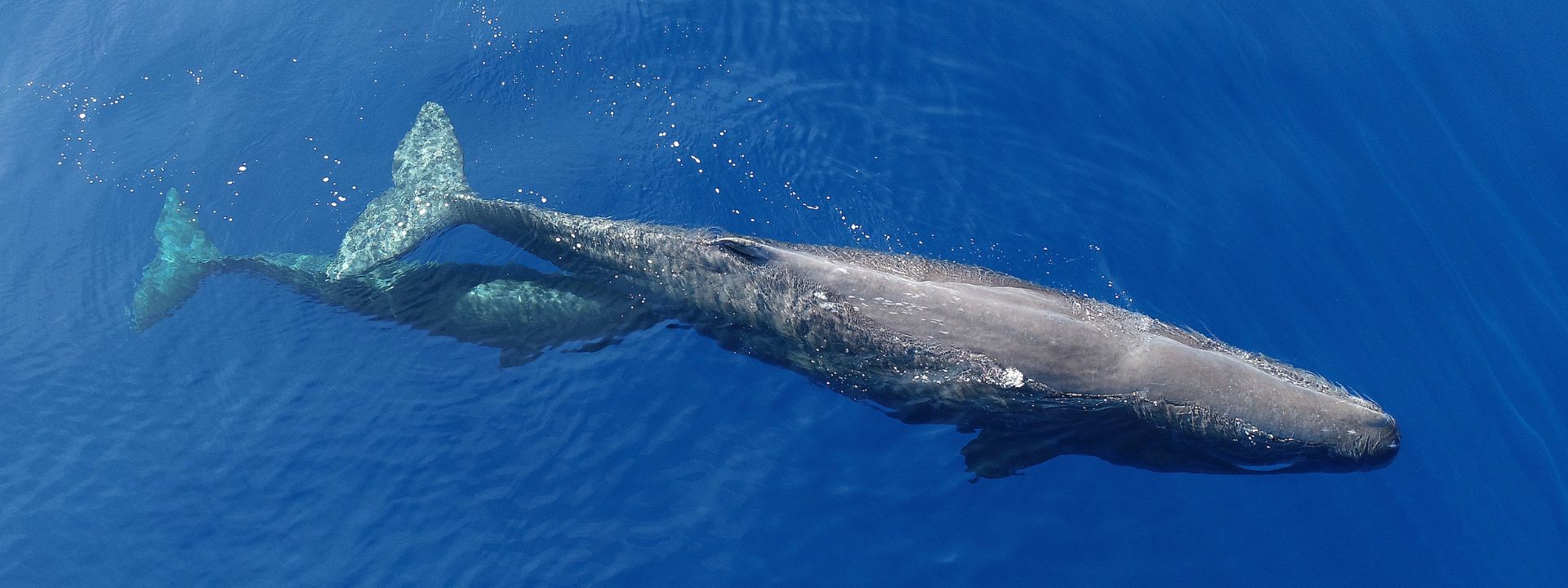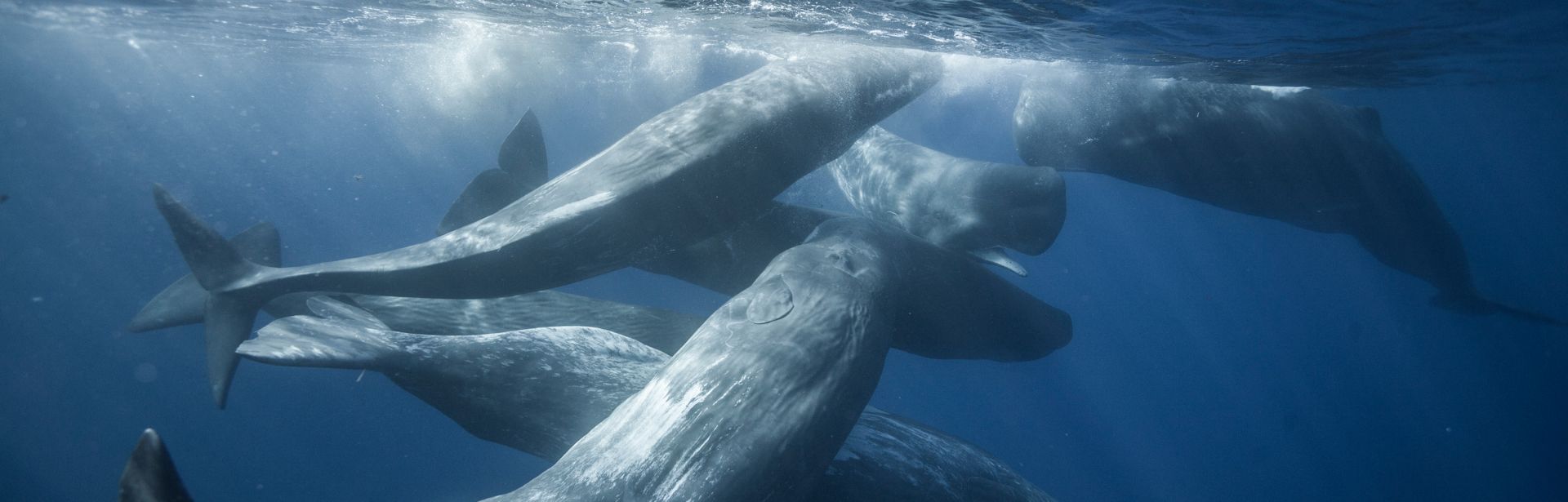



As cetaceans lack hair to cover their skin, they are more prone to cuts and abrasions than other mammals, leading to a high incidence of visible scars. In cetaceans, these scars remain white or unpigmented and can result from a wide variety of injuries, such as accidents, parasites, predators, or intraspecific fights (McCann, 1974). These scars are widespread in cetaceans of the Odontocete family (toothed whales), to which the sperm whale belongs.
Whether you’re a marine enthusiast, a biologist, or simply curious about these ocean giants, discover the stories etched into the skin of the sperm whale and gain a deeper understanding of their fascinating existence.

Scars from Intraspecific Fighting
In sperm whales, it is known that some scars, often arranged in parallel, come from intraspecific fighting between males. These scars are perceived as an indicator of male “quality” (MacLeod, 1998).
Sperm whale’s prey consists mainly of cephalopods. So they do not require the use of teeth, which allowed them to evolve as weapons for fighting. This results in greater importance placed on signaling quality. And helps avoid the risk of escalating aggressive encounters between unevenly matched individuals (MacLeod, 1998).
These scars start to appear around the time of maturity. They indicate age, with older and larger animals more heavily scarred (Kato, 1984). These individuals have so many scars that they overlap.

Scars from giant squid suckers

On the other hand, circular scars belong to fights with sperm whales’ main prey: the giant squid. This circular pattern belongs to the vigorous suckers that line the arms and tentacles of the squid.
In dealing with these enormous cephalopods, it is suspected that they use their head to pummel them, after grasping them with the jaws, which causes the tentacles to be impressed on the facial region of the sperm whale (McCann, 1974).
Scars’ Use in Photoidentification

It is unknown whether these scars affect the social structure of sperm whales, but for us, they are beneficial for our photo-identification work. Photoidentification enables us to determine the number of individuals in a group, study the life cycle of the animals, and identify the different groups surrounding the Azores.

Conclusion
When you see sperm whales resting on the surface of the water, they might seem gentle giants, but the scars in their bodies tell us a very different story; they are actually great fighters!
Definitely, scars make these animals much more identifiable, which also helps us identify them by photoID and complete our catalog of sperm whales in the archipelago!
Would you like to know the best times for whale watching?
Take a look at our whale watching calendar and plan your next adventure! Don’t miss the chance to spot these majestic creatures in Azorean waters. 🐋 🌊
References
- Kato, H. (1984). Observation of tooth scars on the head of male sperm whale, as an
indication of intra-sexual fighting. Sci. Rep. Whales Res. Inst. Tokyo 35: 39±46 - MacLeod, C. D. (1998). Intraspecific scarring in odontocete cetaceans: an indicator of male
‘quality’in aggressive social interactions?. Journal of Zoology, 244(1), 71-77. - McCann, Charles. (1974). Body scarring on Cetacea-odontocetes