
Logo Futurismo
Day Tours
Travel Agency
About Us
The Azores
Blog
Gift Shop
Futurismo Azores Adventures - Search
en
  • FR
  • DE
  • IT
  • PT
  • ES
Islands
  • São Miguel island Arrow Right
  • Pico island Arrow Right
Land
Jeep tours
Bike tours
Hiking tours
Van tours
Water
Whale Watching
Kayaking & SUP
Canyoning
Coasteering
Best Sellers
  • Whale Watching in Ponta Delgada
  • Whale Watching in Rabo de Peixe
  • Van Tour to Furnas
  • Jeep Tour Sete Cidades & Lagoa do Fogo
  • Kayak Rental in Sete Cidades (double)
  • Bike Rental in Sete Cidades
Land
Hiking tours
Van tours
Water
Whale Watching
Best Sellers
  • Whale Watching in Lajes do Pico
  • Pico Island Van Tour
  • Hiking Unesco Heritage
Contacts Why Futurismo
Our DMC
  • Contact Forms Arrow Right
Contact Forms
I'm a Traveler
I'm a Travel Agency
Your Journey Awaits

Welcome to Futurismo Azores Adventures Travel Agency, an avant-garde and innovative travel agency in the stunning Azorean archipelago

know more
Our Projects Why Futurismo
About Us
  • The Brand Arrow Right
  • Our Fundamentals Arrow Right
  • Our Projects Arrow Right
  • Our Commitments Arrow Right
  • Our Policies Arrow Right
  • Honors & Alliances Arrow Right
  • Collab with Us Arrow Right
  • Contacts
The Brand
Our Fleet
Who We Are
- Our Motto
- The Guardians
Our Story
Why Futurismo
Mission & Vision
Our Purpose
Our Values
Categories
All Projects
- People
- Planet
- Wildlife
United Nations Global Goals
Protecting Azores through projects

We generate awareness and protection through passionate and meaningful projects

see projects
Our Commitments
Ceased Swimming with Dolphins
Mindful & Transformational Travel
Responsible Whale Watching
Responsible Travel
Hiking Conduct Code
Animal Welfare Policy
Environmental Policy
Sustainability Policy
Honors & Alliances
Associativism
Media Highlights
Awards
Certifications
Noteworthy Achievements in Travel Excellence

Global acclaim spotlights Futurismo Azores Adventures’ sustainable excellence, boosting tourism and community impact!

know more
B2B Partnerships
Content Creators
Media
Whale Watching Scientific Investigations
Contact Forms
  • Islands Arrow Right
  • Whale Watching Arrow Right
  • Cetacean Species Arrow Right
Islands
Corvo
Faial
Flores
Graciosa
Pico
Santa Maria
São Miguel
São Jorge
Terceira
The hidden paradise

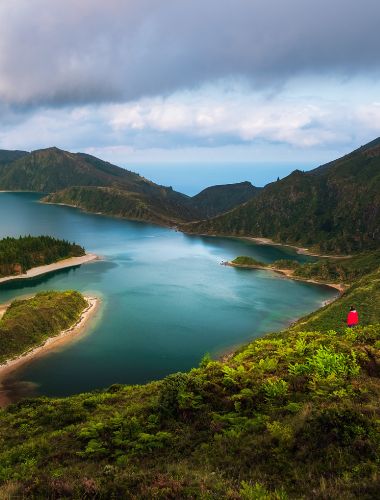
With its deep green valleys, dramatic volcanic lakes, breathtaking waterfalls, and hypnotizing ocean rich in biodiversity, the Azores have all you can dream of for a memorable holiday.

search tours
About
Best Island
Best Season
Complete Guide
History
Preservation
Sighting Statistics
What to Wear
Why Futurismo
Educational Projects
Our Fleet
Our Story
Responsible Operator
Scientific Publications
The Marine Biologists
The Lookouts
WCA Certification
Why Futurismo
15 Years of Scientific Publications: Unveiling Azores' Aquatic Enigmas

Immerse yourself in pioneering Azorean whales & dolphins research and scientific discoveries

read more
Dolphins
Atlantic Spotted Dolphin
Bottlenose Dolphin
Common Dolphin
False Killer Whale
Orca / Killer Whale
Risso's Dolphin
Striped Dolphin
Whales
Blainville's Beaked Whale
Blue Whale
Bryde's Whale
Cuvier's Beaked Whale
Fin Whale
Humpback Whale
Minke Whale
Nothern Bottlenose Whale
Pilot Whale
Sei Whale
Sowerby's Beaked Whale
Sperm Whale
Resident & Migratory Species

Comprehensive fact sheets on Azorean cetacean species

read more
Our Projects Why Futurismo
Blog
  • Categories Arrow Right
Categories
All Articles
- People
- Planet
- Travel
- Wildlife
Copywriters & Guest-bloggers
Photographers
Our Projects Why Futurismo
Shop
  • Books Arrow Right
Books
O Canto dos Açores
O Canto dos Açores​

The end of whaling, a family saga among black basalt, loss and reconciliation – a unique love story in the Azores.

read more
Our Projects Why Futurismo
  • Tours & Activities
  • Blog & News
  • Scientific Publications
  • Tours & Activities
  • Blog & News
  • Scientific Publications

Do Dolphins Eat Tuna? | Scientific Approach

Wildlife 09/01/2026
Wildlife

.

.

2 months ago
Lara Costa - Picture
Copywriter
Lara Costa
David Rodrigues - Picture
Photos
David Rodrigues

When it comes to who eats whom, there is always a bit of confusion. Dolphins inhabit our oceans, but they have plenty of company in this vast habitat, which can lead us to wonder what they eat. So, join us in this adventure and come learn a little more about these wonderful animals’ diets and whether the dolphins eat tuna or not.

Contents hide
1 How do dolphins eat?
1.1 Opportunistic feeders
1.2 Do they use their teeth?
1.3 Hunting techniques
2 So… Do dolphins eat tuna?
2.1 Benefits of preying on tunas
2.2 Costs of preying on tunas
3 Conclusion
4 References

How do dolphins eat?

Dolphins are Odontocetes, which means “toothed cetaceans”. They are known to be opportunistic feeders, meaning that they show some flexibility in their feeding behavior, allowing them to consume different prey items following are available at any given time (Klinowska, 1991).

You might also want to know more about what dolphins eat.

Opportunistic feeders

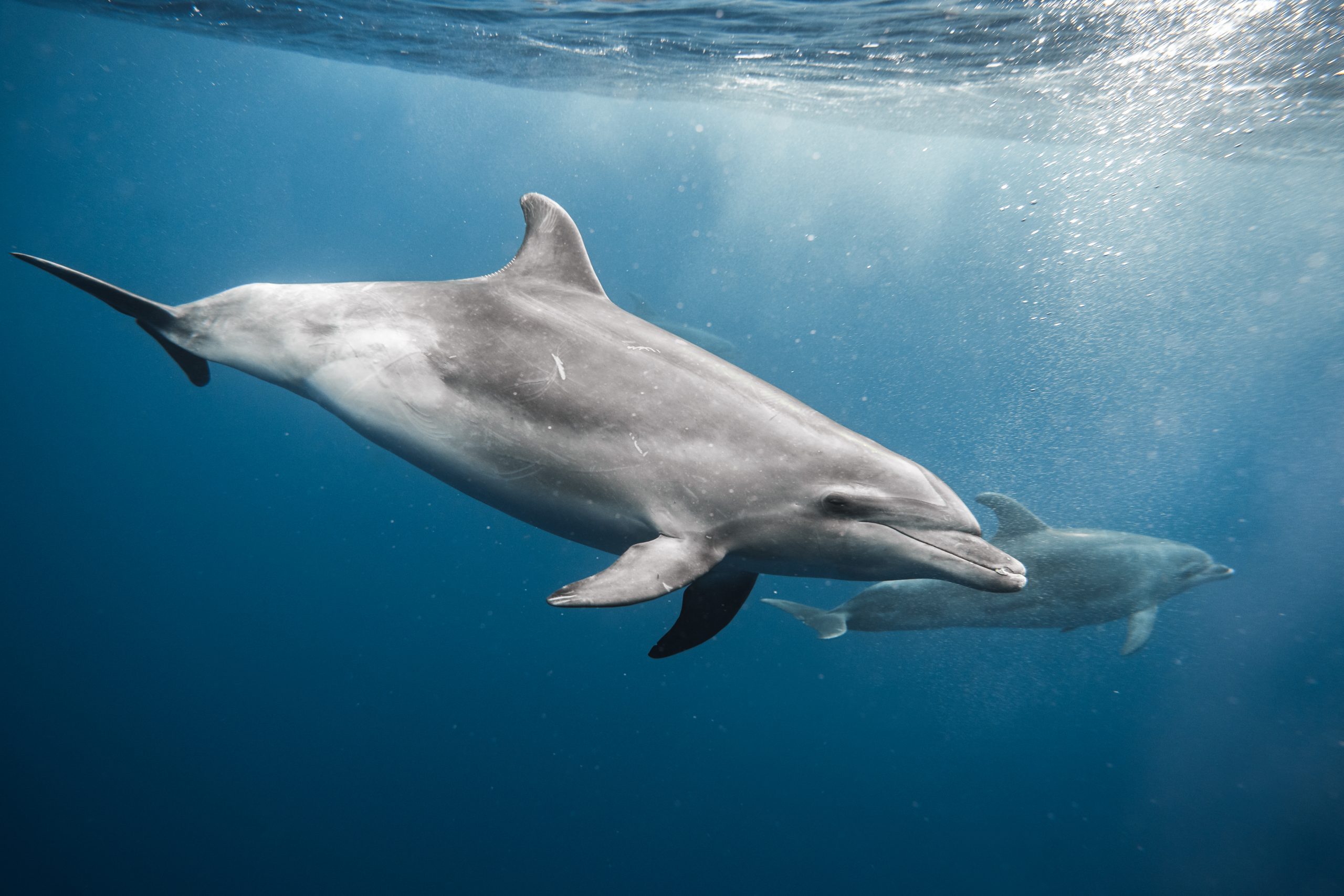
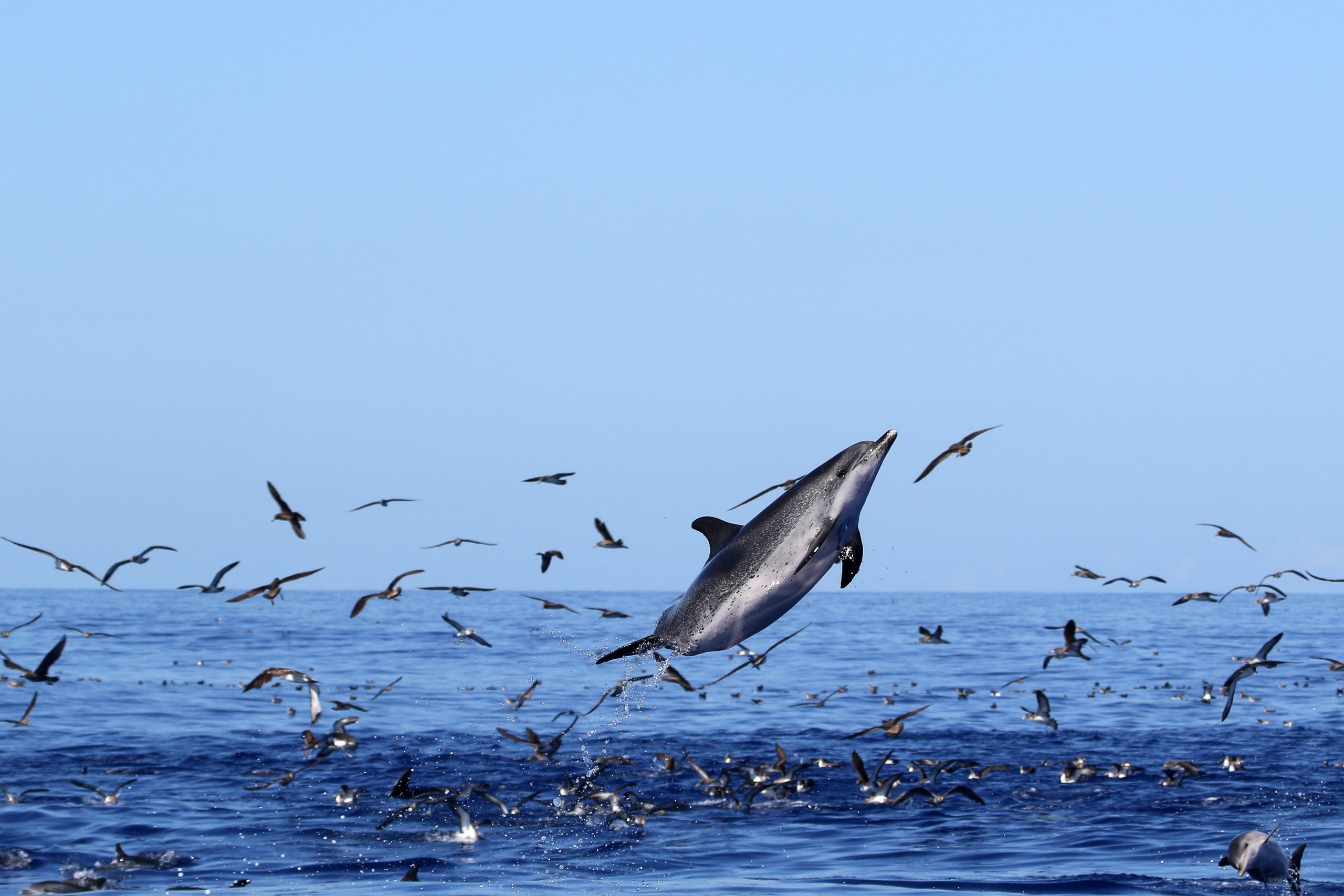
Javi Garcia | Spotted dolphins. Do Dolphins Eat Tuna
Javi Garcia | Spotted Dolphins in the Azores

This allows them to take advantage of whatever prey item is most easily accessible or abundant in their habitat. In dolphins, prey items can include fish, squid, and crustaceans.

This kind of flexibility in prey items gives them advantages, including the ability to adapt to changes in their habitat and maintain a diverse diet even when their preferred food sources are not always available. Therefore, they have evolved to eat fish and other prey items using highly developed sensory systems.

Do they use their teeth?

All dolphins have conical-shaped teeth; Risso’s dolphin has 14, while the Spinner dolphin can have 240. Although they do not chew their food if needed, they can break it into smaller pieces before swallowing it. To start, they usually used them to kill the fish, biting them in the head.

Hunting techniques

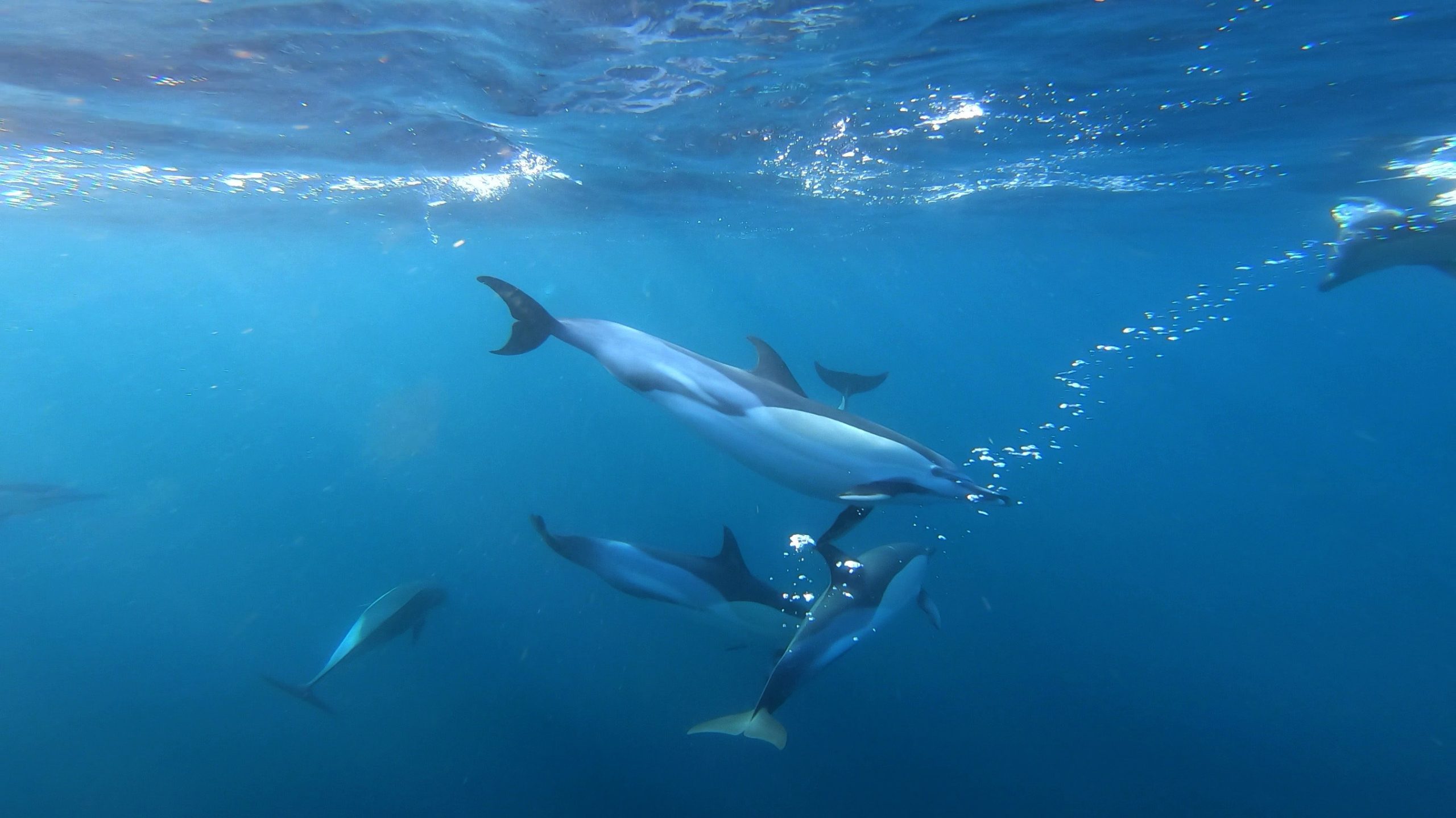
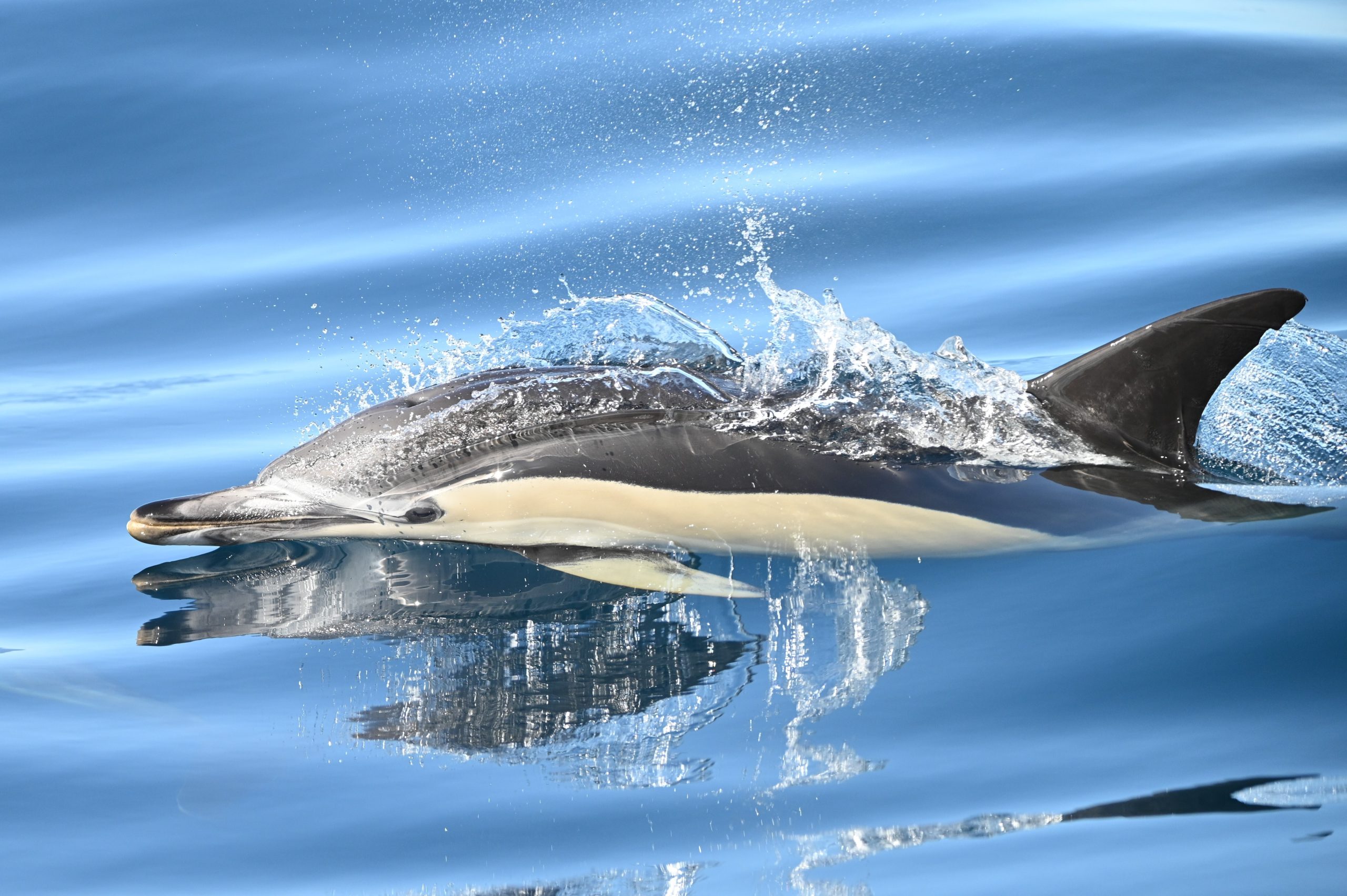
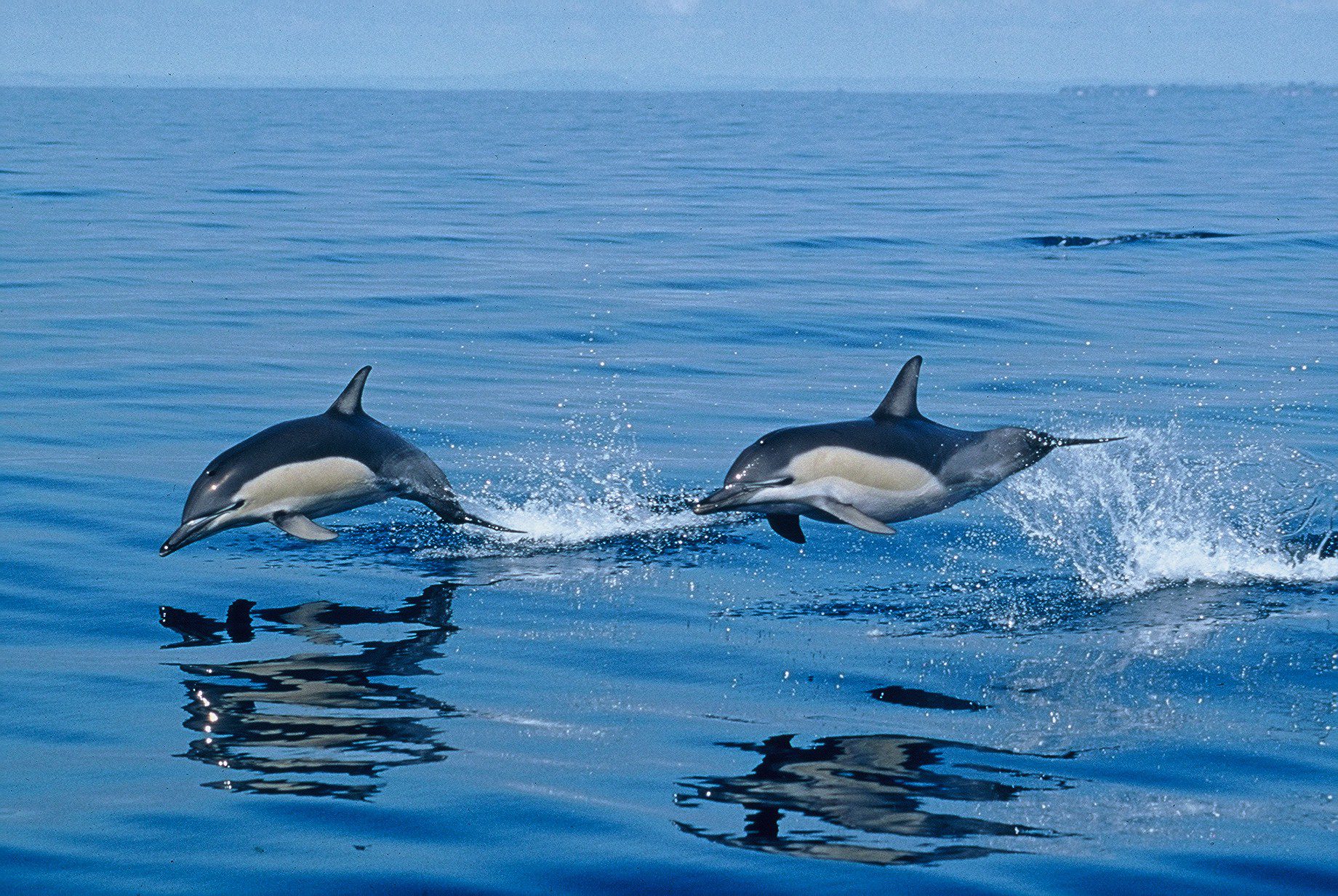
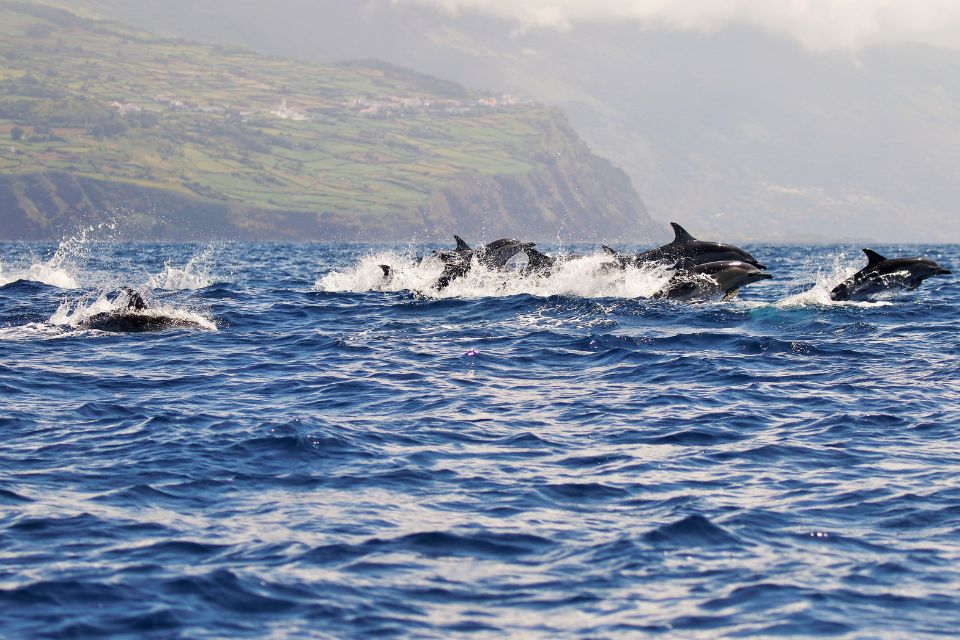
David Rodrigues | Common dolphins hunting on the South Coast of São Miguel island
David Rodrigues | Common dolphins hunting on the South Coast of São Miguel Island

Dolphins are indeed a very intelligent species, which is reflected in their hunting techniques. They have developed different techniques to hunt their prey, which include:

  • Herding fish into tight groups, which can be done through mud ringing (where the dolphins create a ring-shaped mud plume forming a turbidity barrier around the prey).
  • Whacking the fish (stunning the fish through a blow with the tail, sometimes allowing them to catch the fish out of the water).
  • Chasing down individual fish, strand feeding (the dolphins create waves to push fish to the edge of the mud and then move to the shore to catch them).
  • They wave, wash, and even use their echolocation to stun or disorient prey.

So… Do dolphins eat tuna?

YES! Some dolphins are known to prey on tuna, including common dolphins (Silva, 1999; Brophy et al., 2009), false killer whales (Ortega-Ortiz et al., 2014), bottlenose dolphins (Spitz et al., 2006), killer whales (Guinet et al., 2007), and spotted dolphins.

Benefits of preying on tunas 

David Rodrigues | Atlantic Spotted Dolphin photo Azores. Do Dolphins Eat Tuna
David Rodrigues | Atlantic Spotted Dolphin photo Azores

Preying on tunas can provide some benefits to the dolphins. This includes: 

  1. High-nutrition food source: Tuna is a highly nutritious food, rich in protein and essential nutrients such as omega-3 fatty acids and vitamin D. These nutrients are essential for maintaining healthy brain function (Simmonds & Isaac, 2007).
  2. Ecological importance: Dolphins are top predators, which gives them an important role in maintaining the balance of the food chain. When they prey on tuna, they help regulate the population and prevent tuna from overgrazing on their prey (Estes & Duggins, 1995).
  3. Energy-rich prey: Tuna is a major source of energy for dolphins, allowing them to maintain their energy levels.
  4. Adaptive behavior: the activity of preying on tunas can promote an adaptive behavior in dolphins, as a result of the difficult hunt they require. This will help improve their overall hunting skills and their chances of survival (Reiss et al., 2018).
  5. Cooperative hunting opportunities: Due to the tuna’s size and speed, hunting them requires cooperation among dolphins, increasing their chances of success and reducing their risk of injury (Orbach et al., 2017).

Costs of preying on tunas

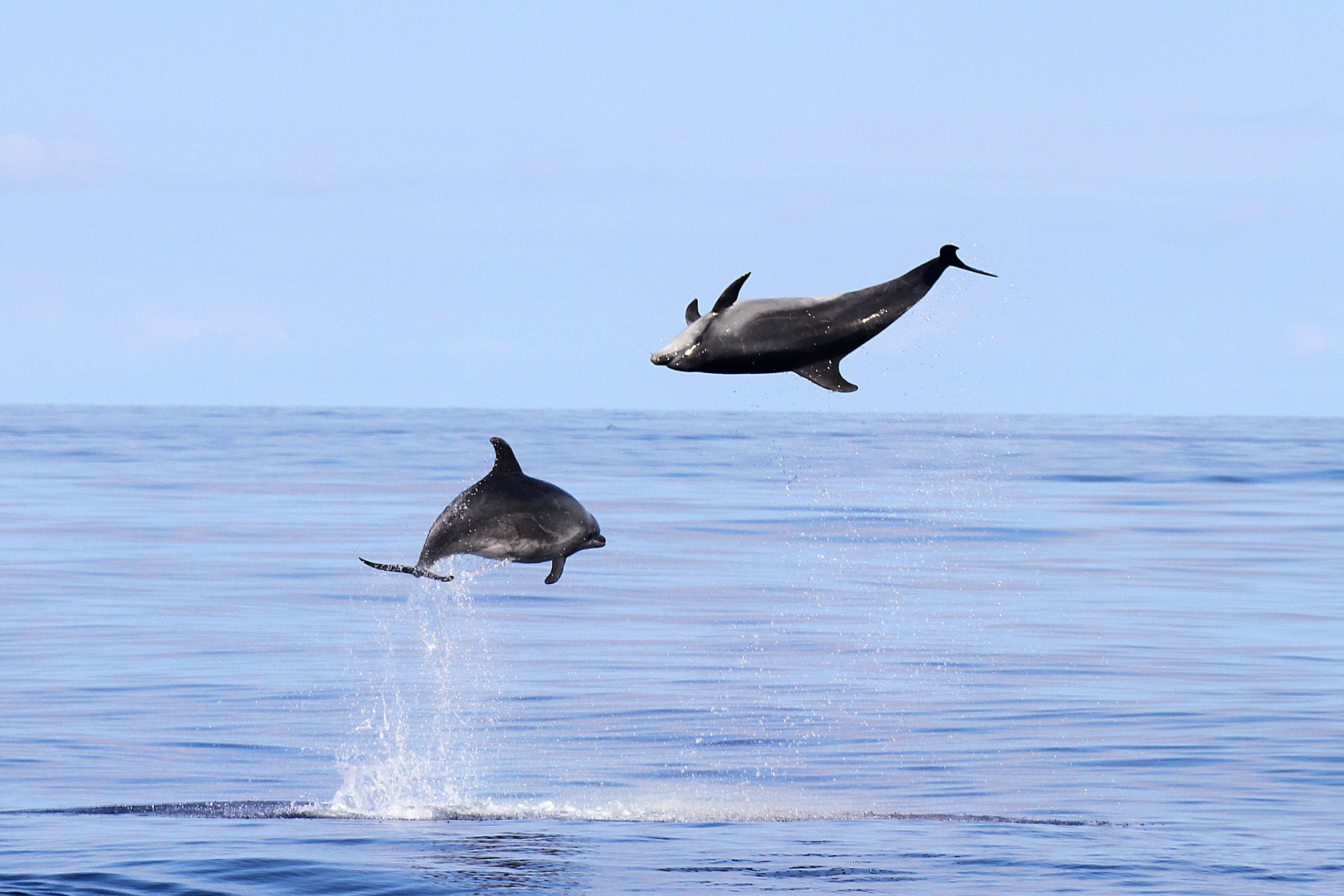
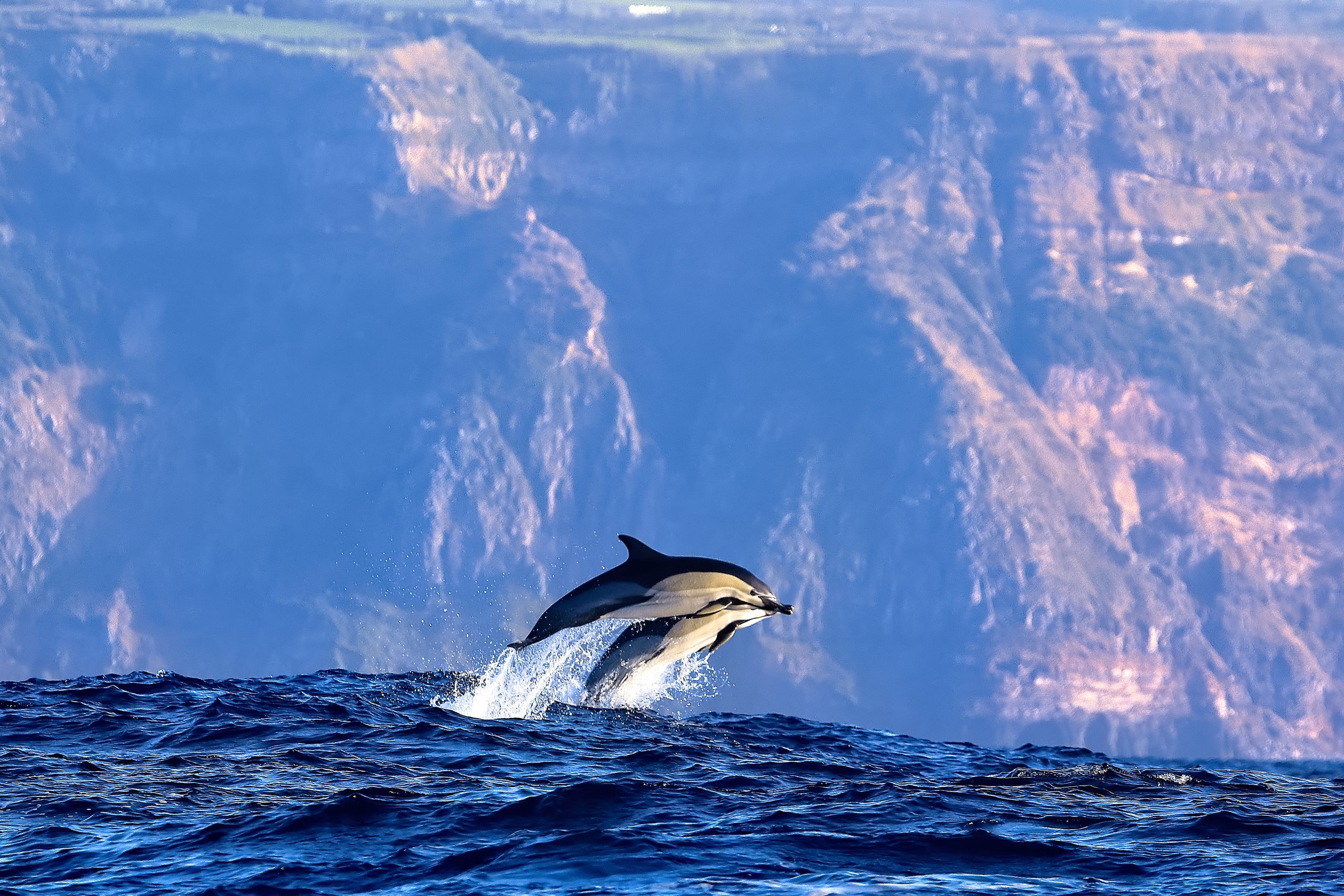
David Rodrigues | Whale and Dolphin Watching on one of our zodiac boats' perspective
David Rodrigues | Whale and Dolphin Watching from one of our zodiac boats’ perspective

Tunas can contain high levels of mercury and other pollutants, which can be harmful to dolphins’ health. It’s also important to note that dolphins are at risk of entanglement and accidental capture in fishing gear that is used to catch tuna and other fish.

As a result, this can lead to injury or death for dolphins. Therefore, it is essential to adopt sustainable fishing practices and reduce the bycatch of non-target species, including dolphins.

✨ Related articles: How do Dolphins Sleep? | Whales & Dolphins Communication | How is a Group of Dolphins called? | Top-3 Facts & Curiosities about Dolphins | What Dolphins Eat?

Conclusion

Although dolphins can prey on tuna, this species is not their primary food source. However, their diverse feeding habits reveal just how intelligent and adaptable dolphins are.

In addition, dolphins remain incredibly special and fascinating to watch in the wild. For this reason, be sure to follow us online for more news and educational articles about whales and dolphins.

Furthermore, if you would like to learn more about whales and dolphins in their natural habitat, the Futurismo team would be delighted to welcome you on one of our Whale Watching tours in the Azores. Ultimately, book a trip to meet these wonderful creatures, and we will help you create lasting memories.

References

  • Brophy, J. T., Murphy, S., & Rogan, E. (2009). The diet and feeding ecology of the short-beaked common dolphin (Delphinus delphis) in the northeast Atlantic. IWC Scientific Committee Document SC/61/SM, 14.
  • Estes, J. A., & Duggins, D. O. (1995). Sea otters and kelp forests in Alaska: generality and variation in a community ecological paradigm. Ecological Monographs, 65(1), 75-100.
  • Guinet, C., Domenici, P., de Stephanis, R., Barrett-Lennard, L., Ford, J. K. B., & Verborgh, P. (2007). Killer whale predation on bluefin tuna: exploring the hypothesis of the endurance-exhaustion technique. Marine Ecology Progress Series, 347, 111 – 119.
  • Spitz, J., Rousseau, Y., & Ridoux, V. (2006). Diet overlap between harbour porpoise and bottlenose dolphin: an argument in favour of interference competition for food?. Estuarine, Coastal and Shelf Science, 70(1-2), 259-270.
  • Klinowska, M. (1991). Dolphins, porpoises and whales of the world: the IUCN Red Data Book. IUCN, Cambridge, and Gland. 
  • Orbach, D. N., Brennan, P. L., & Connor, R. C. (2017). Toothed whale communication. Current Opinion in Psychology, 16, 41-47.
  • Ortega-Ortiz, C. D., Elorriaga-Verplancken, F. R., Olivos-Ortiz, A., Liñán-Cabello, M. A., & Vargas-Bravo, M. H. (2014). Insights into the Feeding Habitats of False Killer Whales (Pseudorca crassidens) in the Mexican Central Pacific. Aquatic Mammals, 40(4).
  • Reiss, D., Marine, L., & Furey, N. (2018). Mirror self-recognition in the bottlenose dolphin: a case of cognitive convergence. Proceedings of the National Academy of Sciences, 115(45), 11453-11455.
  • Silva, M.A. (1999). Diet of common dolphins, Delphinus delphis, off the Portuguese continental coast. Journal of the Marine Biological Association of the UK, 79(3), 531–540. doi:10.1017/s0025315498000654
  • Simmonds, M. P., & Isaac, S. J. (2007). The impacts of climate change on marine mammals: early signs of significant problems. Oryx, 41(1), 19-26.
Quick info

Did you know

Related Articles

Find out more interesting articles

Pico dos Bodes: A 360º View Around the Eastern Part of São Miguel

São Miguel Island in the Azores’ archipelago boasts stunning natural landscapes and volcanic terrain. People call it the Green Island, and from the viewpoint of
Read Now

Areal de Santa Bárbara: São Miguel’s Surf Paradise

Areal de Santa Bárbara, also known as Santa Bárbara Beach, is located in Bairro do Bandejo, Ribeira Seca, in the municipality of Ribeira Grande, on

Read Now

Monte Palace: The Story of the Abandoned Hotel in São Miguel

A ridiculously gigantic building is falling apart on the rim of a dormant volcano, surrounded by dense vegetation. When visiting Miradouro da Vista do Rei

Read Now

Lagoa das Patas: Terceira’s Mirror Water

Lagoa das Patas, or Lagoa da Falca, rests in the heart of the Lagoa das Patas Forest Reserve. This forest reserve is located in the

Read Now

Rabo de Peixe: The Azorean Fishing Village Behind the Netflix Success

On the northern shore of São Miguel Island lies Rabo de Peixe, the largest fishing village in the Azores. Over many generations, the village has

Read Now

Lagoa das Furnas: The Crown Jewel of São Miguel

Lagoa das Furnas, a stunning volcanic crater lake in the heart of Furnas parish, is one of São Miguel Island’s most iconic natural wonders. Famous

Read Now

Related Articles

What Do Whales Eat? Diet, Facts & Surprising Food Habits

What Do Whales Eat? Diet, Facts & Surprising Food Habits

Are Whales Mammals? Discover the Truth About the Ocean’s Largest Mammals

Are Whales Mammals? Discover the Truth About the Ocean’s Largest Mammals

How Long Do Whales Live? Ocean’s Longest-Living Giants

How Long Do Whales Live? Ocean’s Longest-Living Giants

Can You Hear Whales Above Water? | Scientific Approach

Can You Hear Whales Above Water? | Scientific Approach

Is the Fin Whale Endangered? | Scientific Approach

Is the Fin Whale Endangered? | Scientific Approach

How do Whales Sleep? | Scientific Explanation

How do Whales Sleep? | Scientific Explanation

Are Whales Carnivores? | Scientific Approach

Are Whales Carnivores? | Scientific Approach

Portuguese Man-o’-War Jellyfish (Physalia physalis) | Everything You Need to Know

Portuguese Man-o’-War Jellyfish (Physalia physalis) | Everything You Need to Know

Sperm Whale Diet | Scientific Approach

Sperm Whale Diet | Scientific Approach

How Fast Can Whales Swim? | Scientific Approach

How Fast Can Whales Swim? | Scientific Approach

How Do Dolphins Mate? | Scientific Approach

How Do Dolphins Mate? | Scientific Approach

How Do Whales & Dolphins Communicate? | Scientific Approach

How Do Whales & Dolphins Communicate? | Scientific Approach

Are Pink Dolphins real? | Scientific Approach

Are Pink Dolphins real? | Scientific Approach

How Do Dolphins Sleep? | Scientific Approach

How Do Dolphins Sleep? | Scientific Approach

What Do Dolphins Eat | Scientific Approach

What Do Dolphins Eat | Scientific Approach

Do whales & dolphins lay eggs? | Scientific Approach

Do whales & dolphins lay eggs? | Scientific Approach

How Long Can Whales Hold Their Breath? Deep Diving Facts Explained

How Long Can Whales Hold Their Breath? Deep Diving Facts Explained

Do Dolphins Smell? | Scientific Fact Check

Do Dolphins Smell? | Scientific Fact Check

Sperm Whale’s Scars | Scientific Explanation

Sperm Whale’s Scars | Scientific Explanation

What is a Group of Dolphins Called? | Scientific Approach

What is a Group of Dolphins Called? | Scientific Approach

Are Dolphins Endangered? | Scientific Approach

Are Dolphins Endangered? | Scientific Approach

Dolphins: Top3 Facts & Curiosities | Scientific Approach

Dolphins: Top3 Facts & Curiosities | Scientific Approach

What Does Whale Milk Taste Like? | Scientific Explanation

What Does Whale Milk Taste Like? | Scientific Explanation

Does Whale Sperm Make the Ocean Salty? | Scientific Approach

Does Whale Sperm Make the Ocean Salty? | Scientific Approach

How Long Can a Blue Whale Hold its Breath?

How Long Can a Blue Whale Hold its Breath?

What Does a Whale Penis Look Like?

What Does a Whale Penis Look Like?

Whale Watching in Azores: When is the best time?

Whale Watching in Azores: When is the best time?


Impactful & unforgetable experiences

Browse all the outstanding experiences you can live in the Azores

Left Right
Whale Watching

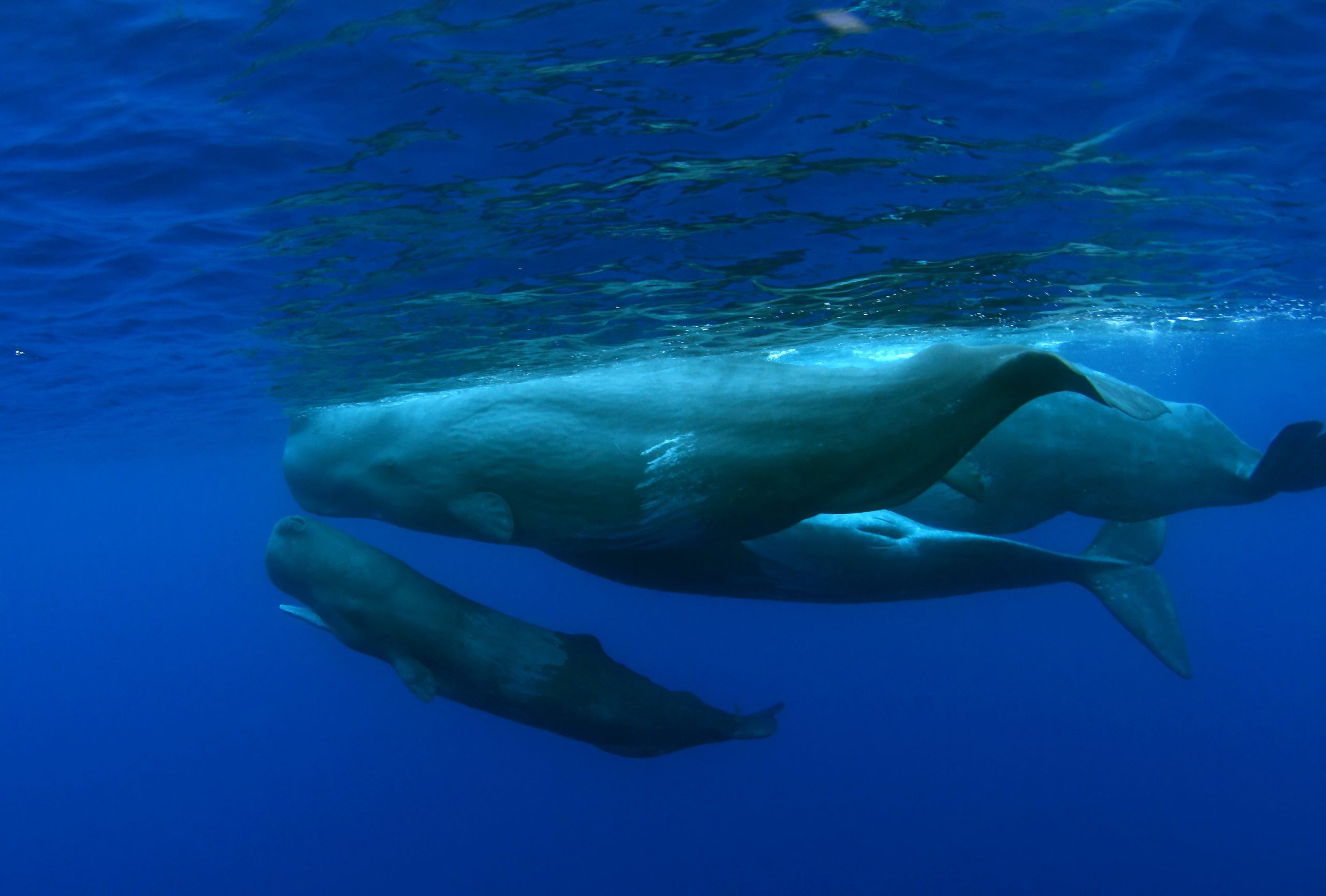
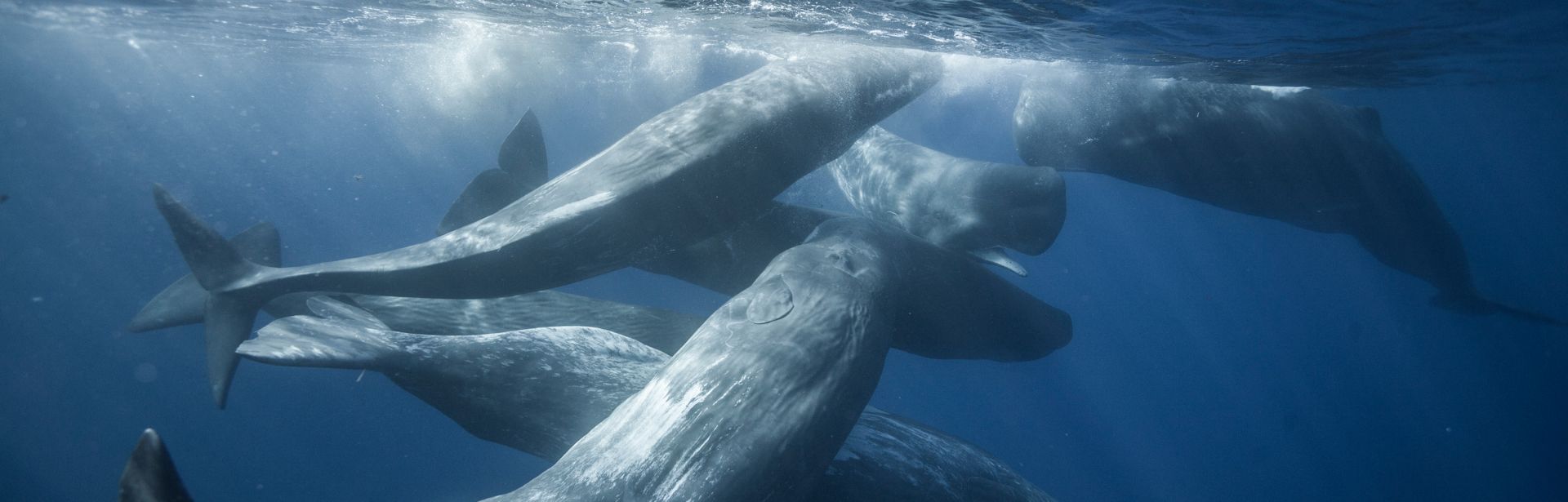
Lying in the middle of the mystical Atlantic Ocean, the wonderful Azores islands are a permanent home or point of passage for more than a third of the entire world’s whale and dolphin species.
Dive into this lifetime adventure with ancestral creatures where science and emotion come together at their highest level!
This may be the best place on earth to observe these magnificent animals.

Whale Watching
Jeep Tours

Feel the rush, surprise, and emotion in an all-terrain vehicle, this adventure will take you to the core of secrets. We will take you where nobody has ever reached before. Experience moments of adrenaline in our jeep tours. The adventure through the interior of the islands will begin!
The trips are made in 4×4 vehicles properly equipped, capable of taking you to places little explored. It is intended for those who want to discover new perspectives and unusual scenarios on the Azores Islands in a more adventurous way. We pass on secondary roads, which are not usually found on the usual tourist routes. They are narrow paths, dirt paths, called “canadas” in Azorean, and are mostly used by farmers.

Jeep Tours
Kayaking & SUP

Find solace in listening to the birds chirping and enjoy the peacefulness of the moment, and make sure you capture it with your camera this unforgettable experience.
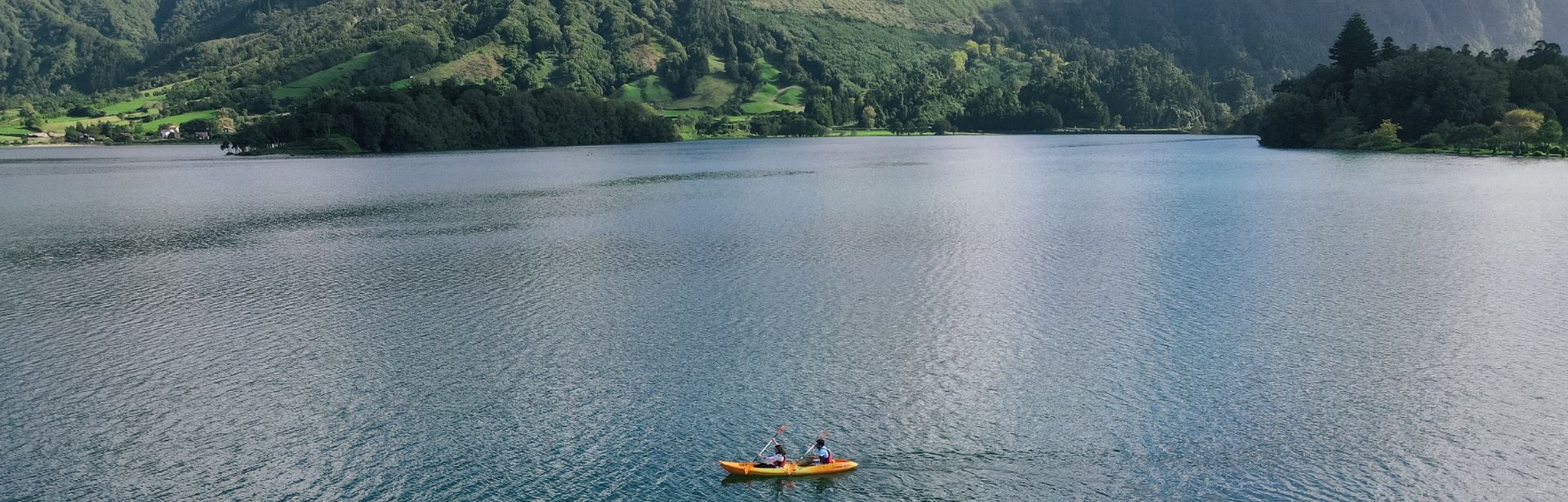
Sete Cidades is a volcanic complex where you can visit several lakes. Inside one of the craters, you can find two lakes, known as Lagoa Verde (green lake) and Lagoa Azul (blue lake), that feature in a legendary love legend about the lake’s creation. This special place was elected as one of the country’s seven natural wonders and once you are there, you will definitely understand why.
The contrast of colors between the two mysterious lakes is mesmerizing, and being on the water, in the middle of the volcanic crater, will give you a different perspective of the high green cliffs around.

Kayaking & SUP
Canyoning

The boldest and most unique adventure! Heading through the natural landscape you will be able to enjoy some adrenaline-fueled activities. Wet, wild, and absolutely unforgettable.
This experience involves trekking through river gorges, around pools, or even behind waterfalls.
Canyoners navigate down waterways by abseiling down waterfalls, clambering over rocks, or jumping into water rock pools. You will get wet for sure, even with an exposure suit, but this is not too bad with the relatively warm climate of the Azores.

Canyoning
Van Tours

Take a seat in the emotion sector, stop wherever you want and where your curiosity demands it. Taste, observe, and treasure the entire originality of this Atlantic paradise.
If you want to get to know the island of São Miguel more peacefully, without the worry of renting a car, opt for more comfort, on a pleasant van ride. Make the most of your vacation and get away from the city.
This way, you are guaranteed to know the main points of interest, but also those you will not find in travel guides. This is perhaps the best choice for those looking for convenience and security.

Van Tours
Hiking Tours

From lush green vegetation to a great variety of wildlife, enjoy heaven after a long ramble with otherworldly vistas.
Enjoy your holidays in the Azores walking through the beautiful landscapes of volcanic origin. Breathe fresh air and contemplate all the diversity of fauna and flora you will find.
You can start the day feeling the nature among mountains, enjoy more than one lagoon on the island of São Miguel, and finally, to end the day in a perfect way, take a boat trip to see the sunset.

Hiking Tours
Bike Tours

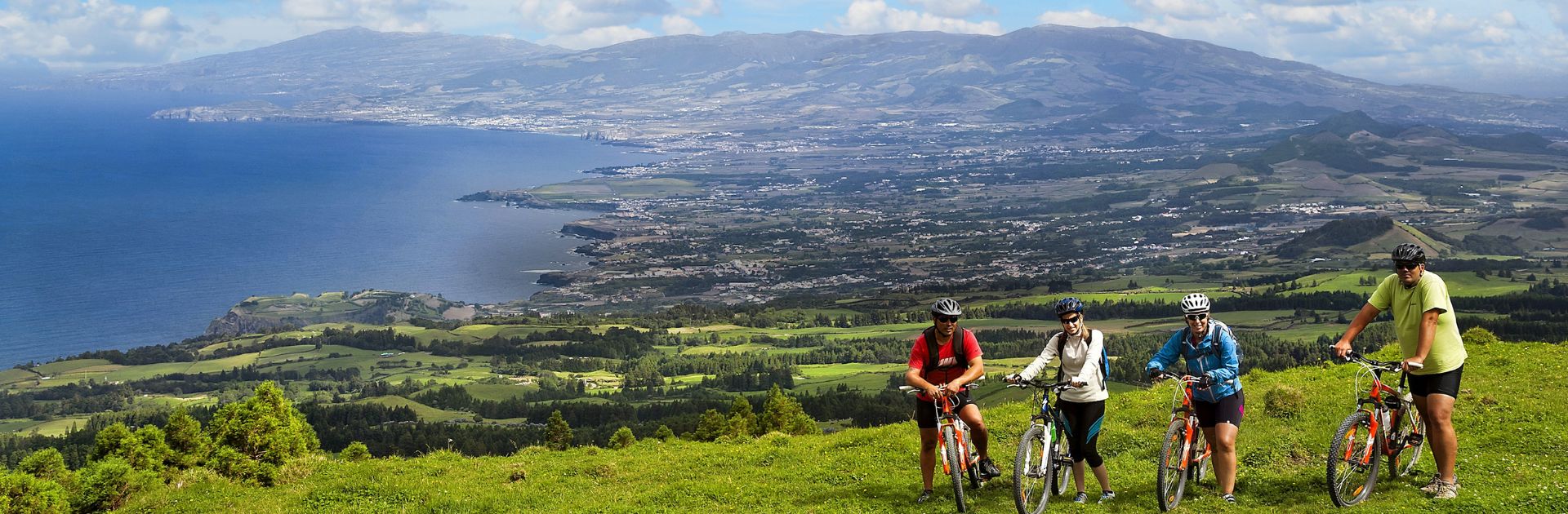
In order to discover São Miguel island and stay active, cycling is definitely the way to go!
At Sete Cidades volcanic complex, have one of your best bike adventures! Indeed, we are not taking you to a random place. We are talking here about one of the Seven elected wonders of all of Portugal.
This is where our awesome bike adventures take place and we can tell that we love to take our guests there!

Bike Tours
Coasteering

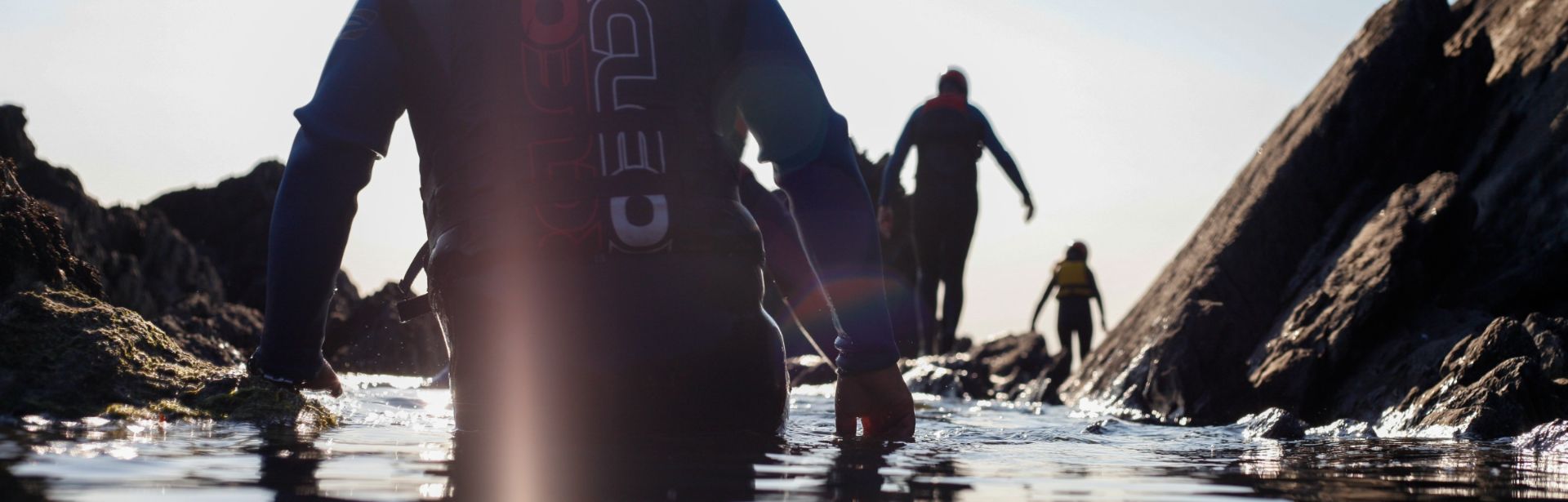
Here, you can explore the geography of the giant rocky cliffs climbing through the sky and how the pounding waves smooth the coastline. Coasteering is an exhilarating experience combining rock and water activity with coastal landscapes. It was originated as a combination of mountaineering and orienteering.

Coasteering

Explore Azores

Adventure awaits

Book your experience
SITEMAP
TERMS & CONDITIONS
PRIVACY POLICY
COMPLAINTS BOOK
About Us
OUR PURPOSE
OUR STORY
WHO WE ARE
WHY FUTURISMO
Honors & Alliances
ASSOCIATIVISM
AWARDS & DISTINCTIONS
CERTIFICATIONS
MEDIA HIGHLIGHTS
Social Media
Facebook Youtube Instagram Twitter Tripadvisor
Info & Reservations

info@futurismo.pt
Tel. (+351) 296 628 522
Mobile. (+351) 967 805 101

Licences

MT 22/2009 (Açores)
AT 09/2011/RA (Açores)

Tours & Islands

SITEMAP
TERMS & CONDITIONS
B2B PARTNERS
PRIVACY POLICY
COMPLAINTS BOOK

Partners
Info & Reservations

info@futurismo.pt
Tel. (+351) 296 628 522
Mobile. (+351) 967 805 101

Licences

MT 22/2009 (Açores)
AT 09/2011/RA (Açores)

Facebook Youtube Instagram Twitter Tripadvisor

Certifications

All rights reserved. Copyright © 2022 - Futurismo
|
design by: WEBOOST.PT
LAST NEWS
Earlybird Discount: Enjoy a 10% discount if booking with 30 days in advance by using the Promo code EARLYBIRD on the checkout of your Whale Watching tour Mix & Save: Enjoy a 10% Discount on your Second Tour operated by Futurismo and 15% on the next ones Contact us via chat (working days only) or the +351 296 628 522
x
Manage Consent

We use technologies like cookies to store and/or access device information to enhance your experience. Some tools, such as the live chat, may still be active to assist with navigation and offer promotional messages, even without explicit consent. You can manage your preferences at any time.

Functional Always active
The technical storage or access is strictly necessary for the legitimate purpose of enabling the use of a specific service explicitly requested by the subscriber or user, or for the sole purpose of carrying out the transmission of a communication over an electronic communications network.
Preferences
The technical storage or access is necessary for the legitimate purpose of storing preferences that are not requested by the subscriber or user.
Statistics
The technical storage or access that is used exclusively for statistical purposes. The technical storage or access that is used exclusively for anonymous statistical purposes. Without a subpoena, voluntary compliance on the part of your Internet Service Provider, or additional records from a third party, information stored or retrieved for this purpose alone cannot usually be used to identify you.
Marketing
The technical storage or access is required to create user profiles to send advertising, or to track the user on a website or across several websites for similar marketing purposes.
  • Manage options
  • Manage services
  • Manage {vendor_count} vendors
  • Read more about these purposes
View preferences
  • {title}
  • {title}
  • {title}
Search
Day Tours +
+ São Miguel island
Bike Tours
Canyoning
Coasteering
Kayaking & SUP Best seller
Hiking Tours
Jeep Tours Best seller
Van Tours
Whale Watching Best seller
+ Pico island
Hiking Tours
Jeep Tours Best seller
Van Tours
Whale Watching Best seller
Travel Agency
Futurismo +
+ The Brand
Our Story
Who We Are
Why Futurismo
+ Our Fundamentals
Mission & Vision
Our Purpose
Our Values
+ Our Projects
All Projects
> People
> Planet
> Wildlife
United Nations Global Goals
+ Our Commitments
Ethical Swimming with Dolphins
Hiking Conduct Code
Mindful & Transformational Travel
Responsible Travel
Responsible Whale Watching
+ Our Policies
Animal Welfare Policy
Environmental Policy
Sustainability Policy
+ Honors & Alliances
Awards
Associativism
Certifications
Media Highlights
+ Collab with Us
B2B Partnerships
Content Creators
Media
Contact Us
The Azores +
+ Islands
Corvo
Faial
Flores
Graciosa
Pico
Santa Maria
São Miguel
São Jorge
Terceira
+ Whale Watching
About
> Complete Guide
> Best Island
> Best Season
> History & Culture
> Preservation & Threats
> Sightings Statistics
> What to wear
Why Futurismo
> Educational Projects
> Our Fleet
> Our Scientific Publications
> Scientific Publications
> The Marine Biologists
> The Lookouts
> Responsible Operator
> WCA Certification
+ Species
Dolphins' Species
> Atlantic Spotted Dolphin
> Bottlenose Dolphin
> Common Dolphin
> False Killer Whale
> Orca
> Risso's Dolphin
> Striped Dolphin
Whales' Species
> Blainville's Beaked Whale
> Blue Whale
> Bryde's Whale
> Cuvier's Beaked Whale
> Fin Whale
> Humback Whale
> Minke Whale
> Nothern Bottlenose Whale
> Pilot Whale
> Sei Whale
> Sowerby's Beaked Whale
> Sperm Whale popular
Blog +
+ All articles
All articles
> People
> Planet
> Travel
> Wildlife
+ Contributors
Copywriters & Guest-bloggers
Photographers & Videographers
Gift Shop +
+ Books
O Canto dos Açores
Day tours

SITEMAP
TERMS & CONDITIONS
B2B PARTNERS
PRIVACY POLICY
COMPLAINTS BOOK

Multiday tours
About Us
Travel Agency
The Azores
Blog

Get in touch

EN
FR
DE
IT
PT
ES
Rubens Rodrigues

Ruben Rodrigues

Owner & General Director

Lorem ipsum dolor sit amet, consectetur adipiscing elit. Ut elit tellus, luctus nec ullamcorper mattis, pulvinar dapibus leo.

The iron-rich water of this spa at open air is naturally warm at any time. This green jungle classified as Natural Regional Monument will transport you to another planet. Enjoy the unique scenery straight out of a Jurassic Park movie.

What to take?
Best Season to Visit
Read Complete Guide