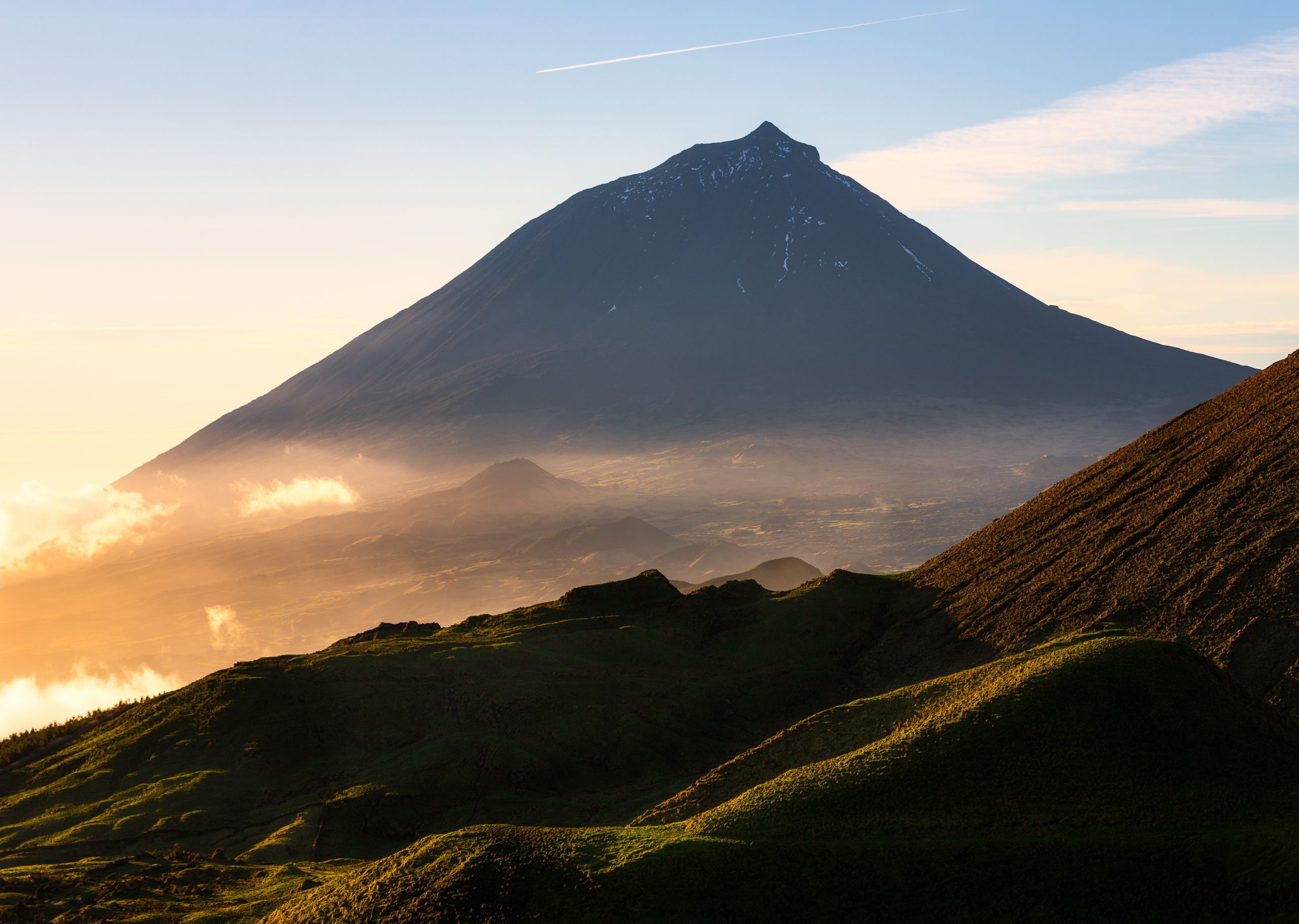






Pico Mountain, the rooftop of Portugal! This is the highest you can be in the whole country. This important volcano in the middle of the Atlantic almost takes up the entire Pico Island, which is named after it. It is quite an impressive view from the plane when you arrive at the island.
You can see the mountain from almost everywhere on the island. Rising to 2,351 meters above sea level 7713 ft (2.35 km), it is quite the ultimate Azorean challenge to climb to the top of Portugal’s highest peak. And what a romantic view to have at its summit!
Here, we will see all you need to know about this majestic volcano, from its history to geology and nature. We will also give you tips on how to climb Pico Mountain safely. This will be the highlight of your holidays in the Azores.
What is Pico Mountain?
Geology & Volcanology
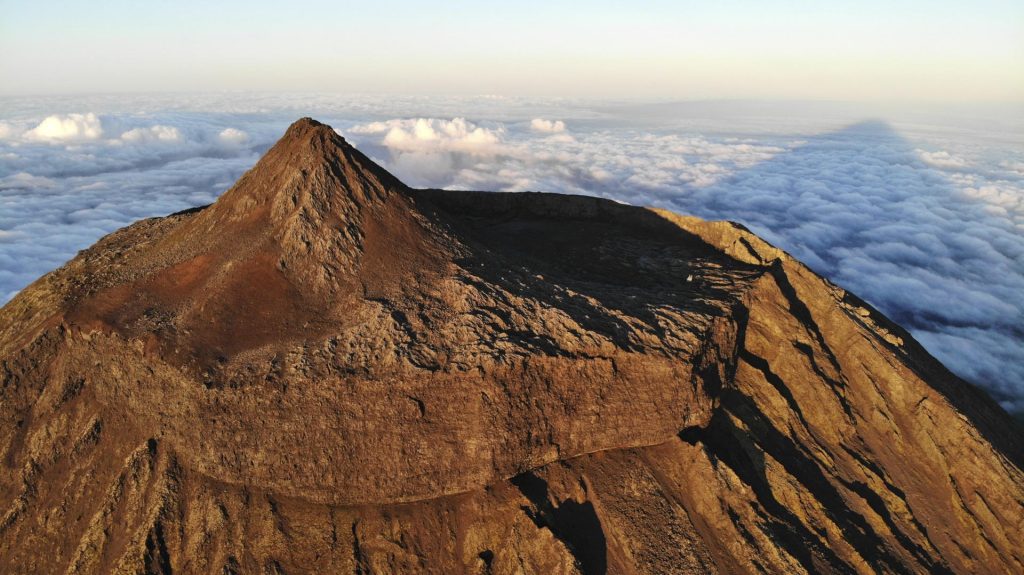
The stratovolcano of Pico is relatively young, volcanologically speaking. It is about 750,000 years old and is the third-biggest peak in the Atlantic. On top of Pico Mountain, you will find the central crater named Pico Grande, from where there is another lava cone of 70 meters known as Piquinho. From Piquinho, several sulfur fumaroles are coming out, proving the volcanic activity is still alive at Pico Mountain!
The crater has a perimeter of about 700m, and its walls rise to 30 meters above the rim. Lavender flows around the mountain, and plenty of basalt material can be seen. Pico Mountain’s base is at the central plateau of Pico Island, but in Ponta da Faca, the mountain ends in the ocean with basaltic lava flows creating bays, caves, and lava tubes.
History & Geography
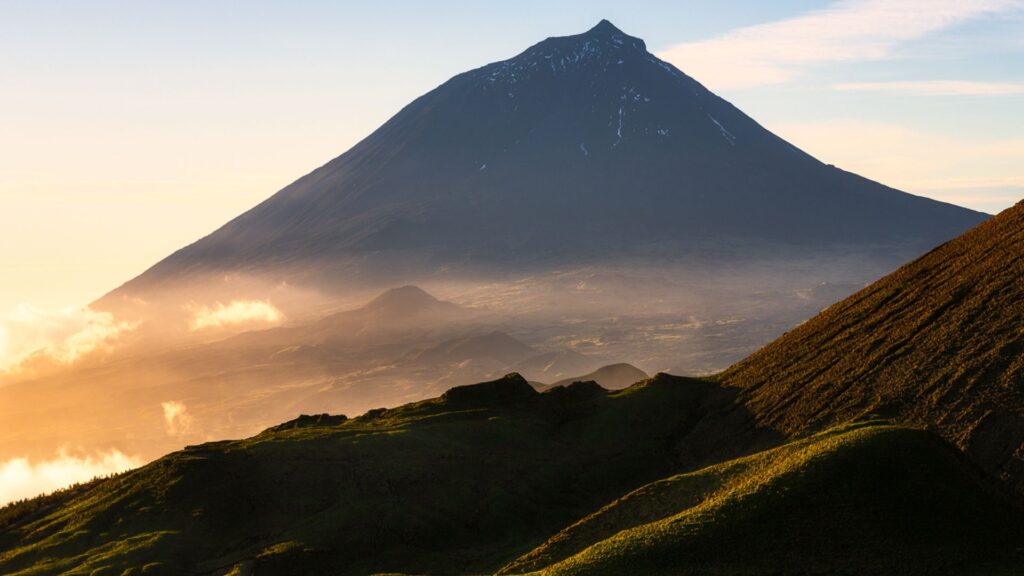
All the most significant eruptions of the Pico volcano happened on the flanks, never really from the main crater. The last eruption was in December 1720. The creation of Piquinho occurred in 1718 on the southern side. Before this, an enormous eruption from 1562 to 1564 created lava flowing into the ocean.
In addition to possessing the highest mountain in Portugal, Pico Island is the second-largest island of the Azorean archipelago after São Miguel. It is part of the central group of islands, with its four other neighbors, São Jorge, Faial (the three forming the Triangle islands), Terceira, and Graciosa, to the north.
Fauna & Flora

Pico Mountain has been a nature reserve since 1972, and its 1,500 acres should be protected at all costs. It is designated a Special Area of Conservation (SAC) under Natura 2000 and is one of the most important geosites in the Azores, according to UNESCO. Remember not to take anything but pictures, leave nothing but footprints, and do not walk on the vegetation.
Among the vegetation, you can find quite a lot of diversity at the base of the mountain. There are also some pastures where cows enjoy the pure air and grass of Pico Mountain. From 1,200 to 1,400 meters above sea level, the Macaronesian holly, Azores juniper, Azores blueberry, or Erica Azorica can be seen along with the typical species found in a Laurissilva forest. At the top, you will mostly see lichens.
There is little wildlife due to the harsh altitude, food scarcity, and severe weather. However, in the summer, you can see species like the Atlantic canary, the chaffinch, the starling, the buzzards, and some Azorean bats (noctules).
How to Climb Pico Mountain

The hike to the Pico Mountain top is not easy. It is a steep ascent, and the descent can be dangerous due to the risk of falling. If you are in good health conditions and the weather is on your side, climbing Pico Mountain is a wonderful experience living in the Azores.
The trail begins at the Mountain’s House (Casa da Montanha), about 1,200 meters above sea level, 3937 ft (1.2 kilometers). From there, you can go only to Furna do Abrigo, for 45 minutes and a 1-kilometer distance, or to the top, at 2,351m. One way is about 3.8 km, with a drop of 1,150m (3,772.97 ft). It takes about 3 hours to climb and slightly more to descend.
The passage by the Mountain House is mandatory before and after each climb. They will provide you with instructions and advice, and they will hand over a GPS to rescue you if needed. Along the hike, you will find 47 wooden markers that will help you find your way. Moreover, the Mountain House authorizes only 160 visitors on the trail at a time and 320 per day, so always book in advance. There are three ways to climb Pico Mountain.
Climb by Day

This is the fastest option if you run out of time on Pico Island. You can go to the mountain house in the morning, climb to the top, see the incredible views, and then go back down. This would last about 7 to 8 hours, including stops to explore and fully enjoy the challenging hike.
The most significant advantage of this option is that you will have a lighter backpack than if you decide to stay overnight (option 3). So hiking gets easier as you carry less weight, no tent or camping equipment. This is also perfect if you are only staying a few days on Pico Island or want the safety of a more leisurely hike in the daylight and the comfort of a hotel bed.
Climb During the Night
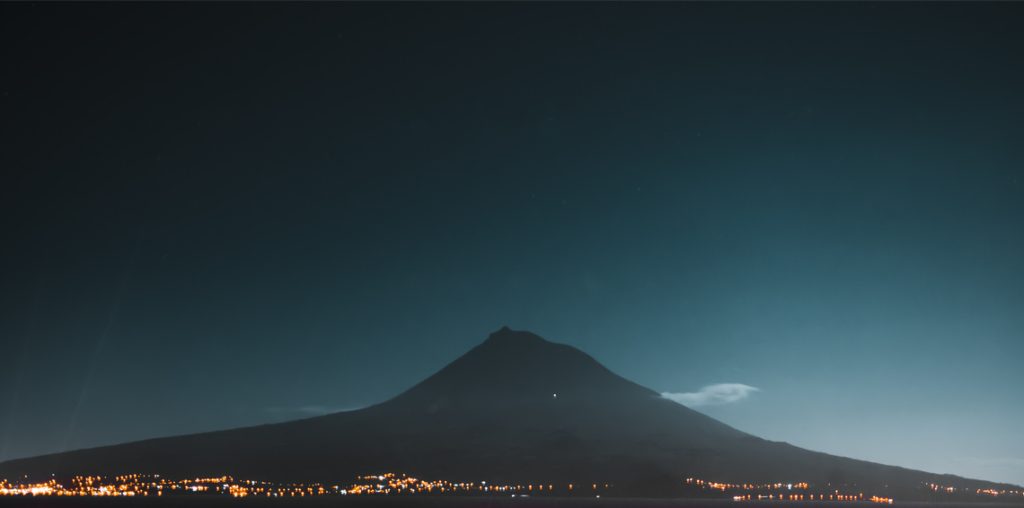
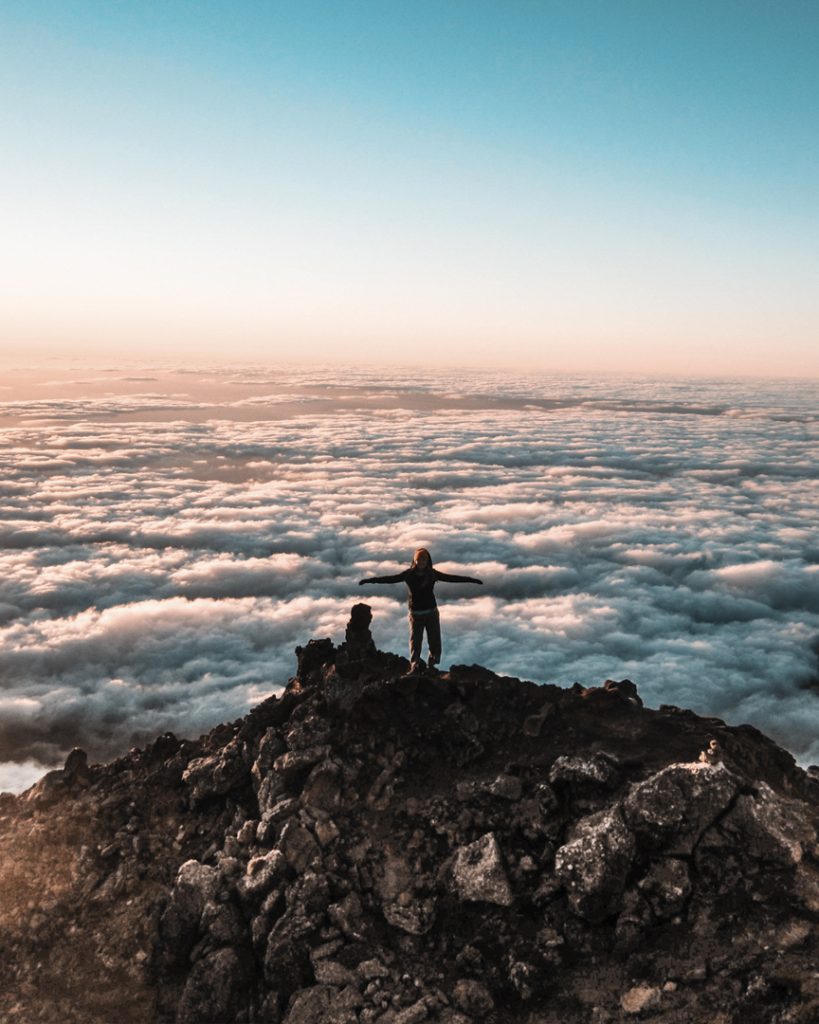
With this option, you will need to climb during the night, about 3 to 4 hours before sunrise, to arrive at Piquinho right at the first rays of the sun rising from the infinite ocean. This is a truly spectacular moment to be living on the rooftop of Portugal.
Climbing Pico Mountain in the dark can be challenging, and it is better to go with a guide. However, it is easier than going down in the dark, which is not recommended. Many people choose this option for the sunrise spectacle as it consumes less time than staying overnight. For this option, you will need a head torch to climb safely.
Stay Overnight
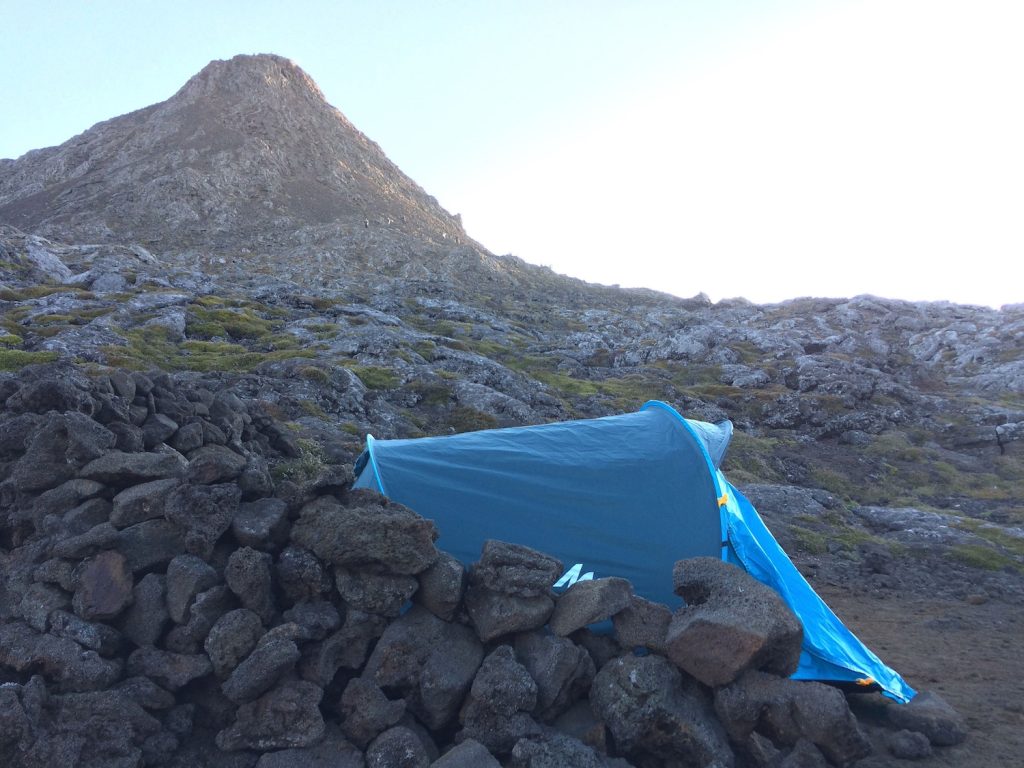
The overnight stay at the top of Pico Mountain is an unforgettable experience for camping enthusiasts. You will arrive right at sunset. Before sunset at Piquinho, set up your tent properly, as it will get dark quickly. After watching the sunset over the ocean, you will sleep inside the enormous crater, protected by some rocky walls. The night can get cold, so please keep a good sleeping bag in mind.
After a good night of sleep at the highest point of Portugal, you will get ready for the descent, but climb again at Piquinho for the sunrise, which is worth seeing. For this option, only 32 visitors may camp on the same night, so it is crucial to book in advance. Please note that there are no facilities, such as toilets or food outlets, in the crater.
Best Time to Climb Pico Mountain

Best Season to Visit Pico Mountain
The best season to climb Pico Mountain is the summer. From May to October is perfect weather-wise. However, in July and August, the mountain can get full quickly. You need to book in advance to respect the quotas.
Outside this season, the weather is more uncertain. However, you can never be sure about the weather in the Azores, even in the summer. But there are more chances of rain, fog, clouds, or even snow! Additionally, it can get much colder on the summit, making it uncomfortable to sleep. Furthermore, if the weather conditions are too bad, your climb can be canceled by the Mountain House. So put all chances on your side and climb in the warmer months.
Check all our articles about the weather in the Azores throughout the year 🌤️ ☔️: January | February | March | April | May | June | July | August | September | October | November | December
Best Time of the Day
For the day climb, the best approach is to start in the morning, take your time, and avoid rushing. If you wish to climb at night, you need to see the sunrise time and start 3 to 4 hours beforehand to make sure you don’t miss the natural show. Finally, for the overnight stay, you must begin your hike at 2 pm from November to May, or at 4 pm from June to October, to arrive before sunset.

Plan Your Visit to Pico Mountain
How to Get to Pico Mountain
The Mountain’s House (Casa da Montanha) is on the island’s Western side. From Madalena town, you must follow the EN3 main road Eastwards until you see indications towards the mountain on the right side. It takes about 20 minutes to get there and is only 17 kilometers away from that town.
You can get there easily by renting a car and parking at the mountain house. There are also taxis going there from all the towns around Pico Island. Here is the GPS link.
Planning a trip to the Azores? These articles will help you: How to Get to the Azores 🗺️ | Azores airports 🛬 | Flights between islands ✈️ | Ferries between islands ⛴️ | Which island to choose? 🏝️ | What airlines fly to the Azores? 🛩️
What to Bring

When you decide to climb Pico Mountain, there are a few things you will need to consider bringing with you for a safe and fun experience, depending on which climb you choose. Firstly, clothing. Dress in layers to be prepared for anything. Bring a sweater, a rain jacket, comfortable pants, and hiking shoes. Walking sticks are always helpful for ascent and descent.
Then, you need to think about water. Having at least 1.5 L of water with you is essential, as this hike can be exhausting and cause dehydration. Sunscreen and sunglasses are also crucial, as the sun’s intensity increases at altitude, and there is no shelter from it. Energy food is also a good option for a snack, dinner, or breakfast if you’re planning to sleep there.
For the overnight climb, you will need a tent, a sleeping bag, a mat, a flashlight, and extra warm clothes. If there is snow on the trail, it is mandatory to wear crampons to climb.
Where to Eat
If you’re looking for a place to eat near Pico Mountain, click here. In this link, you’ll find the 10 best restaurants on TripAdvisor.
Where to Stay
To make your life easier, we’ve filtered the search by:
Pricing & Opening Hours

Pricing depends on the type of climb that you are planning. For guided tours, prices vary across companies. Note that the climb is free of charge for Residents of the Azores. Here are the fees that you need to pay to climb Pico Mountain:
- Climb to Furna Abrigo: €5
- Full climb to the crater: €15
- Additional climb to Piquinho: €10
- Overnight stay: €10
Mountain House Opening Hours:
- The mountain house is open 24/24 hours from May 1st to September 30th.
- From October 1st to 31st, it opens non-stop from 8 am on Friday to 8 pm on Sunday. On other days, the hours are from 8 am to 8 pm.
- From November 1st to April 30th, it is open from 8 am to 6 pm.
- Closed on January 1st and December 25th.
Azores Guide Book
Azorean Language & Phrases 🗣️ | Currency & Banks 💵 | Credit Cards & Traveler’s Cheques 🏧 | Driving in the Azores 🚗 | Electricity 🔌 | Experiences & Tours 🗺️ | Health & Safety 🩺 | Internet & Wi-Fi Access 🛜 | Phones & Mobile Service 📞 | Post Offices & Buying Stamps ✉️ | Public Holidays 🏖️ | Shopping 🛒 | Time & Daylight 🕒 | Whale Watching Guide 🐳 | Best Island to Visit 🏞️
Safety Tips for Climbing Pico Mountain

To climb Pico Mountain, you must have the appropriate material and be physically healthy. It is also recommended that you go with a local guide. The most significant danger of climbing Pico Mountain is the descent, as you can fall due to small rocks on the way. That is why starting at least 4 hours before sunset is essential.
Furthermore, the weather conditions can change quickly, and you could be surrounded by fog. This makes it challenging to follow the trail. If you pass by one of the official wooden markers and can’t find the next one within 30 minutes, return to the last one you saw. Otherwise, you can walk forever and get lost. A good way to tell if you are lost is to step on vegetation. There are none on the trail route.
At the mountain house, you’ll receive a GPS tracker that you’ll need to return upon completion. If the mountain house is closed on your way back, you should return it to the Fire Department in Madalena.
Quick Info
Casa da Montanha’s new rules require everyone to wear suitable footwear for mountaineering to be allowed up the mountain. Consequently, they will deny access to the mountain reserve to anyone wearing flat shoes, sports shoes, running shoes, or sneakers without a proper sole profile.
You must wear hiking shoes or shoes with a sturdy sole and good grip.
If you have doubts about your shoes, please send us a photo, and we will let you know if they are acceptable. If informed clients arrive with shoes not permitted on the mountain and are denied access, we will charge them for the climb.
Nearby Attractions
Longitudinal

On Pico Island, you can see the longest straight road in the Azores. It is also one of the longest in Portugal, right by Pico Mountain. The longitudinal EN3 is approximately 23 kilometers long, with 9 kilometers of it being a straight line. It is longer than the width of 4 islands of the archipelago.
The length of this straight road is also the exact distance between Pico and Faial Island. This road is an attraction in itself. It is called one of the most beautiful roads in Portugal, thanks to the stunning views over Pico Mountain. But it also leads to one of Pico’s most beautiful lakes: Lagoa do Capitão.
Vineyards of Criação Velha
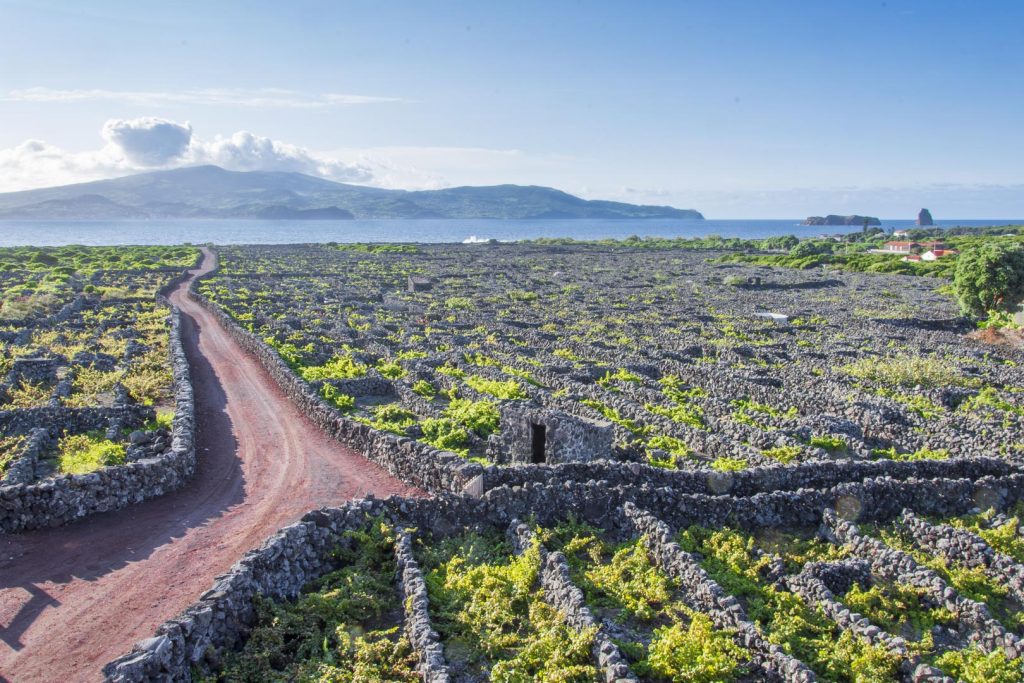
On the western part of Pico Island, Criação Velha is a beautiful, rocky natural pool with transparent waters. It is located right next to the world-famous vineyards, a typical landscape of Pico Island that should not be missed when on holiday. The Criação Velha trail is distinguished by its highlights and singular beauty.
This trail is full of surprises, from walking surrounded by old volcanic vineyards to swimming in the crystal-clear waters of the natural pool nearby, to seeing interesting geological and volcanological patterns.
Located in Madalena, this hike was recognized in 2011 by BootsnAll for its landscape and cultural diversity. It is a prime example of the Protected Landscape of the Wine Culture, which UNESCO has designated a World Heritage Site since 2004. It is rich in elements from the wine culture and volcanic activity.
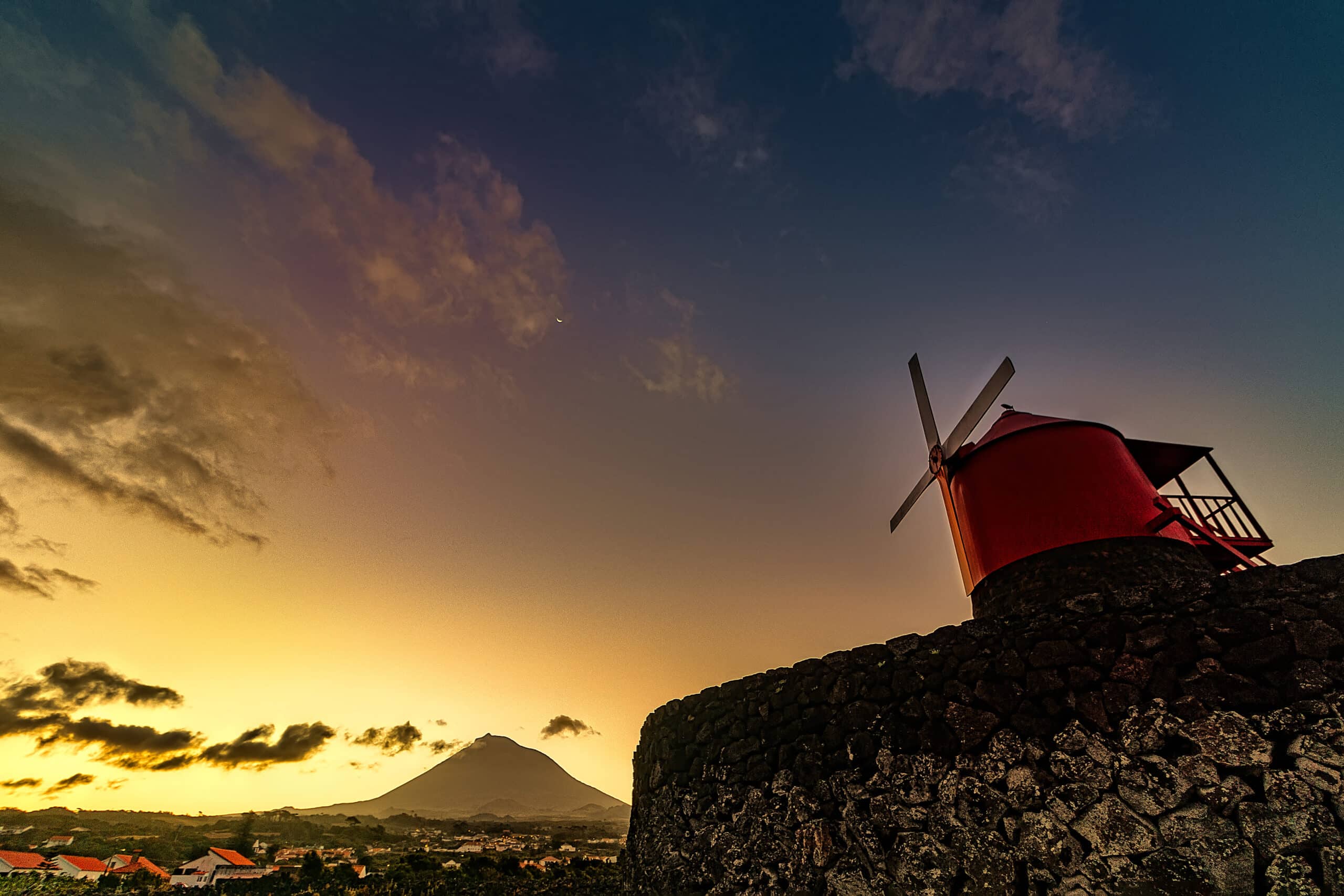
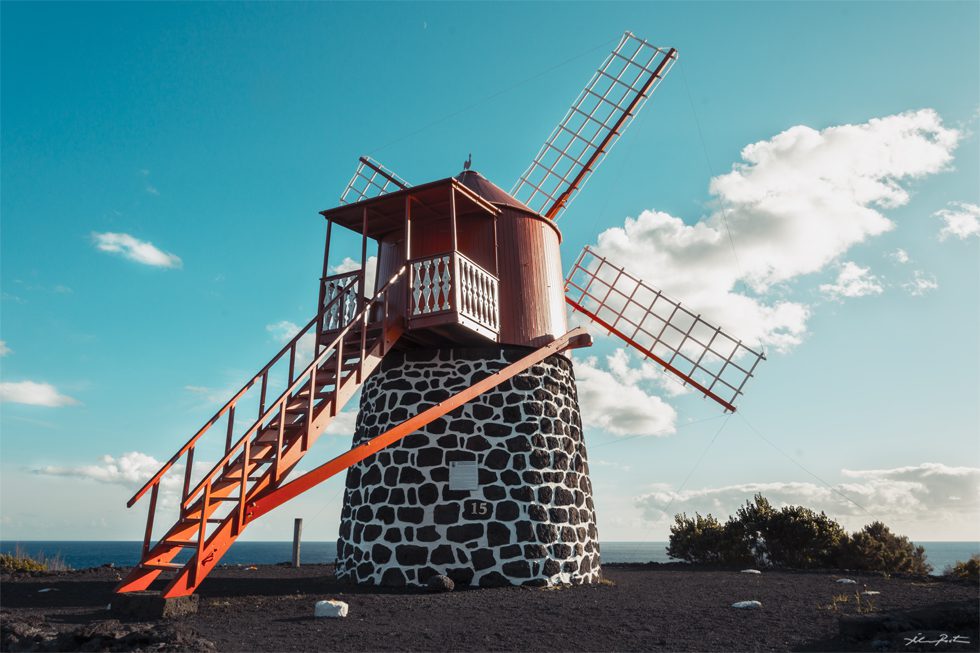
From the trail, you can even see the islets of Madalena and the island of Faial. One highlight is the large red windmill, which is sometimes open to visitors. Walk with our guide to know more about this trail!
Madalena
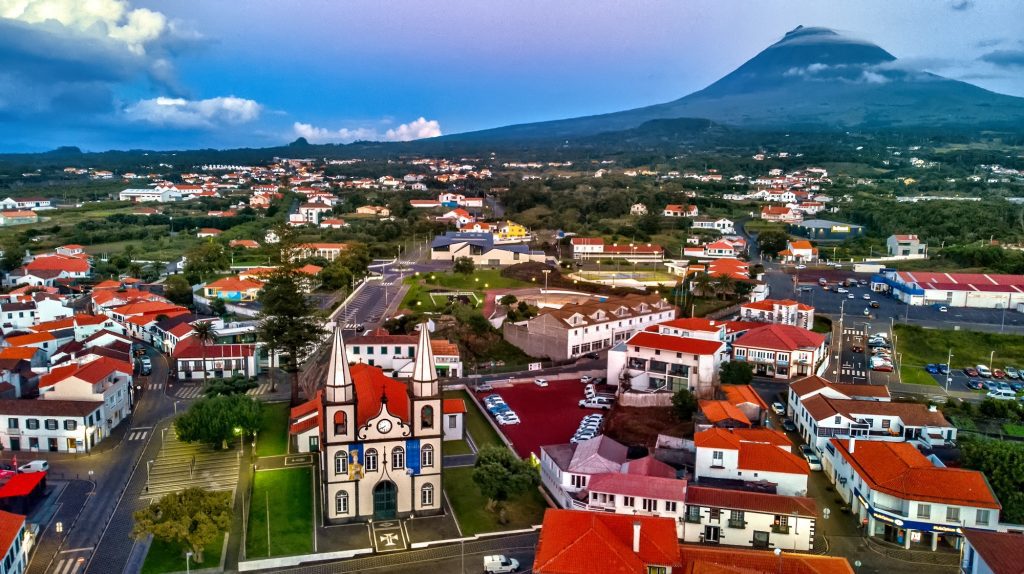
The municipalities of São Roque do Pico and Lajes do Pico limit Madalena to the east. It is well located on the island of Pico, opposite Horta, on Faial. From the seafront of Madalena, you can spot the islets between the two islands. Those are geological formations where seabirds nest.
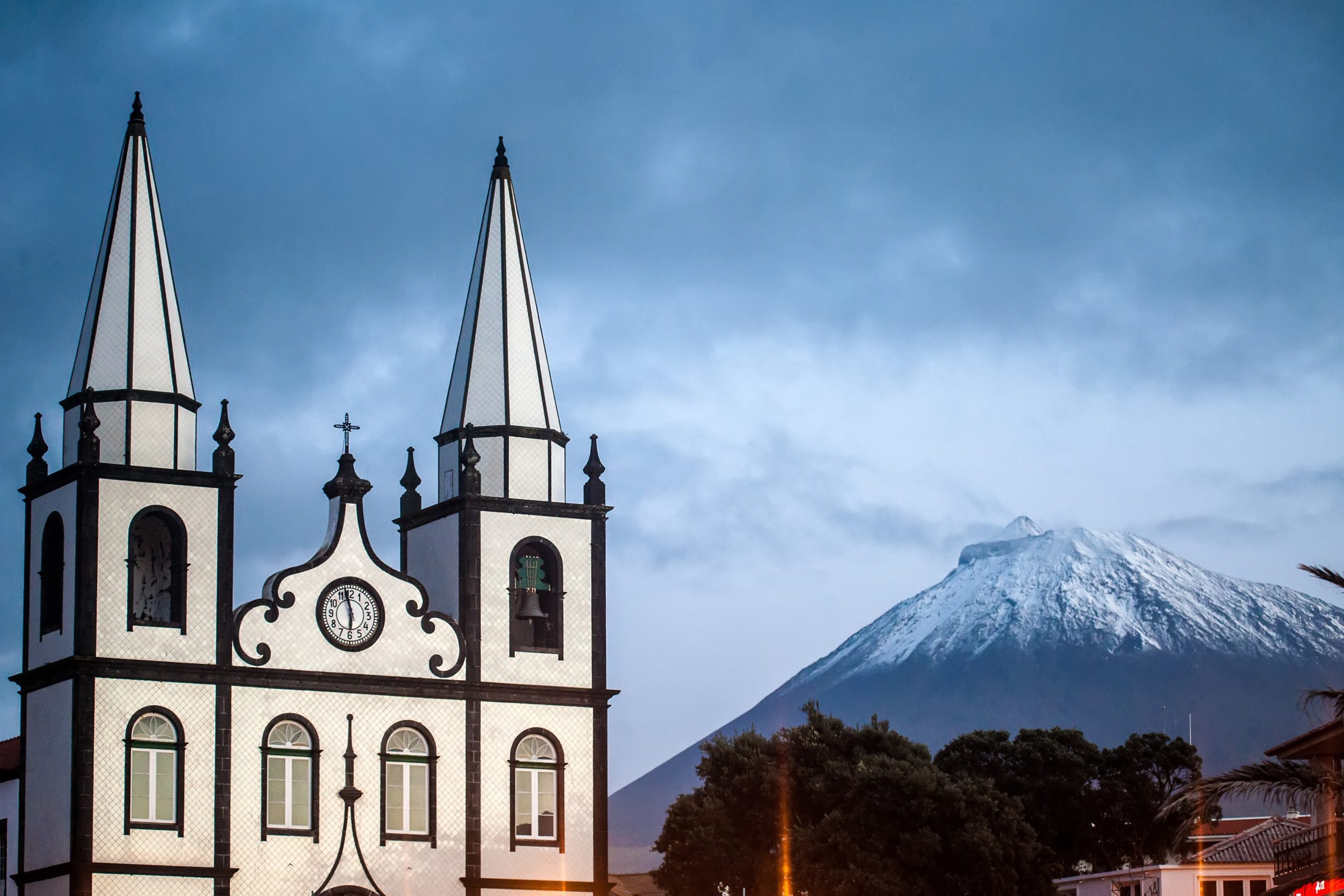
The historic center of Madalena is also essential to visit, featuring Santa Maria Church, City Hall, and the narrow streets with beautiful architecture. The land right outside the town is where most of the Pico wine is produced, and you can even visit the wine museum in the city to learn everything about the special process.
→ Explore the authentic flavors of Azorean gastronomy in our articles: Bolos Lêvedos | Cozido das Furnas | Grilled Limpets | Massa Sovada | Pimenta da Terra | Gorreana Tea | Queijadas de Vila Franca do Campo | Queijadas da Graciosa | Azorean Cracas
Lagoa do Capitão

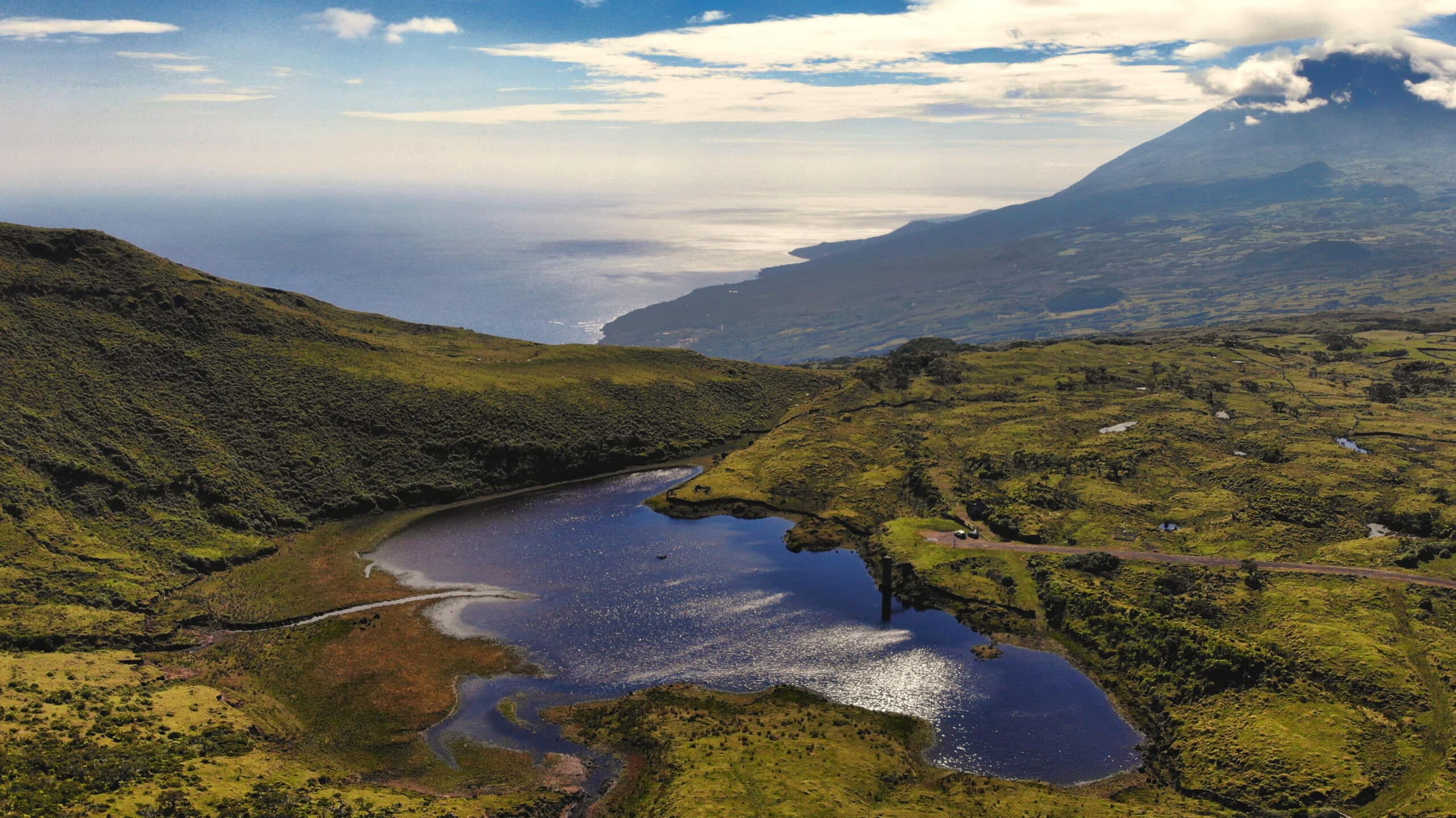
At about 800 meters above sea level, this lake is the most popular on Pico Island due to its infinite beauty and view of Pico Mountain when the sun is shining. There are so many beautiful natural landscapes to see on Pico Island. Choosing which one to visit first is challenging, but Lagoa do Capitão in São Roque should be on your list. This may be the lake with the most beautiful view of Pico Volcano in the background.
From up there – at 826m above sea level – you can enjoy a fantastic panorama over Pico and São Jorge islands. Once you arrive at the shore of the lake, surrounded by beautiful Azores Junipers, you can meet some peaceful cows, several species of birds, and aquatic life.
There is the possibility of doing a hike (PR13PIC) to Lagoa do Capitão if you wish to visit more of that beautiful mountainous region that is the central plateau of Pico. And, of course, Futurismo can take you to this beautiful lake and other wonderful places off the beaten track with a van tour dedicated to volcanoes and lakes. Embark on this discovery adventure with us! Explore the most breathtaking lakes on the island and the longest lava tube in Portugal.
Check all our articles about each one of the most relevant points of interest on Pico Island: Pico Mountain | 15 Unique Things to do in Pico Island | Madalena | São Roque do Pico | Moinho do Frade | Centro de Visitantes da Gruta das Torres | Lagoa do Paul

Complementary Information
Best Season to Visit the Azores
The Azores Archipelago boasts a unique climate that shapes its lush landscapes, making it a splendid year-round destination. With mild temperatures and minimal fluctuations, each season offers something unique. Spring averages 16 °C, summer reaches 21 °C, autumn cools to 18 °C, and winter remains mild at 14 °C.
→ For a detailed breakdown of the weather by month, check the following links 🌤️☔️: January | February | March | April | May | June | July | August | September | October | November | December
How to Get to the Azores
The Azorean Archipelago is easily accessible through numerous flight routes. Lisbon and Porto are the main entry points to the continent, with direct flights available to São Miguel (PDL), Terceira (TER), Faial (HOR), Pico (PIX), and Santa Maria (SMA). To find the best flight, use search engines like eDreams or Skyscanner. These platforms let you compare prices and schedules from multiple airlines in one convenient location.
For more details on how to get to the Azores, take a look at our complete guide. But what if you want to explore beyond your arrival island? We’ve got you covered!
- Azores airports 🛬
- Flights between islands ✈️
- Ferries between islands ⛴️
- Which island to choose? 🏝️
- What airlines fly to the Azores? 🛩️
→ Once you’ve found the perfect route, book your tickets and get ready to experience one of the world’s most stunning island groups!
Travel Essentials
Essential Information for your Azores trip: Azorean Language & Phrases 🗣️ | Currency & Banks 💵 | Credit Cards & Traveler’s Cheques 🏧 | Driving in the Azores 🚗 | Electricity 🔌 | Experiences & Tours 🗺️ | Health & Safety 🩺 | Internet & Wi-Fi Access 🛜 | Phones & Mobile Service 📞 | Post Offices & Buying Stamps ✉️ | Public Holidays 🏖️ | Shopping 🛒 | Time & Daylight 🕒 | Whale Watching Guide 🐳 | Best Island to Visit 🏞️
Useful Tools & Apps
The weather in the Azores can be variable, so it’s helpful to use some apps before visiting the islands. Spotazores provides live camera feeds from the main tourist attractions, allowing you to check the weather and plan your visit. For accurate weather predictions, use Windy or Windguru — they provide the most reliable predictions.
Video
Conclusion
Climbing Pico Mountain is not for the faint-hearted, but if you are healthy with a strong mind and the will to achieve this goal, no one can stop you from this once-in-a-lifetime experience.
From the top of Pico Mountain, you will feel like you are on top of the world! With a clear sky, you can see all the islands from the central group and the whole island of Pico with the volcano’s shadow. This extraordinary experience will stick with you for the rest of your life.
Are you ready for this Azorean challenge?
Authors’ Note
I am pleased to inform you that all the recommendations in this article are based on my personal experience and observations. As the author, I have personally visited each attraction mentioned, ensuring that every suggestion is grounded in first-hand knowledge and genuine enthusiasm.
FAQs
Pico Mountain is the highest peak in Portugal, rising 2,351 meters above sea level. It’s located on Pico Island in the Azores, offering breathtaking views of the surrounding islands and ocean from its summit.
The hike to Pico Mountain to the summit and back usually takes 6 to 8 hours, depending on your pace and weather conditions. It’s a challenging climb, but the spectacular panoramic views at the top make it a rewarding experience.
The Mountain House of Pico Mountain operates year-round, with hours varying by season. From May 1st to September 30th, it’s open 24/7. In other months, it is open from 8 AM to 6 PM, with extended hours on weekends in autumn.
Climbing Pico Mountain fees vary by hike. The cost for the Furna Abrigo hike is €5, the full ascent to the crater is €15, and an additional hike to Piquinho costs €10. There is a €10 overnight fee, but residents of the Azores climb for free.