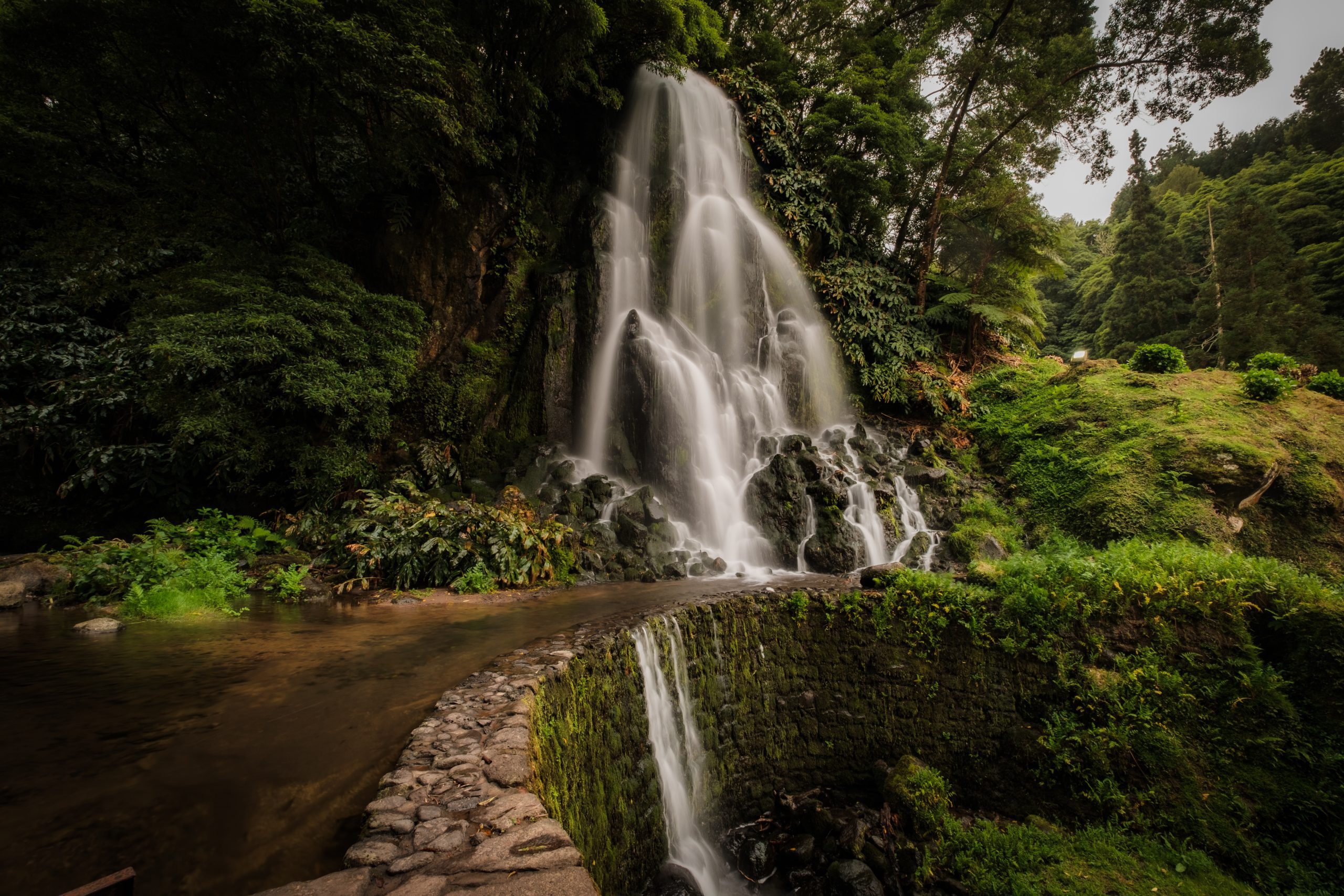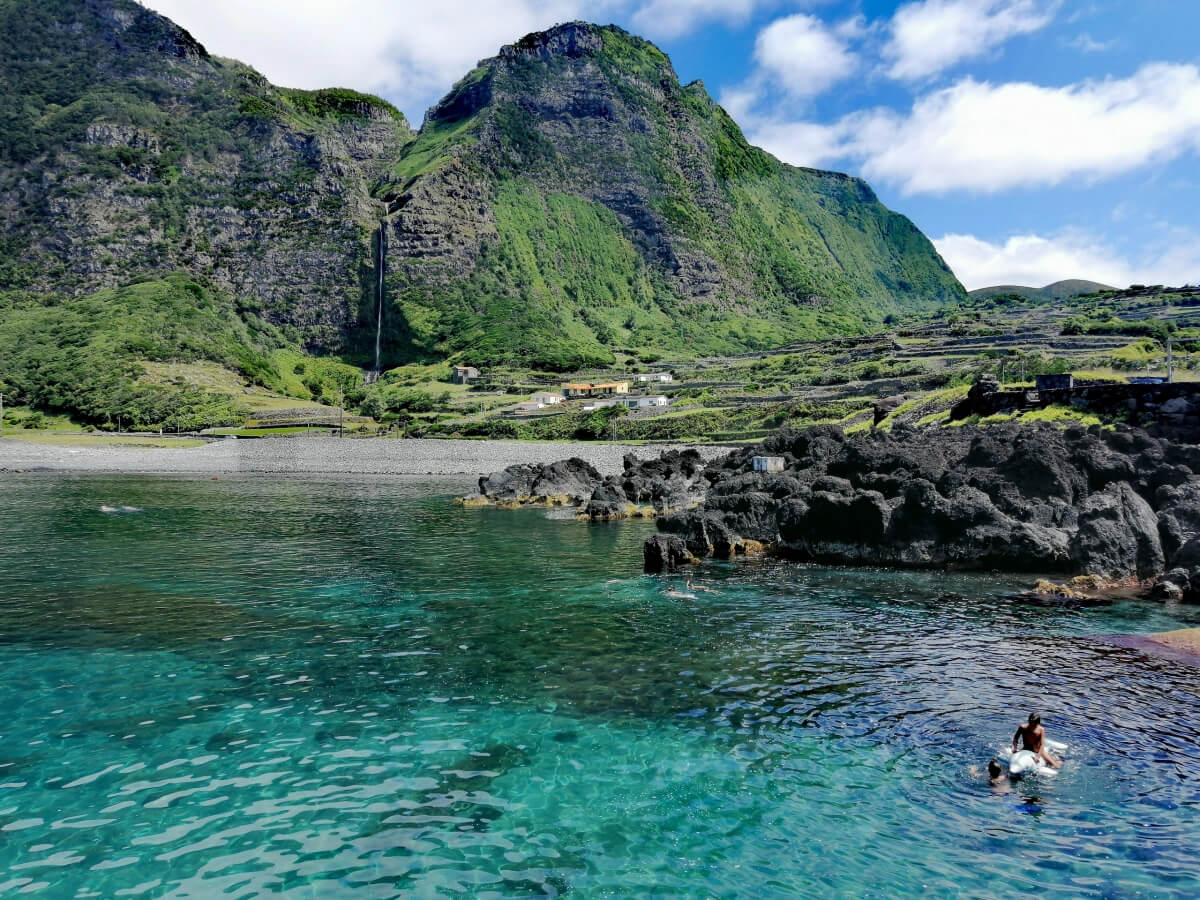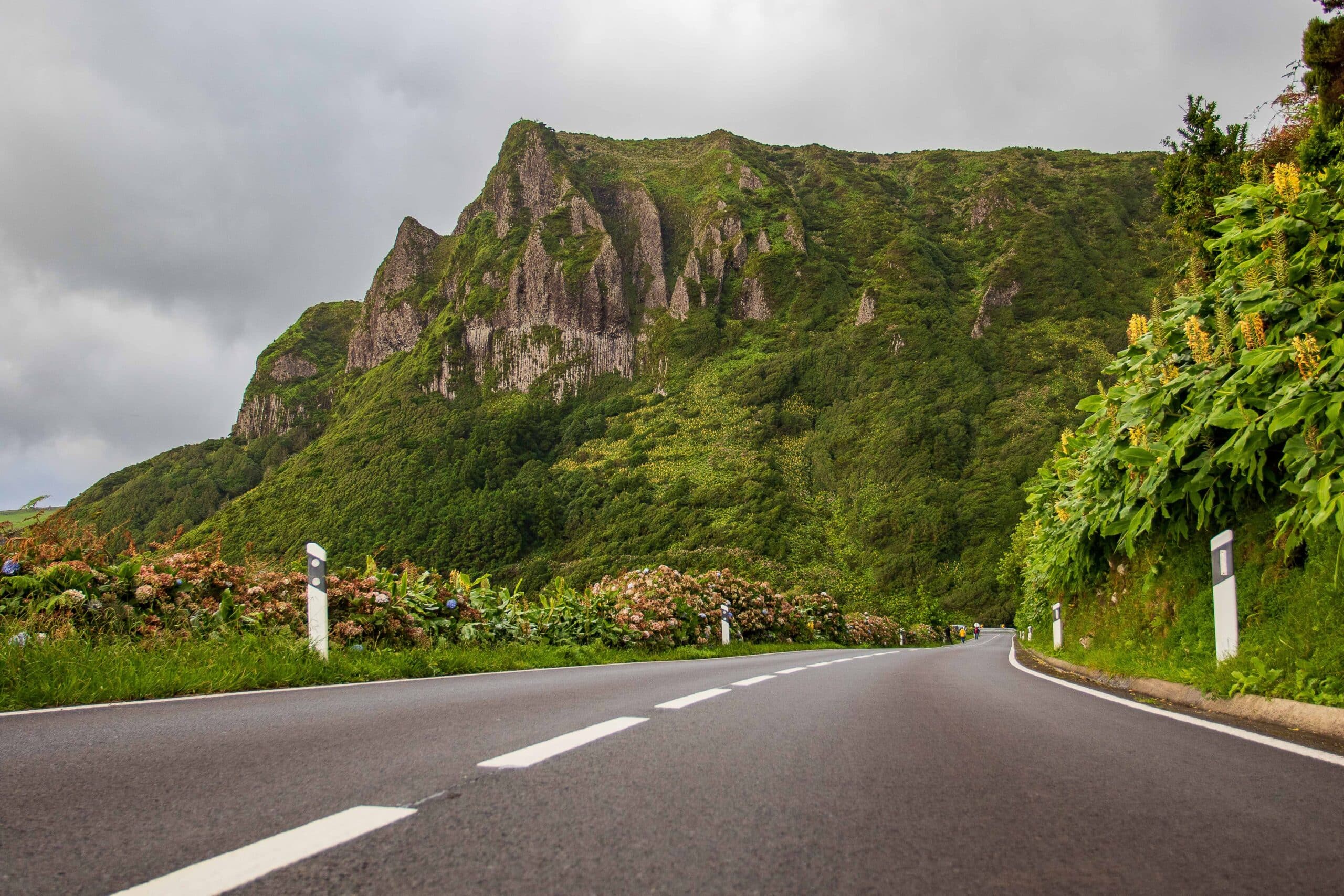





Poço da Ribeira do Ferreiro, literally translated to “the forger’s river pond”, is one of the most extraordinary natural landscapes in the Azores. Located on the western part of Flores Island, this breathtaking lagoon looks like something out of a fairy tale. There, numerous waterfalls cascade down dramatic green cliffs into a perfectly still pond below.
Also called Poço da Alagoinha or Lagoa das Patas, this hidden paradise is considered one of the most iconic and photographed spots in the Azores. The scenery feels almost unreal, like a natural amphitheater of green walls crossed by silver ribbons of water. It is a place that truly shows the raw power and beauty of nature.
If you are visiting Flores Island, this is an absolute must-see. No trip to the island is complete without standing before this natural masterpiece and experiencing its silence and charm. Here, you will learn everything about Poço da Ribeira do Ferreiro, from how to get there to pro tips to not miss a thing.
What is Poço da Ribeira do Ferreiro?

Poço da Ribeira do Ferreiro is a stunning lagoon fed by dozens of waterfalls that plunge from a towering, almost vertical cliff over 150 meters high. These waterfalls are known as Cascatas da Ribeira do Ferreiro and originate from springs of the island’s central plateau.
Depending on rainfall, the number of visible waterfalls can vary. After rainy days, there are more falls than you can count. The visual effect is extraordinary: white streams of water falling against dense vegetation, forming a serene lake at the base.
The pond drains into the Ferreiro river, continuing its journey toward the sea. The setting is incredibly peaceful, and it is one of those places where you are reminded of how small you are compared to nature.
The lagoon can only be accessed from one side. The remaining perimeter is surrounded by lush forest and wetland that is home to frogs, insects, and many bird species. The alternative name “Lagoa das Patas” (“the ducks’ lake”) comes from the large number of wild ducks that historically used the lagoon as their home, mainly during the migrating season.
This place is so important for biodiversity that it is protected. Poço da Ribeira do Ferreiro is indeed part of Morro Alto Forest Reserve, a protected environmental area dedicated to conservation. Additionally, the entire island is part of the Reserva da Biosfera da Ilha das Flores, recognized by UNESCO since 2009 for its unique ecosystem and exceptional natural value.
Check all our articles about each one of the most relevant points of interest on Flores Island: Poço do Bacalhau | Rocha dos Bordões | Piscinas Naturais da Fajã Grande | Poço da Ribeira do Ferreiro
Plan Your Visit to Poço da Ribeira do Ferreiro

How to get to Poço da Ribeira do Ferreiro
From Santa Cruz das Flores, the main town on the island, it will take you around 25 minutes to reach the parking lot of Poço da Ribeira do Ferreiro. You have to cross the whole island from east to west on the ER2-2 road and then go towards Fajãzinha.
There is a free parking area near a small bridge on the main road. The trail begins just across the street from the parking lot. Public buses do not stop here, so access is easiest by car or with a guided tour.
From the parking area, it’s an easy 800-meter walk (about 15 minutes) along a marked path made of stones and dirt. The trail includes a gentle uphill section on the way there (around 80 meters of elevation gain) and a downhill on the way back, as it is the same path. After the short walk, you will arrive at what truly feels like a hidden paradise.
For hiking enthusiasts, consider the scenic 13 km trail from Lajedo to Fajã Grande (PR02FLO), approximately 3h30. This trail passes by the lagoon and is a great option if you have plenty of time and want to explore the south-west part of Flores on foot.
Planning a trip to the Azores? These articles will help you: How to Get to the Azores 🗺️ | Azores airports 🛬 | Flights between islands ✈️ | Ferries between islands ⛴️ | Which island to choose? 🏝️ | What airlines fly to the Azores? 🛩️
Best Time to Visit
As the waterfalls face west, the best lighting for photos is in the afternoon, when the sun illuminates the green wall, creating a truly natural spectacle. For the most impressive waterfalls, visit after periods of rain, when the cliffs are alive with countless streams of water.
Even though Flores is not a super touristy island, early mornings and late afternoons also offer fewer crowds and a more peaceful atmosphere. Always check weather conditions beforehand, as fog or heavy rain can reduce visibility of the top part of the cliffs.
Check all our articles about the weather in the Azores throughout the year 🌤️ ☔️: January | February | March | April | May | June | July | August | September | October | November | December
Pro Tips
There are several grass areas around the lagoon that are perfect for sitting, relaxing, even meditating, or enjoying a small picnic while admiring what many consider the most beautiful place on Flores Island. If you bring food with you, please respect the environment: leave nothing behind except footprints and take nothing but pictures. Also, do not feed wild animals.
While it’s considered an easy, short hike, hiking shoes are recommended, especially on rainy days, as the path can be slippery. If you would like to admire the waterfalls from another perspective, or if you can’t walk to the pond, then you can drive to Miradouro do Portal. From this viewpoint, you can enjoy panoramic views over the waterfalls, the village of Fajãzinha, and the western cliffs of Flores. A beautiful contrast of colors between the blue of the ocean and the green of the land.
Nearby Attractions
Rocha dos Bordões
Rocha dos Bordões is a geological formation made up of large vertical prismatic basalt columns 20 meters high that resemble “bordões”. This tourist attraction has been designated a Regional Natural Monument by the Regional Government of the Azores since 2004.

Did you know
Rocha dos Bordões is approximately 570,000 years old and is located in Cabo Baixo das Casas, in the parish of Mosteiros, in the municipality of Lajes das Flores, approximately 10 kilometers from the Poço do Bacalhau waterfall.
This fantastic rocky monument is part of the Special Conservation Area of the Central Zone — Morro Alto, within the Natura 2000 Network, and is a geosite of the Azores Geopark — UNESCO World Geopark.
In addition, this Natural Monument is home to flora and fauna endemic to the Azores, which, together with its geological features, make it an ex libris of the island and a popular spot for nature photographers.
Fajã Grande Natural Pools

Fajã Grande Natural Pools is the westernmost village in Europe and a charming place to wander. Its peaceful streets, traditional houses, and coastal scenery with waterfalls and high cliffs make it ideal for a relaxed afternoon stroll. Plus, there are some cafés and restaurants there for a good break from the adventurous day on this wonderful island.
The village offers perfect ocean views and access to natural swimming areas. Sunsets here are particularly beautiful, as the sun disappears directly into the infinite Atlantic Ocean.
→ Related Post: Best beaches in the Azores. Read more!
Seven Lakes

Flores Island is famous for its crater lakes, often referred to as the “Seven Lakes.” These include Lagoa Funda (deep), Lagoa Rasa (shallow), Lagoa Comprida (long), Lagoa Negra (black), Lagoa Branca (white), Lagoa Seca (dry), and Lagoa da Lomba (hill).
Surrounded by picturesque green hills and volcanic landscapes, it is possible to observe each of these lakes from spectacular viewpoints and hiking routes, such as the 7,3km PR03FLO, which passes by 4 lakes.
The lakes are proof of the island’s volcanic origin and are among the most scenic landscapes in the central plateau of Flores. Make sure to go on a sunny day, because with fog and low clouds, you won’t be able to see the lakes.
Poço do Bacalhau Waterfall

Near Fajã Grande, you can visit Poço do Bacalhau, a stunning waterfall plunging directly into a natural swimming pool. This is your chance to bathe surrounded by a surreal landscape. The water from the fall is quite cold, but this refreshing dip is worth it for a unique experience in the Azores, beneath a 90-meter-tall waterfall.
This is another iconic natural attraction that you shouldn’t miss while visiting Flores Island. Plus, it is easily accessible via a short 5-minute walk from the main road. So, don’t forget your bathing suit!
Check all our articles about each one of the most relevant points of interest on Flores Island: Poço do Bacalhau | Rocha dos Bordões | Piscinas Naturais da Fajã Grande | Poço da Ribeira do Ferreiro
Complementary Information
Best Season to Visit the Azores
The Azores Archipelago boasts a unique climate that shapes its lush landscapes, making it a splendid year-round destination. With mild temperatures and minimal fluctuations, each season offers something unique. Spring averages 16 °C, summer reaches 21 °C, autumn cools to 18 °C, and winter remains mild at 14 °C.
→ For a detailed breakdown of the weather by month, check the following links 🌤️☔️: January | February | March | April | May | June | July | August | September | October | November | December
How to Get to the Azores
The Azorean Archipelago is easily accessible through numerous flight routes. Lisbon and Porto are the main entry points to the continent, with direct flights available to São Miguel (PDL), Terceira (TER), Faial (HOR), Pico (PIX), and Santa Maria (SMA). To find the best flight, use search engines like eDreams or Skyscanner. These platforms let you compare prices and schedules from multiple airlines in one convenient location.
For more details on how to get to the Azores, take a look at our complete guide. But what if you want to explore beyond your arrival island? We’ve got you covered!
- Azores airports 🛬
- Flights between islands ✈️
- Ferries between islands ⛴️
- Which island to choose? 🏝️
- What airlines fly to the Azores? 🛩️
→ Once you’ve found the perfect route, book your tickets and get ready to experience one of the world’s most stunning island groups!
Travel Essentials
Essential Information for your Azores trip: Azorean Language & Phrases 🗣️ | Currency & Banks 💵 | Credit Cards & Traveler’s Cheques 🏧 | Driving in the Azores 🚗 | Electricity 🔌 | Experiences & Tours 🗺️ | Health & Safety 🩺 | Internet & Wi-Fi Access 🛜 | Phones & Mobile Service 📞 | Post Offices & Buying Stamps ✉️ | Public Holidays 🏖️ | Shopping 🛒 | Time & Daylight 🕒 | Whale Watching Guide 🐳 | Best Island to Visit 🏞️
Useful Tools & Apps
The weather in the Azores can be variable, so it’s helpful to use some apps before visiting the islands. Spotazores provides live camera feeds from the main tourist attractions, allowing you to check the weather and plan your visit. For accurate weather predictions, use Windy or Windguru — they provide the most reliable predictions.
Video
Conclusion
When talking about nature in its purest form, you must experience this place. Words cannot fully describe the view. You will see dozens of waterfalls cascading into a silent lagoon. Untouched greenery and abundant life completely surround this scenery.
Even though it is the most popular place on Flores Island, Poço da Ribeira do Ferreiro remains almost pristine. It is a true sanctuary where silence prevails, and the only sounds come from falling water and birds. It is a place to slow down, breathe deeply, and reconnect with nature.
Completely worth the visit, this magical lagoon is ideal for relaxation, reflection, and capturing postcard-like photos. Now that you know everything about Poço da Ribeira do Ferreiro, if you are planning a trip to Flores, make sure this extraordinary natural wonder is at the top of your itinerary.