



The Senhor Santo Cristo dos Milagres is the most important religious festival in the Azores and the second-largest in Portugal. Thousands of immigrants return each year to their islands, most particularly São Miguel. It is time to celebrate and honor this great time of year.
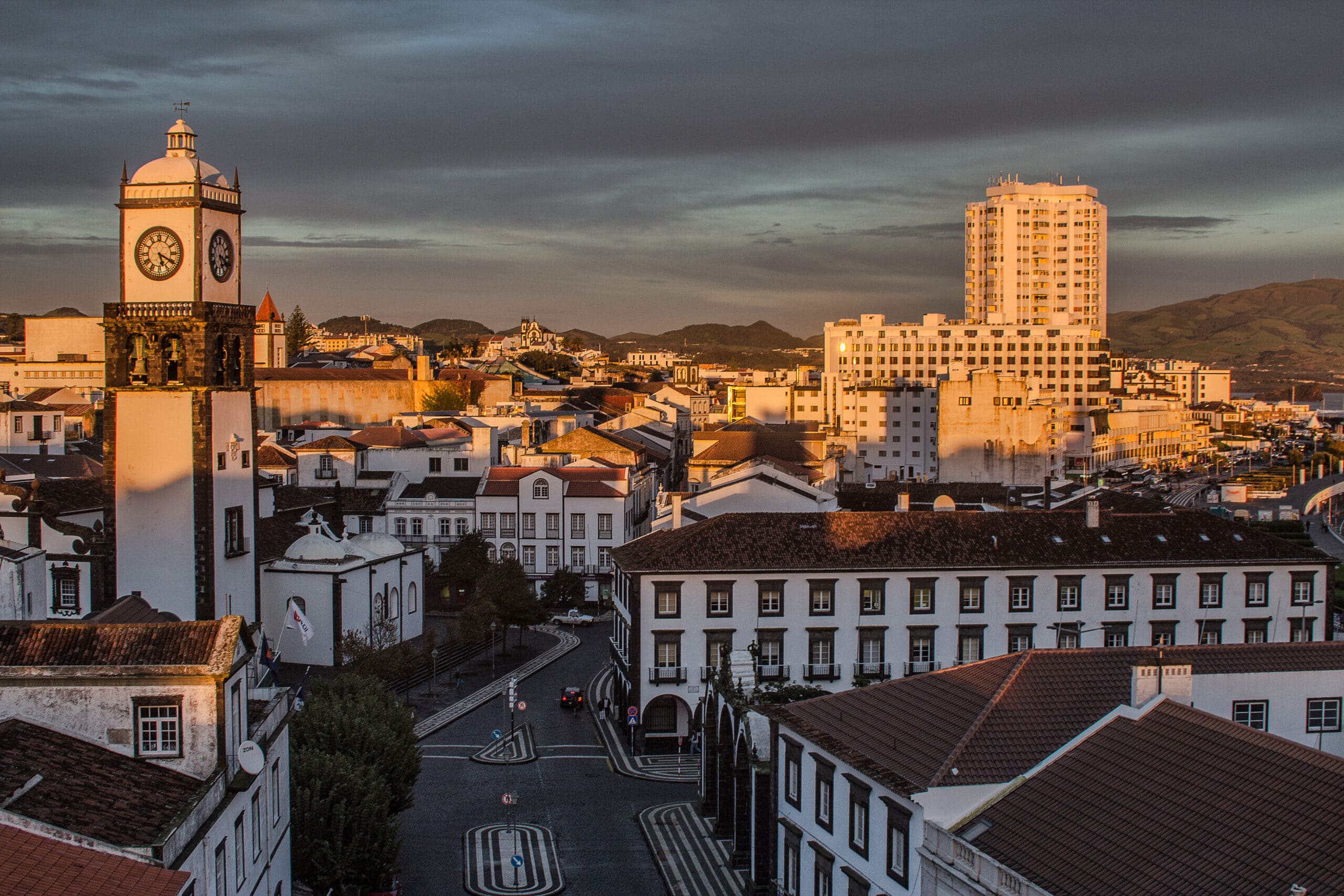
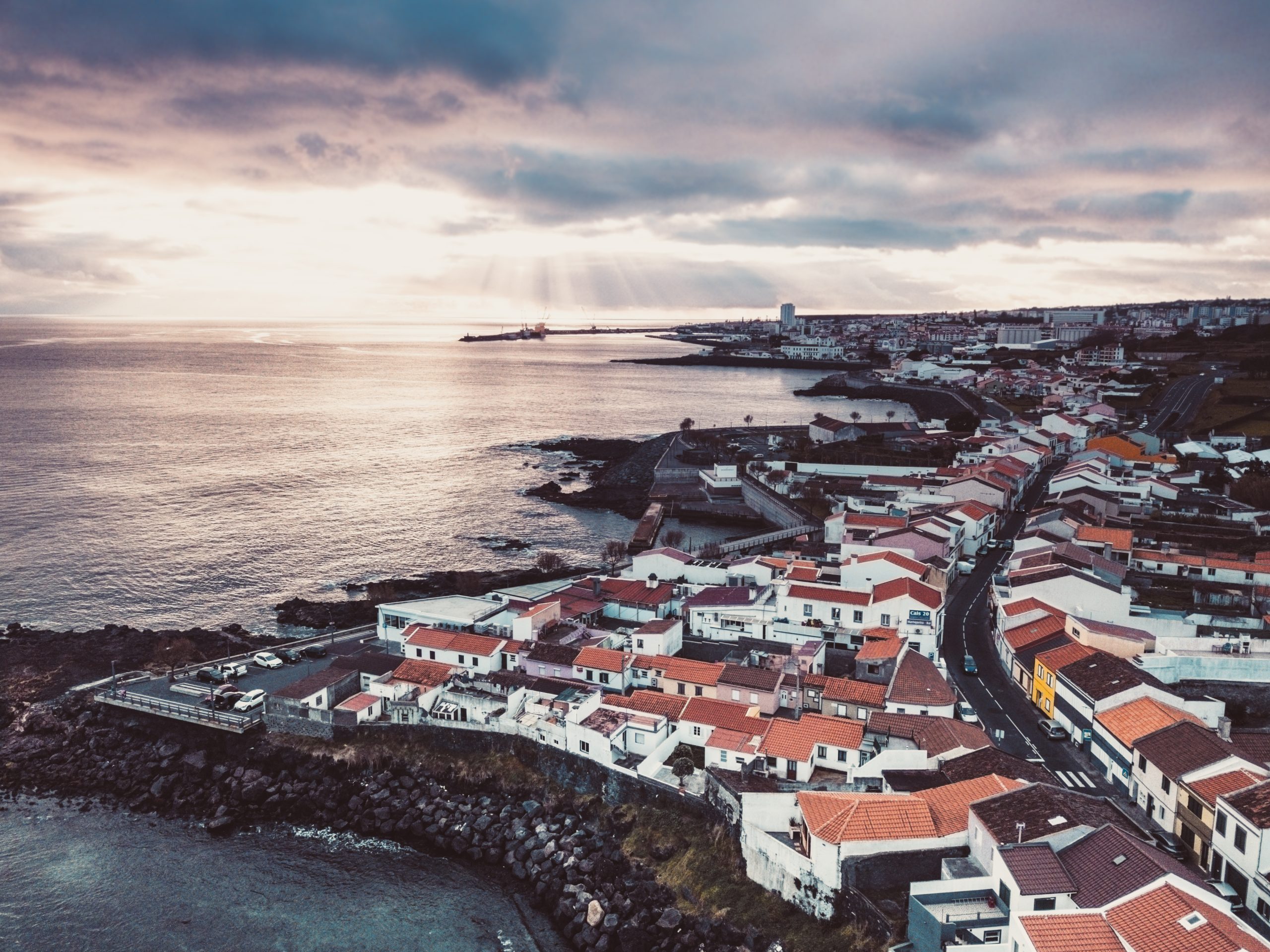
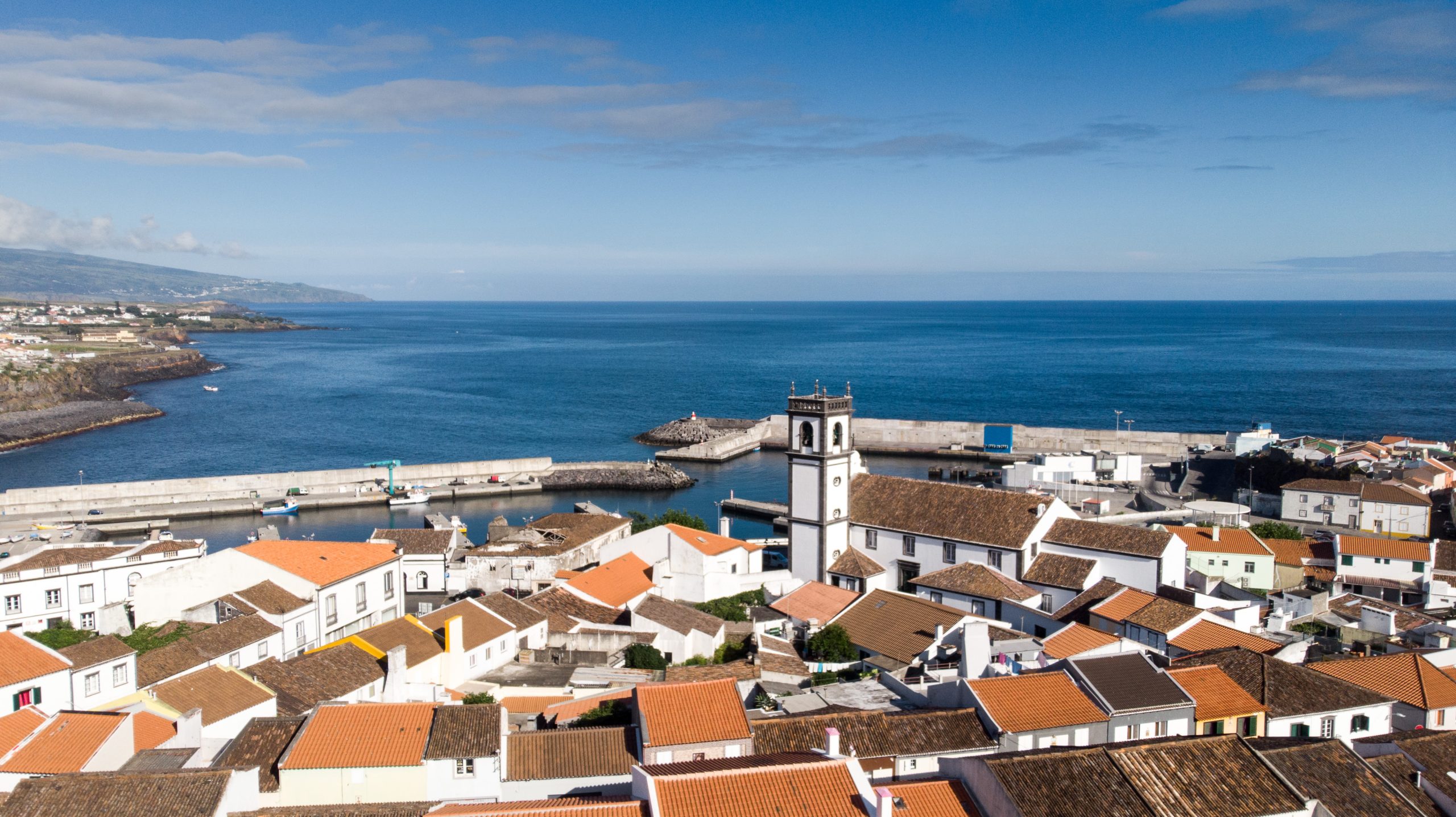
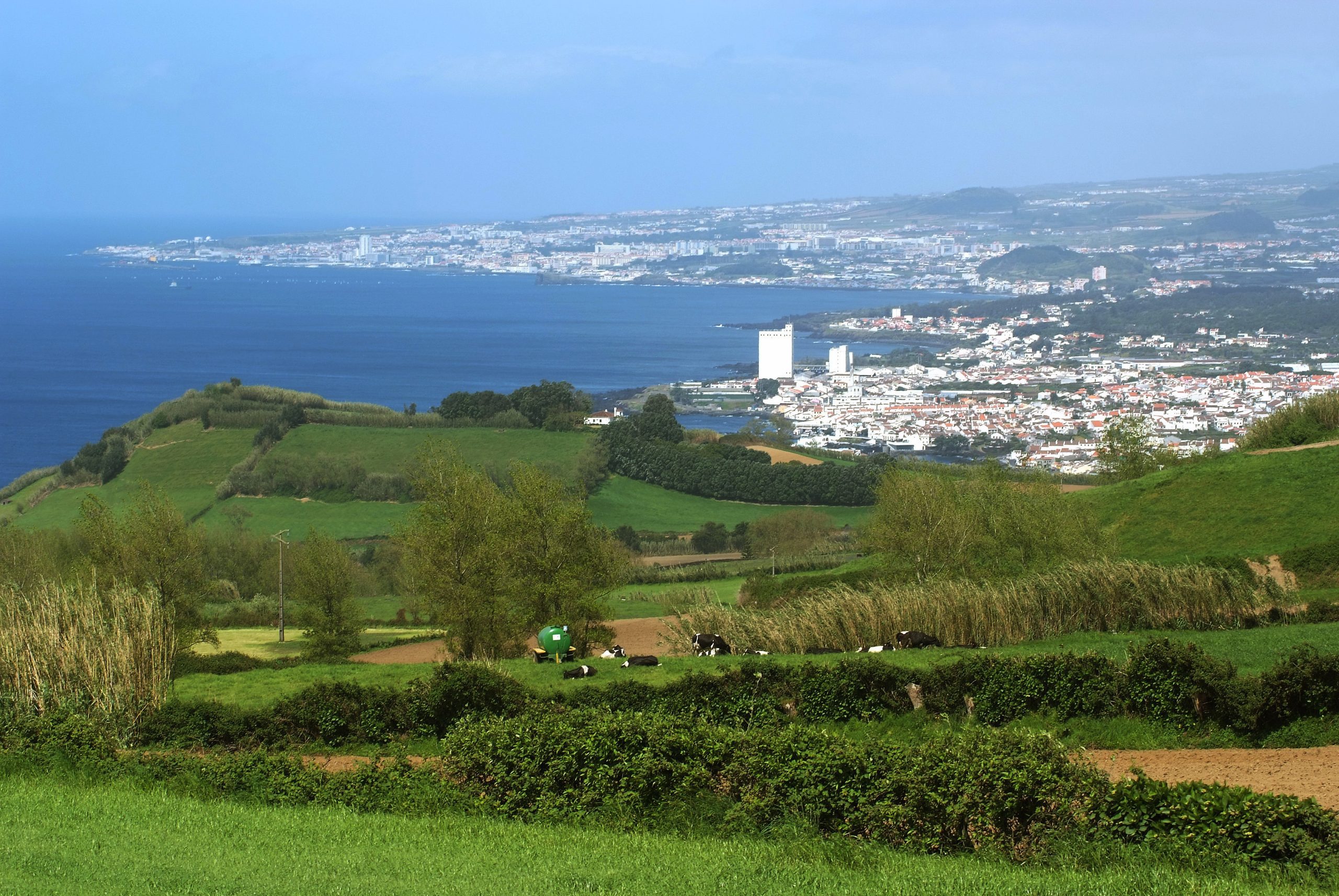
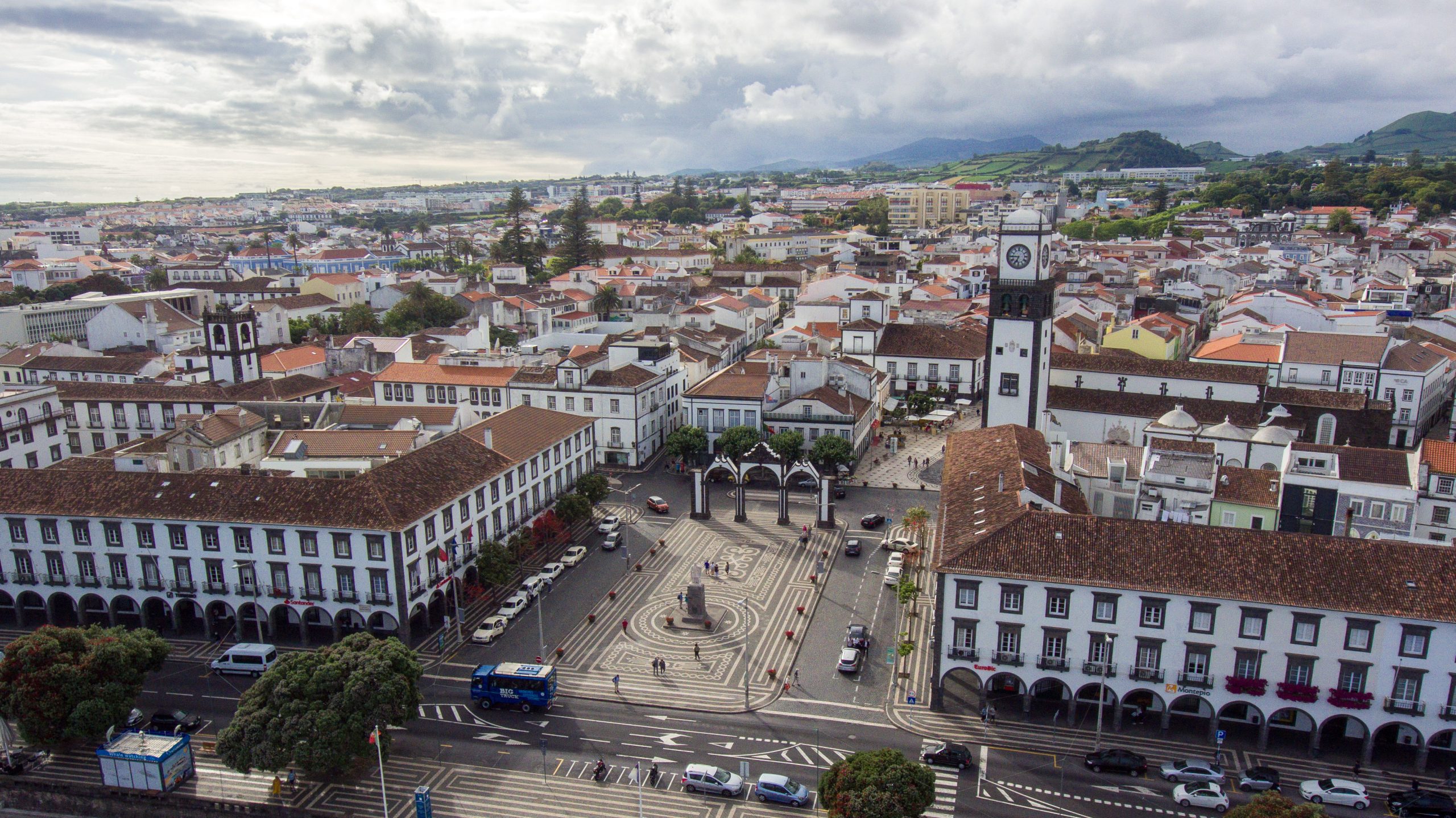
Ponta Delgada has become a thriving city with live music, flowers in the streets, illuminated monuments and squares, many activities for children, and delicious street food trucks. People come together in the streets. This shows the importance of the Santo Cristo festival for shaping Azoreans’ history and culture for centuries.
The religious tourism generated by this festival shows that the people of the Azores are deeply devoted to Christianity. It is part of their identity, providing a feeling of belonging to a community. In this article, we will tell you all you need to know about the happiest time of the year in Ponta Delgada, the biggest city in the archipelago.
What is Senhor Santo Cristo dos Milagres?
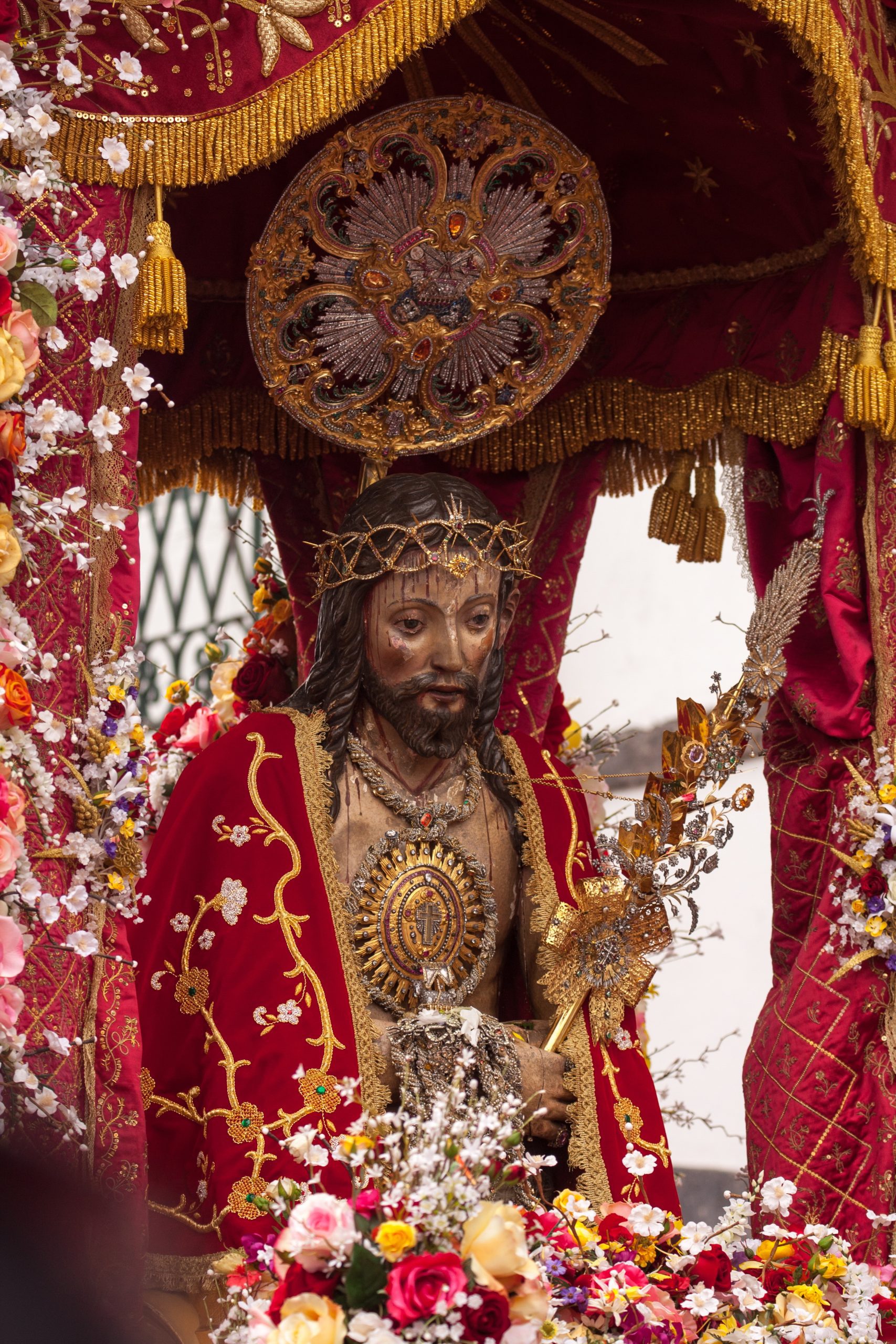
Senhor Santo Cristo dos Milagres is a sacred work of art that can be seen at the Nossa Senhora da Esperança convent in Ponta Delgada, located on São Miguel island in the Azores archipelago. The wooden relic, attributed to an anonymous artist, depicts Ecce Homo — Jesus Christ during the Passion. He was in front of the crowd with tied fists, wearing the crown of thorns (Lucas 23:1-25).
You can truly sense the contrast between the violence that Jesus suffered and the calm he projects through his expression. The statue also features an abundance of gemstones, diamonds, and gold. Experts estimate that the artist sculpted Santo Cristo dos Milagres at the beginning of the 16th century.
The Origins
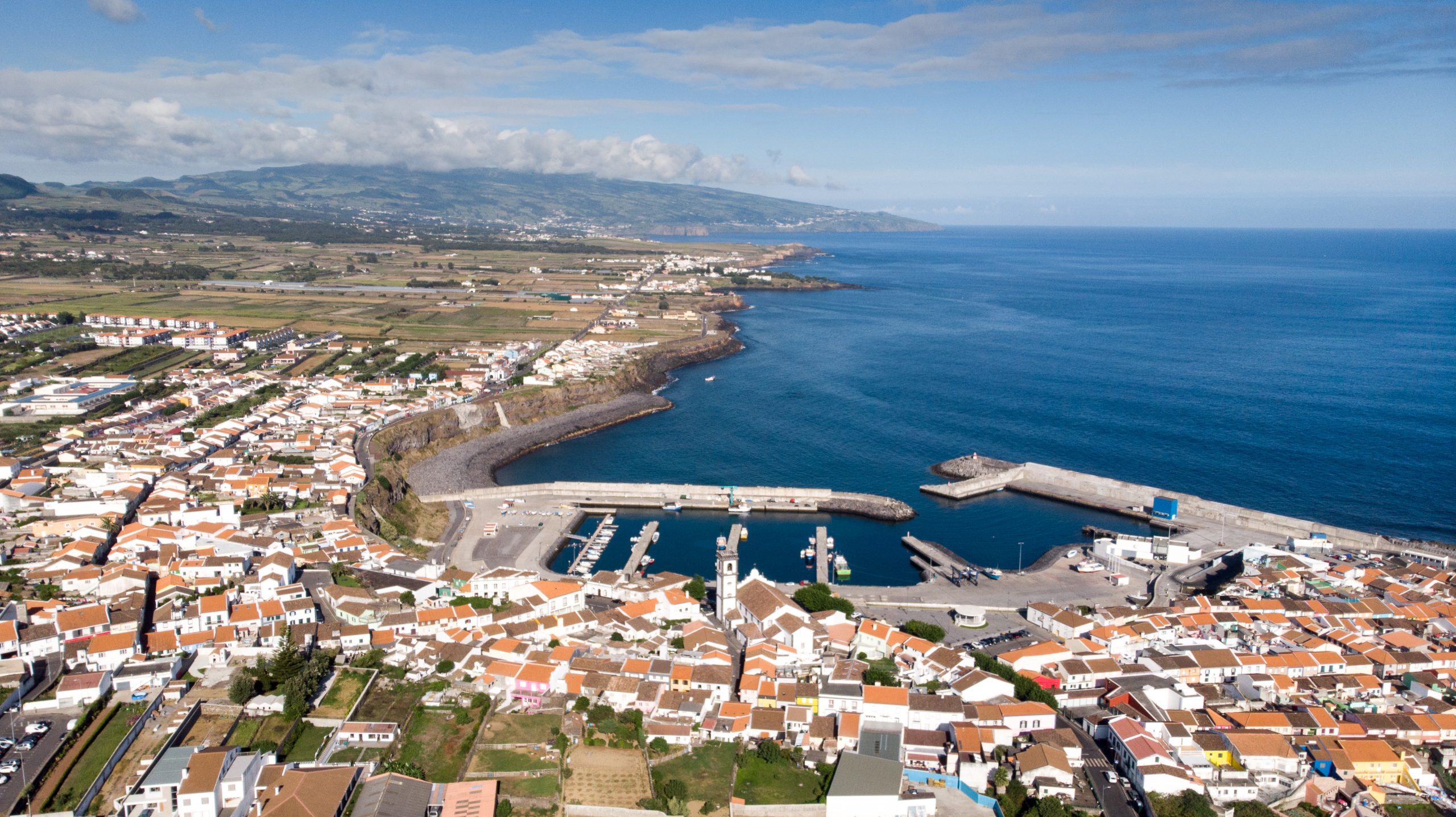
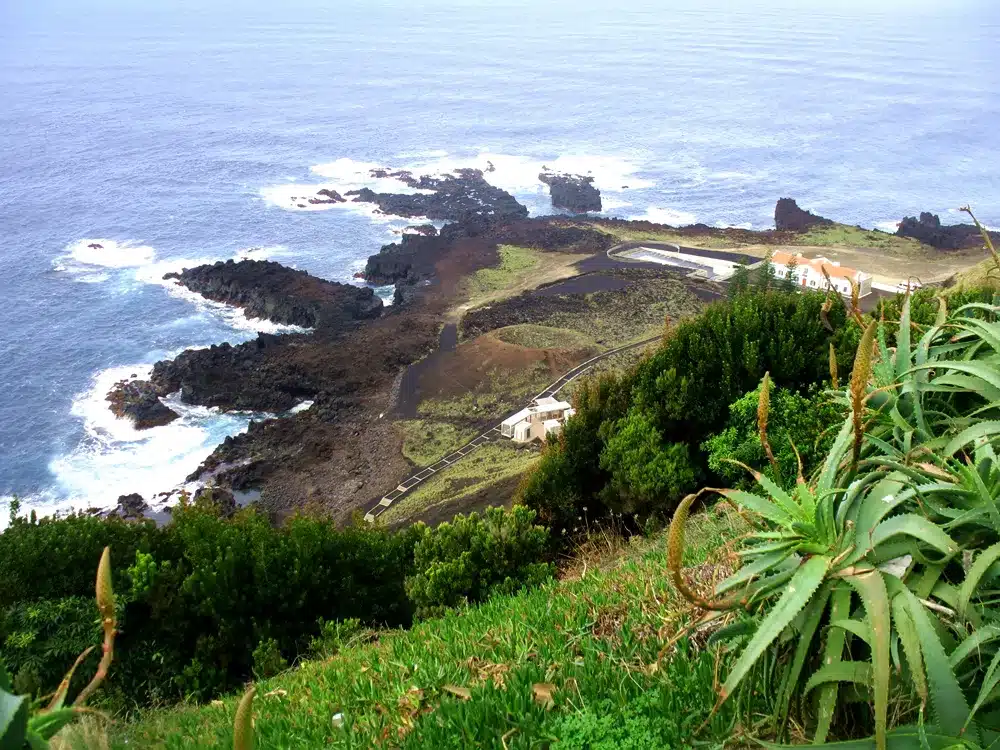
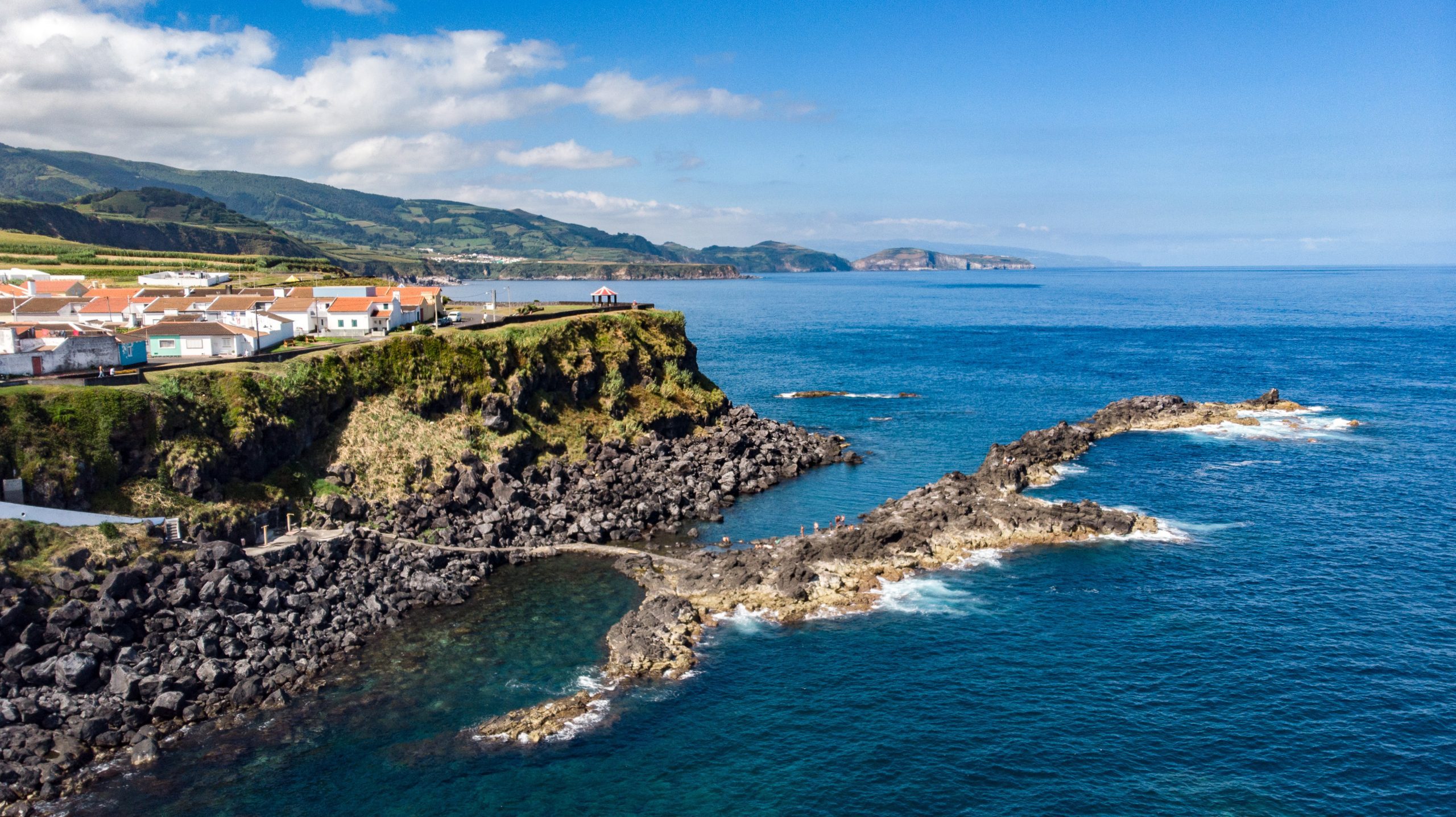
But where did this statue come from? And how did it become a tradition honoured every year, eventually giving rise to the largest religious festivity in the Azores? The devotion to Senhor Santo Cristo dos Milagres dates back to the 16th century and begins at the old Caloura convent in Água de Pau, then known as Vale de Cabaços, on the south coast of São Miguel.¹²
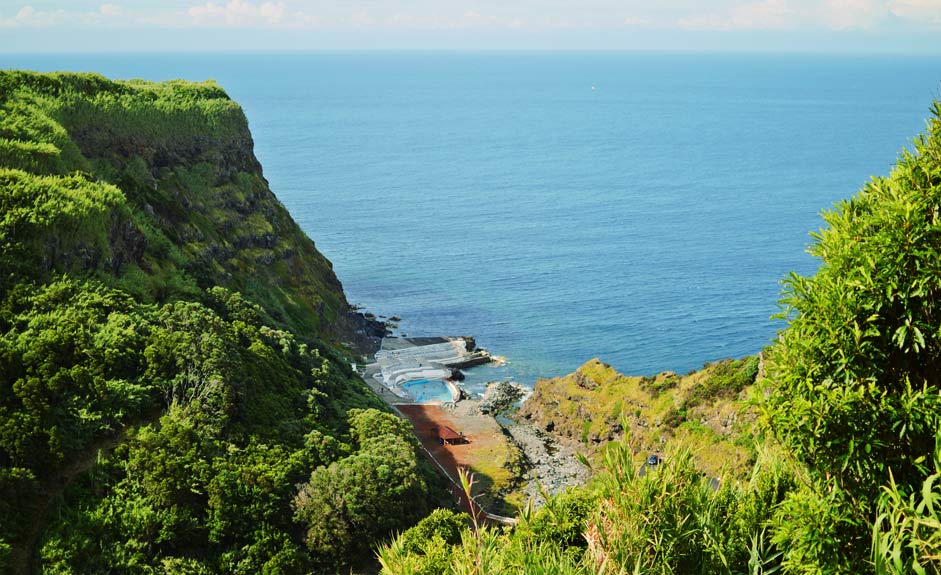
In 1523, a group of young women withdrew into a hermitage by the sea, founding the island’s first female monastery of the Order of Saint Clare.¹²
According to traditional accounts, two nuns later travelled to Rome to obtain the Papal Bull that would officially recognise the community as a convent.³ The Pope — likely Paul III, although some authors suggest Clement VII — is said to have granted the document and offered them an image of Christ in the Ecce Homo scene.³
However, historical records indicate that there is no documented reference to the image currently venerated as Senhor Santo Cristo dos Milagres before the second half of the 17th century.¹ A 2019 study further suggests that the bust was created in the 17th century, although the exact year remains unknown.¹
To explain this gap in the historical record, a widely repeated legend emerged over time: the image offered by the Pope would have been lost at sea on the return journey and later found miraculously near the convent after a storm or shipwreck.¹ The Sanctuary itself acknowledges this as a “beautiful legend, yet full of inaccuracies and improbabilities”, even if it remains part of Azorean devotional imagination.¹
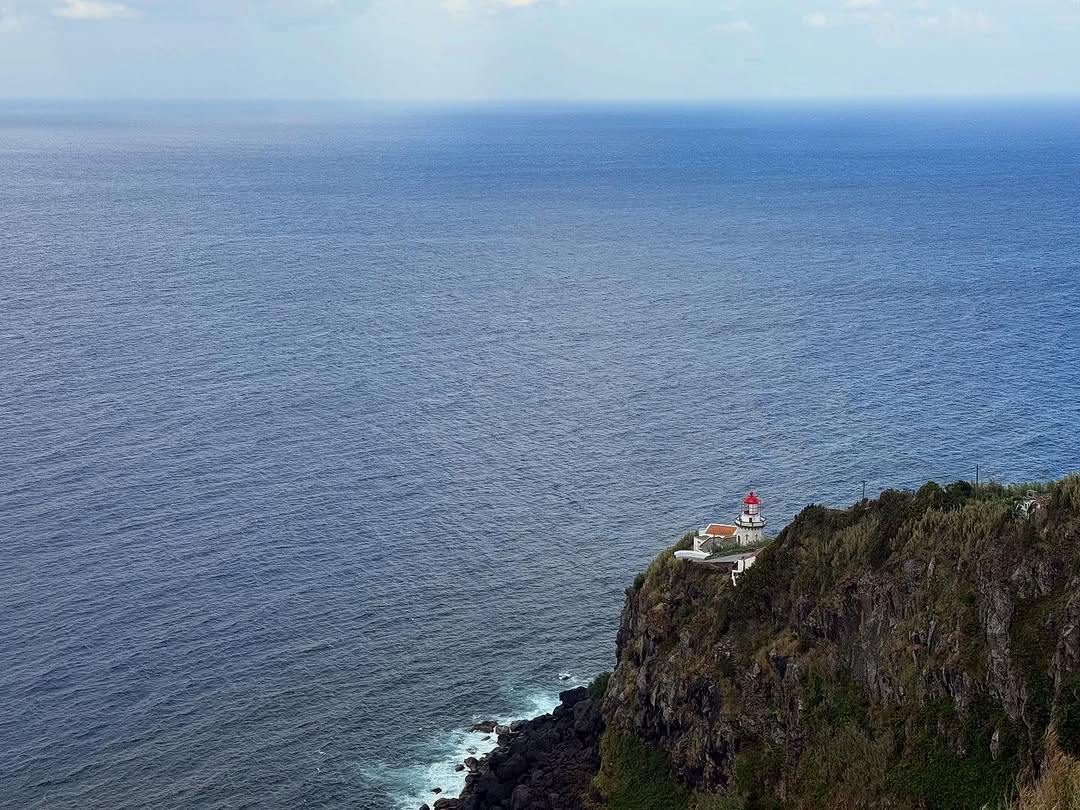
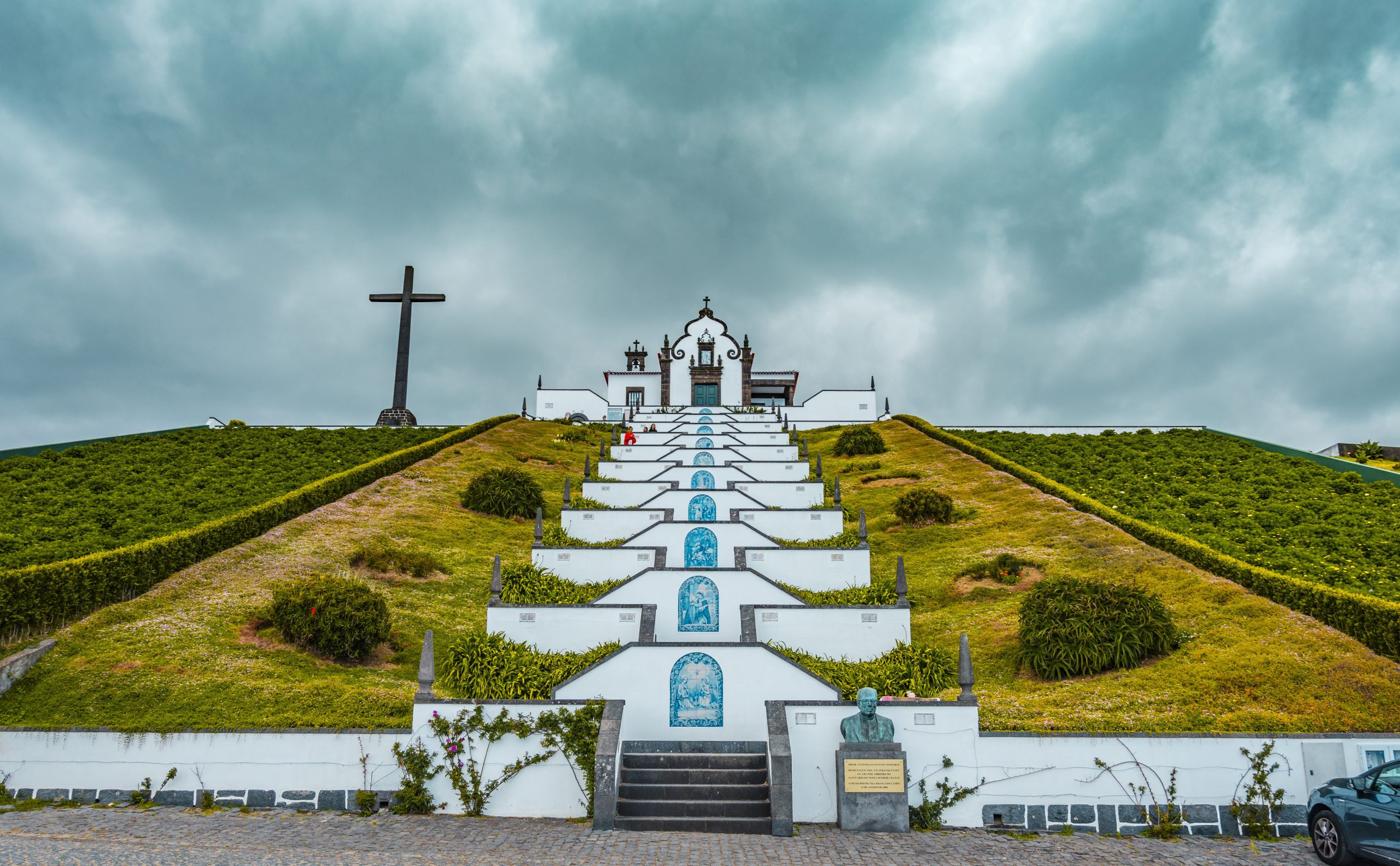
Documented sources confirm that, due to its exposed location on a cliff by the sea, the convent of Caloura was vulnerable to pirate attacks.¹ This led to the foundation of other convents of the Poor Clares, namely in Vila Franca do Campo and later in Ponta Delgada.¹
In 1541, the nuns from Vale de Cabaços moved into the new Convent of Nossa Senhora da Esperança in Ponta Delgada.¹ It was there, according to historical records, that the image of Senhor Santo Cristo dos Milagres began to be venerated in the second half of the 17th century. From 1683 onwards, it received special attention from Mother Teresa da Anunciada, who played a decisive role in organising the first processions and consolidating public devotion.¹²
Today, the devotion blends centuries of tradition with a history that continues to be studied and reinterpreted.
→ Related articles: Ponta Delgada | Caloura
The First Celebration

The first major procession in honour of Senhor Santo Cristo dos Milagres took place in 1700, organised by Mother Teresa da Anunciada, who had been devoted since 1683 to caring for the image and promoting its cult at the Convent of Nossa Senhora da Esperança.¹²4
Historical records indicate that the decision to take the image through the streets of Ponta Delgada arose in a context of intense seismic activity, as a gesture of supplication and trust in divine protection.¹³
According to tradition, the image was carried throughout the city accompanied by nuns, clergy, and faithful from different social backgrounds, including members of the nobility, in an atmosphere of deep emotion.¹³
Over time, several legendary elements became associated with this procession. Devotional tradition holds that the day was dark and ominous, the city marked by earthquake damage, and that the image fell to the ground during the procession without breaking. It is also said that, at that very moment, both land and sea suddenly calmed, which was interpreted as a sign of divine intervention.¹
However, these details are not confirmed by historical sources and belong to the realm of popular imagination, reflecting the intensity of Azorean faith rather than documented events.¹
What documented sources confirm is that, throughout the 18th century, the society of Ponta Delgada came to regard itself as a “vassal” of Senhor Santo Cristo and began organising a large annual procession in his honour — a tradition that, with rare interruptions and adaptations, continues to this day.¹²³
Many believers still attribute graces and miracles to the image and turn to it in the most difficult moments of their lives, reinforcing the central role of this devotion in the religious identity of the people of São Miguel and the Azores.¹³

Nowadays
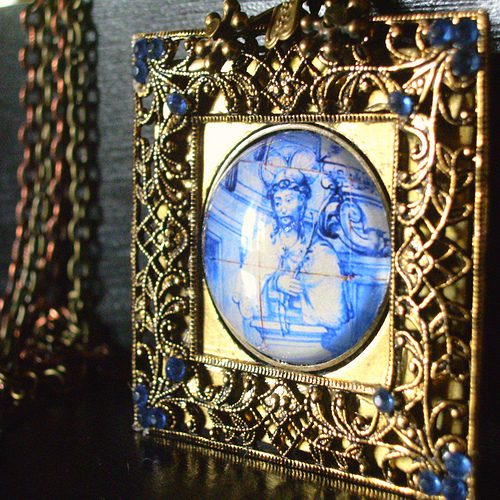
Now, thousands of Azorean people travel to São Miguel for Senhor Santo Cristo dos Milagres. They are locals living on the eight other islands, as well as immigrants living in Canada, the United States, Brazil, and many other countries around the globe. This religious festival brings together locals and travelers. Emigrants who left the island also returned to their homeland to spend time with their families.
When and Where is the Santo Cristo dos Milagres Festival
Festas do Senhor Santo Cristo are celebrated on the fifth Sunday after Easter (Whitsunday). This is when they do the big procession. However, the festivities last from Friday to the following Thursday (Ascension Day). The place where the magic happens is mostly São Francisco Square with the convent of Esperança in Ponta Delgada. This is where Ecce Homo departs, and the party begins.
→ Related article: Public Holidays in the Azores
How We Celebrate Santo Cristo dos Milagres
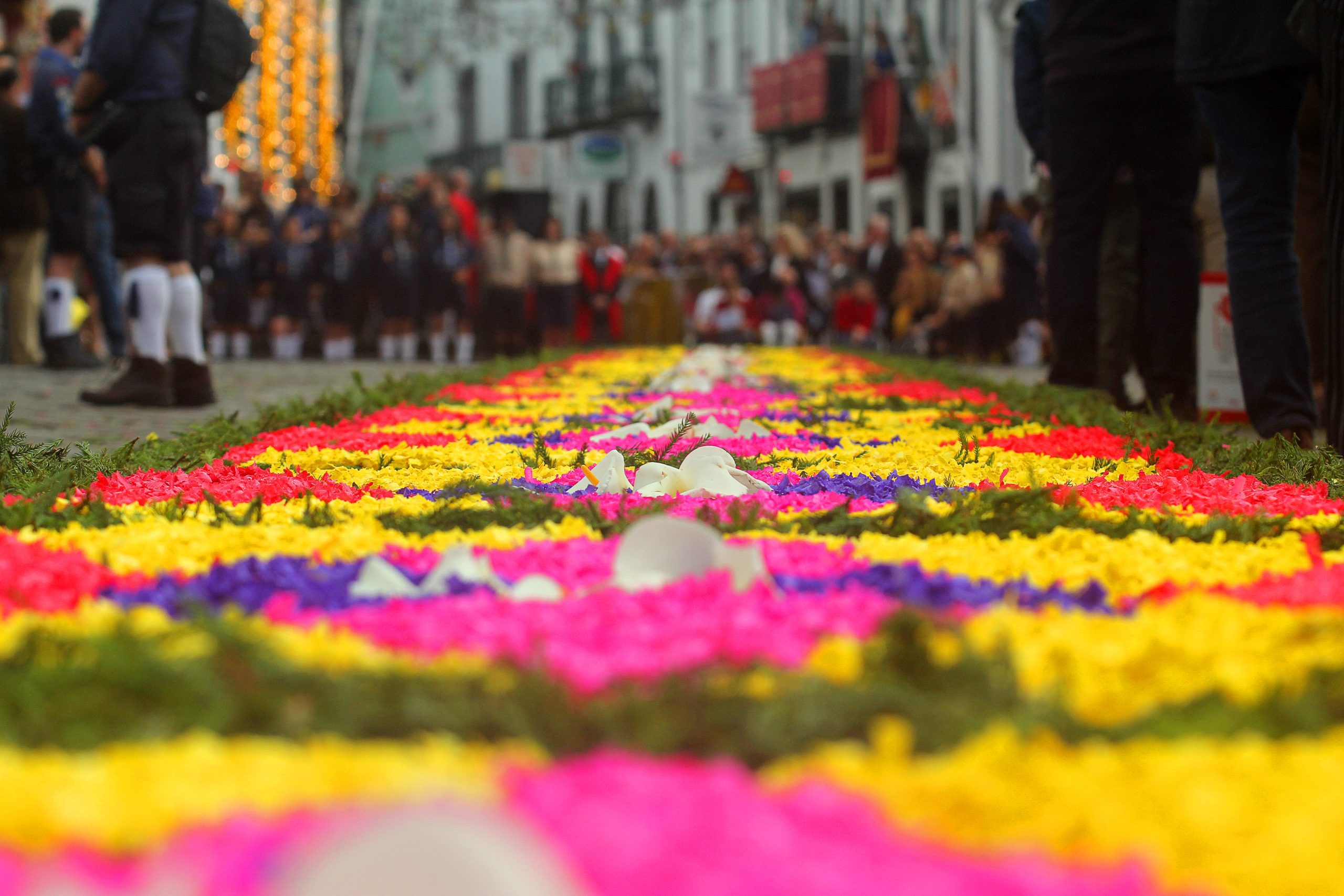
Everybody is preparing for this period, which is just as loved as Christmas. Locals decorate their houses with traditional white linens hanging on the windows. The floor of the city center is also covered with flowers, tree leaves, and colorful wood chips. Santo Cristo is much more than a religious event. There are many things to do during this time of year in the streets of the biggest Azorean city.
Religious Traditions

The religious dimension of the Cult of Senhor Santo Cristo dos Milagres includes the celebration of Eucharists, novenas (nine consecutive days of prayer), moments of adoration, and a major procession in honour of the venerated image kept at the Convent of Nossa Senhora da Esperança.¹²⁴
Every year, large numbers of faithful travel to Ponta Delgada from across the Azores, the Azorean diaspora, and other countries to take part in the celebrations and pay homage.¹⁴⁶
The devotion to Senhor Santo Cristo dos Milagres is closely linked to requests for graces and the fulfilment of promises. Many faithful turn to the image in times of hardship and, feeling their prayers answered, return to give thanks.¹⁴ Among the most common offerings are flowers, candles, donations, and jewellery, which over more than three centuries have contributed to the remarkable collection of goldsmithing pieces associated with the image.⁵¹
One of the most visible practices during the festival weekend is the fulfilment of vows in São Francisco Square, in front of the Sanctuary. There, many devotees walk the grounds on their knees or barefoot, often carrying a candle to light upon completing the journey.⁴⁶ This act, sometimes accompanied by family members, expresses gratitude for graces received and continued trust in Senhor Santo Cristo.¹⁴
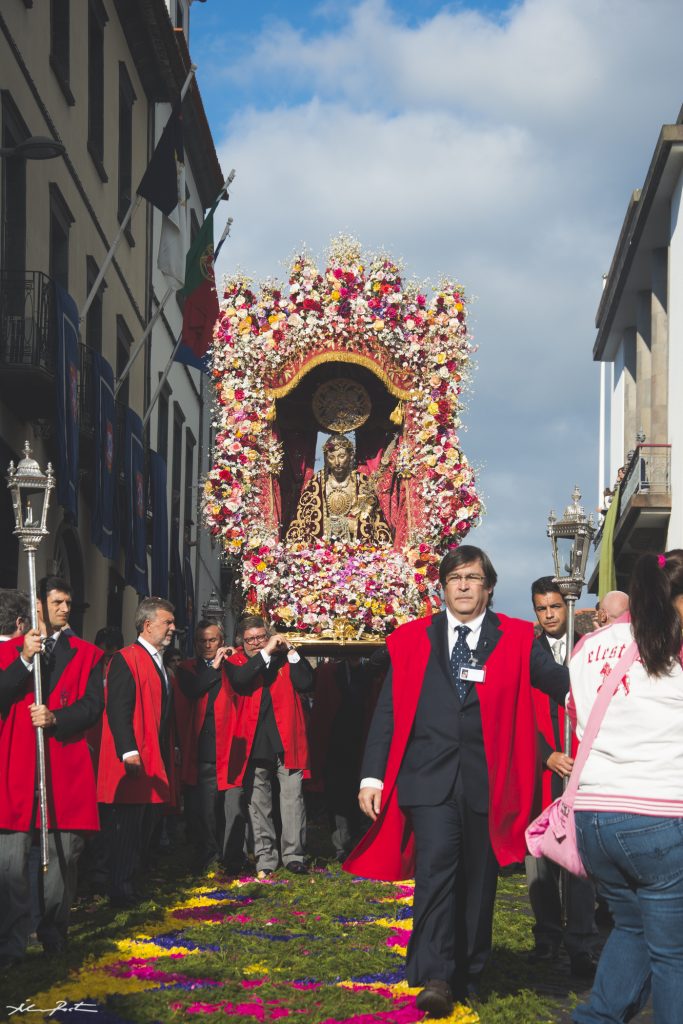
The main procession usually takes place on the fifth Sunday after Easter and carries the image through the streets of Ponta Delgada, passing by several churches and convents.¹²⁴ The route is carefully prepared with flower carpets, coloured wood chips, and quilts hanging from windows.⁶
The image, richly adorned with the so-called “Treasury of the Lord”, including the radiant halo, crown of thorns, relic, sceptre, and rope, is carried by designated men.⁵¹ The procession also includes civil and religious authorities, military and security forces, fire brigades, philharmonic bands, and religious brotherhoods.¹⁶
For several hours, the procession moves through the main streets of downtown Ponta Delgada in an atmosphere of deep devotion and contemplation, as the faithful follow the image, scatter flower petals, and pray in fulfillment of their vows.⁶⁴
At the end, the image returns to the Sanctuary of Nossa Senhora da Esperança, where it remains on display for veneration, allowing the faithful to offer a final prayer before the official closing of the festivities.¹²⁶
Popular Festivities

This is an event that everyone should experience, even if you are not religious. In addition to the cult, the festival part is worth experiencing! There are many activities to enjoy in the streets, like the inauguration of the fantastic lights in the public square, live music, many food trucks serving traditional Azorean food, and even an amusement park! It is a very festive time of year to visit the Azores. Both adults and children very much enjoy Santo Cristo’s festival, mostly at night.
Pro Tips
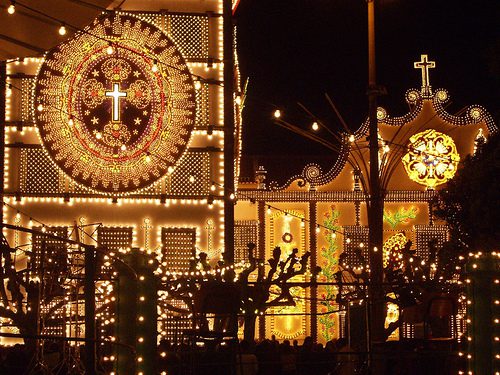
- As previously mentioned, even if you are not religious, this is an excellent opportunity to mingle with locals and enjoy a big street party in Ponta Delgada.
- Since many people come to the island during this season, it may be wise to book your hotel in advance to ensure there are still rooms available. The same goes for plane tickets to secure the best flight prices to the Azores.
- If you want to follow the event but cannot attend, there will be a live transmission on RTP. The government of the Azores website also streams it online so you can see the procession from afar.
Complementary Information
Best Season to Visit the Azores
The Azores Archipelago boasts a unique climate that shapes its lush landscapes, making it a splendid year-round destination. With mild temperatures and minimal fluctuations, each season offers something unique. Spring averages 16 °C, summer reaches 21 °C, autumn cools to 18 °C, and winter remains mild at 14 °C.
→ For a detailed breakdown of the weather by month, check the following links 🌤️☔️: January | February | March | April | May | June | July | August | September | October | November | December
How to Get to the Azores
The Azorean Archipelago is easily accessible through numerous flight routes. Lisbon and Porto are the main entry points to the continent, with direct flights available to São Miguel (PDL), Terceira (TER), Faial (HOR), Pico (PIX), and Santa Maria (SMA). To find the best flight, use search engines like eDreams or Skyscanner. These platforms let you compare prices and schedules from multiple airlines in one convenient location.
For more details on how to get to the Azores, take a look at our complete guide. But what if you want to explore beyond your arrival island? We’ve got you covered!
- Azores airports 🛬
- Flights between islands ✈️
- Ferries between islands ⛴️
- Which island to choose? 🏝️
- What airlines fly to the Azores? 🛩️
→ Once you’ve found the perfect route, book your tickets and get ready to experience one of the world’s most stunning island groups!
Travel Essentials
Essential Information for your Azores trip: Azorean Language & Phrases 🗣️ | Currency & Banks 💵 | Credit Cards & Traveler’s Cheques 🏧 | Driving in the Azores 🚗 | Electricity 🔌 | Experiences & Tours 🗺️ | Health & Safety 🩺 | Internet & Wi-Fi Access 🛜 | Phones & Mobile Service 📞 | Post Offices & Buying Stamps ✉️ | Public Holidays 🏖️ | Shopping 🛒 | Time & Daylight 🕒 | Whale Watching Guide 🐳 | Best Island to Visit 🏞️
Useful Tools & Apps
The weather in the Azores can be variable, so it’s helpful to use some apps before visiting the islands. Spotazores provides live camera feeds from the main tourist attractions, allowing you to check the weather and plan your visit. For accurate weather predictions, use Windy or Windguru — they provide the most reliable predictions.
Video
Conclusion
The importance of Santo Cristo in the Azores is undeniable. It has a significant impact on the island through the flow of travelers coming to São Miguel. Moreover, it is a great time to visit the island to experience the local culture. Keep in mind that this manifestation of faith is more than 320 years old. It is beautiful to see that traditions continue and that people love them. So, now that you know everything about Santo Cristo, come celebrate with us this year in Ponta Delgada!
Sources
- Santuário do Senhor Santo Cristo dos Milagres – Culto e História
https://senhorsantocristo.com/culto - Santuário do Senhor Santo Cristo dos Milagres – Cronologia
https://senhorsantocristo.com/cronologia - Santuário do Senhor Santo Cristo – História do Culto
https://santo-cristo.com/culto-do-senhor-santo-cristo-historia - Wikipedia – Santo Cristo dos Milagres
https://pt.wikipedia.org/wiki/Santo_Cristo_dos_Milagres - Santuário do Senhor Santo Cristo – Património Artístico
https://senhorsantocristo.com/patrimonio-artistico - Visit Ponta Delgada – Festas do Senhor Santo Cristo dos Milagres
https://www.visitpontadelgada.pt/geo_artigo/festas-do-senhor-santo-cristo-dos-milagres