

Traditional Azorean clothing is one of the most distinctive and symbolic elements of the Azores. These islands feature not only beautiful landscapes but also a rich culture, as reflected in traditional clothing. It is possible to see all the cultural references on the Capote e Capelo, which we will dive into in this article.
Origins & Evolution of Traditional Azorean Attire

There is no certainty about the origin of these unique regional costumes. Historians suspect that traditional Azorean clothes draw inspiration from conventional Portuguese styles from regions such as Beira Alta, Minho, and Alentejo, or possibly from Flanders, since these groups were the principal inhabitants of the area.
People made the clothes from natural materials such as wool, linen, and cotton, often handwove and dyed them using local resources. They designed the garments not only for practical purposes, such as protection against the island’s windy and humid climate, but also to preserve women’s identity.
Capote e Capelo: The Most Iconic Azorean Garment

Among the most distinctive items of Azorean traditional attire are the capote e capelo, which are typically worn by women, particularly on the island of São Miguel. It consisted of a long, dark wool cloak (capote) and an oversized, veined hood (capelo).
The garment provided Azorean women with an air of mysticism and invisibility, and also safeguarded them against the weather and offered modesty according to Catholic standards.
The people of São Miguel integrated it so deeply into local identity that they used it every day until the early 20th century. Today, museums, folk shows, and tourism ads actively present it as a symbolic element of the island’s history.
Traditional Clothing in the Azores

Traditional Azorean Men’s Clothing
Men’s traditional attire was simpler, with a significant emphasis on functionality, and it included:
- Wool trousers or breeches
- White linen shirts
- Wool waistcoats
- Felt hats or black caps
- Sashes around the waist
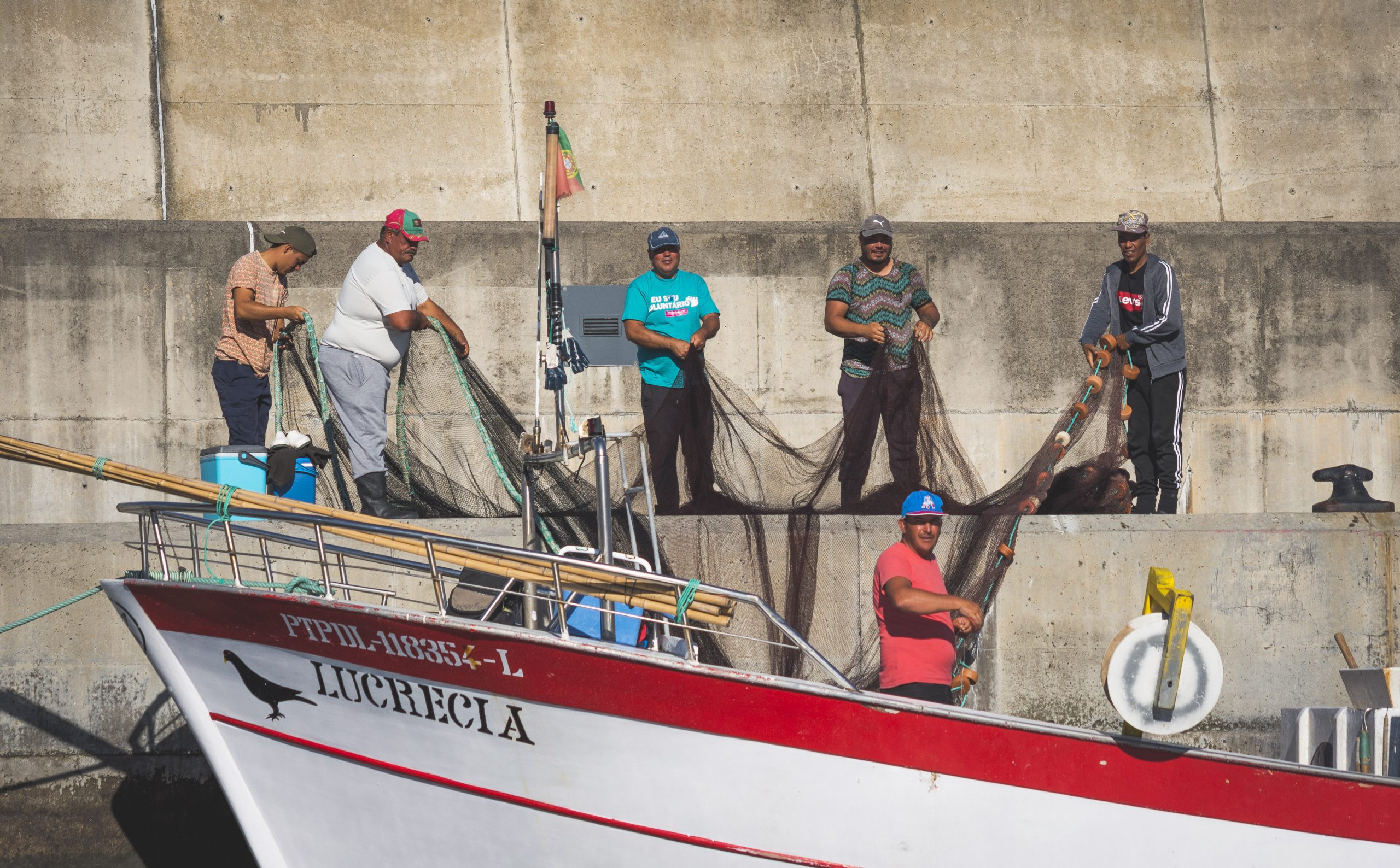
People often wore these garments to signal their occupations, such as agriculture or fishing, and they wore them proudly during religious festivities and traditional dances.
Traditional Azorean Women’s Clothing
Besides Capote and Capelo, traditional women’s clothing in São Miguel typically included:
- Long, pleated wool skirts (saias), typically striped or plain, in vivid reds, greens, blues, or browns. These were adapted for both everyday use and special occasions.
- Embroidered linen blouses (camisas), usually white, with intricate lace detailing and puffed sleeves, reveal the local tradition of textile craftsmanship.
- Aprons (avental), worn over the skirt, which could range from simple cloth for daily chores to richly embroidered silk versions used in festivities.
- Wool bodices or vests (corpetes), tailored to the body, are frequently embellished with decorative buttons or trims.
- Headscarves or shawls (lenços), covering the head and shoulders, are embroidered with floral or religious motifs.
This type of attire varied by social class, with wealthier families wearing more elaborate clothing featuring richer colors and more intricate embroidery.
Preservation & Modern Influence
People no longer wear traditional Azorean attire every day. Still, they continue to use it during religious holidays, especially the Festas do Espírito Santo, as well as in folklore performances, historical reenactments, and community celebrations. The folkloric groups parade in authentic replicas of historical costumes, preserving the island’s heritage for both residents and tourists.
In recent years, elements of traditional attire, such as embroidery patterns or the silhouette of the capote e capelo, have inspired modern fashion designers, fostering renewed interest in Azorean cultural expression in contemporary contexts.
Planning your trip to the Azores? ✨ Check out our complete guide to Public Holidays in the Azores: Full List & Travel Guide
Conclusion
Azorean people unite through their history, religion, and identity, which they express by wearing traditional Azorean clothing. These costumes are not only garments but also visual attributes of specimens of an original insular culture that have withstood the test of time. This is why, by celebrating and preserving them, the Azores continue to speak to the world about them, one stitch at a time.
Azores Guide Book
Azorean Language & Phrases 🗣️ | Currency & Banks 💵 | Credit Cards & Traveler’s Cheques 🏧 | Driving in the Azores 🚗 | Electricity 🔌 | Experiences & Tours 🗺️ | Health & Safety 🩺 | Internet & Wi-Fi Access 🛜 | Phones & Mobile Service 📞 | Post Offices & Buying Stamps ✉️ | Public Holidays 🏖️ | Shopping 🛒 | Time & Daylight 🕒 | Whale Watching Guide 🐳 | Best Island to Visit 🏞️
FAQs
Traditional Azorean clothing refers to the historical garments worn by people across the nine islands of the Azores, including wool skirts, embroidered blouses, and the iconic capote e capelo.
The capote e capelo is a long, dark woolen cloak with a structured hood traditionally worn by women in São Miguel. It served both as protection against the weather and a symbol of modesty and identity.
Wealthier families wore more elaborate and colorful clothing, often decorated with detailed embroidery and made from finer fabrics, while working-class garments were more straightforward and more functional.
Yes, they are worn during religious festivals, especially the Festas do Espírito Santo, and by folkloric groups during cultural events and performances.
You can see authentic examples in ethnographic museums across the Azores, such as the Museu Carlos Machado, and during live performances by regional folk groups.
Yes, contemporary designers are increasingly incorporating elements such as Azorean embroidery and silhouettes into modern clothing, thereby helping preserve and reinterpret this cultural heritage.