


While surfing through the endless sea of the internet, you might encounter some strange or confusing pieces of information. Then, you may start wondering whether they are true or complete nonsense. One of these viral claims has circulated on social media many times over the past few decades. According to many people — including some well-known celebrities — whale sperm supposedly makes the ocean salty. But is this really true, or just another internet hoax?
Whale Reproduction

Over the past few decades, it has been reported that whales release between 40 and 400 gallons (1.51 m³) of sperm during a single mating act, with only about 10% entering the female. However, how precise is this information? Let’s have a quick fact-check!

Natural Selection
Indeed, whales do need to produce a lot of sperm. As females can mate with several males, this adaptation ensures that the males’ genes are passed on successfully. In this world of sperm competition, individuals that produce more sperm may have a greater chance of reproductive success.
Hence, in terms of evolution, this may be one of the reasons why bigger testicles are favored by natural selection and passed on to newer generations.
For instance, North Atlantic right whales, in comparison with other animals engaged in sperm competition, evolved disproportionate adaptations. Researchers suggest that the aquatic environment may be the main influencing factor.
In the ocean, males cannot restrict the female’s access to other males, and they have not evolved behavioral mating strategies for competition, unlike sperm whales. As a result, they rely solely on their sperm quantity and penis length for successful mating.

Studies have further confirmed that sperm competition favors the older males of the population.
Although male right whales can breed at about 8 years of age, fatherhood typically occurs later, from 15 years onward. Scientists have proposed a theory to explain this phenomenon, recommending that the testicles may continue to grow in size and productivity.
Moreover, it is often observed that the same males mate successfully every year, resulting in a more uniform gene pool for future generations. This reduction in variety is a problem, particularly for small populations, because disadvantageous mutations can spread easily, and the species is unable to adapt to environmental changes.

Whale Testicles and Sperm
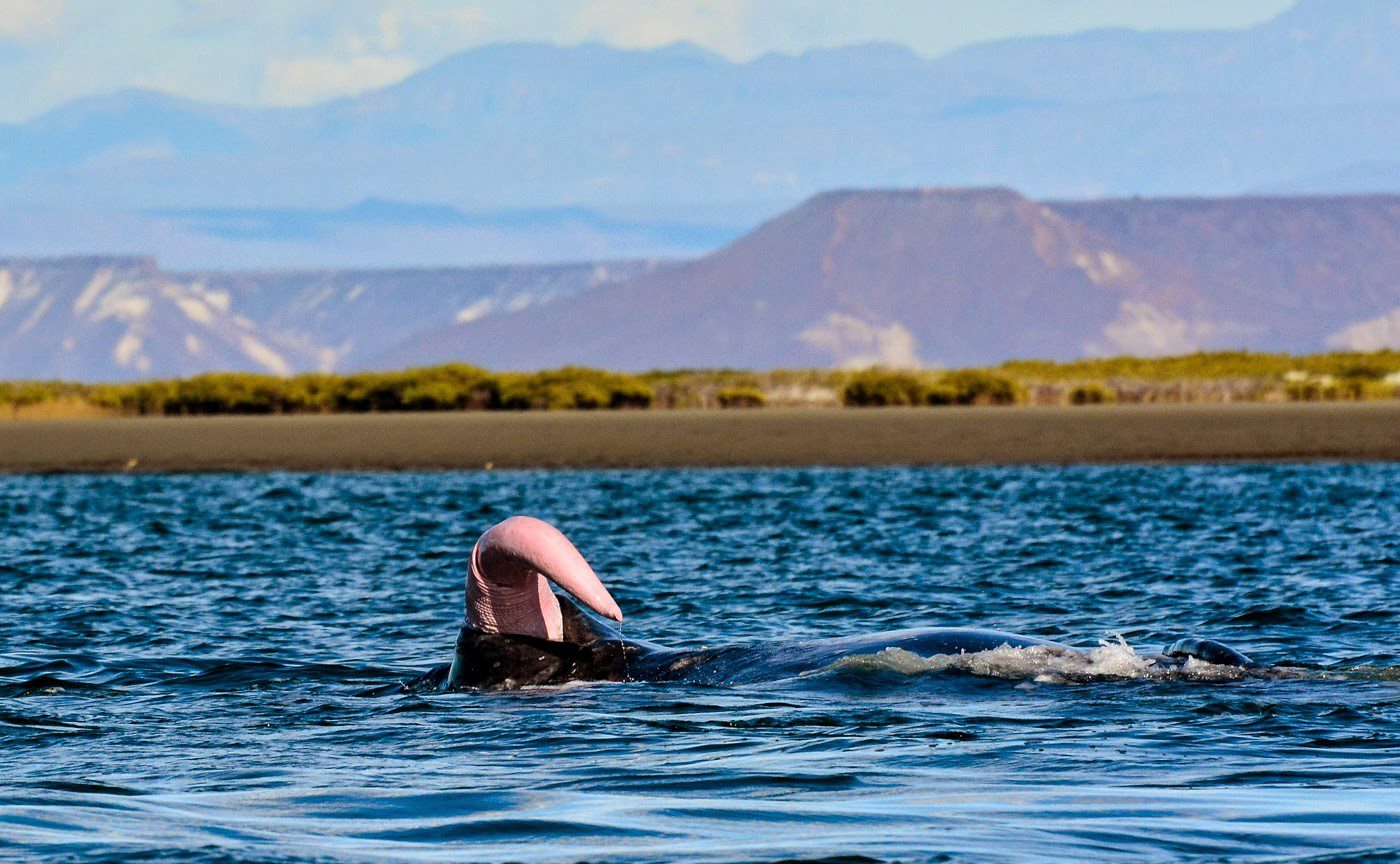
Whales are huge creatures, including the biggest animal that has ever lived on Earth – the blue whale. So, one might think that their reproductive organs are huge as well! And well, if you have read my article about whale penises, you know that they have truly impressive private parts with lengths up to 15% of their body length!
However, if there was a photo on the internet showing a whale with scrotums the size of a car hanging outside, wouldn’t you remember it? You do not! That’s because, although their testicles are big, they are concealed inside the body cavity.
Normally, sperm cells cannot survive at body temperatures of about 35.5° C, as it is too hot. Nevertheless, whales have developed a unique circulatory cooling system around the testicles, which brings colder blood from the extremities to the testicles – essentially an inner-body AC!

Although the blue whale is the largest animal, its testicles weigh only about 45 kg each. There is another whale species that can outcompete this easily! The right whale has the biggest balls in the animal kingdom, with a weight of about a ton together and a volume of about 4.5 liters (or 1.2 US gallons)!
Scientists suggested that the huge amount of sperm produced is used to flush out the competitors. Nonetheless, as data on this topic is hard to gain underwater, volumes can only be roughly estimated by dissecting stranded individuals. Nevertheless, we definitely know that the sky-high amount mentioned by many internet users is way too much, even for a single male right whale at his best age!
Why Are Our Oceans Salty?
Salt Content of the Ocean
The average salinity of the Earth’s oceans remains stable at about 35 PSU (practical salinity unit). PSU is a unit based on seawater conductivity and equals approximately parts per thousand or g/kg, meaning that one kilogram of seawater contains about 35 g of salts.
The salts contained in ocean water are mainly dissolved sodium chloride, magnesium sulfate, potassium nitrate, sodium bicarbonate, chloride, sulfate, and nitrate, as well as carbonate ions.
Where Does the Salt Come From?
Seas are old, and with this, I mean ancient! Several million years ago, gases from volcanoes increased the CO2 content in Earth’s atmosphere, making it more acidic than it had been before. This process led to higher levels of dissolved minerals being washed out of the lava, producing salt ions. However, these minerals did not just dissolve from lava, but also from eroded rocks across the continents. Rivers and rain then drained most of them into the oceans.
Although some of these processes are still ongoing, the oceans remain at a relatively constant salt concentration. How come? The reason is as simple as baffling: There is life in our oceans! All these tiny marine organisms, such as bacteria, use ions for their metabolic processes. Moreover, due to chemical reactions, new minerals are regularly formed and processed by marine organisms.
Besides runoff from land, hydrothermal vents on the ocean floor, underwater volcanic eruptions, and salt domes, these factors have a strong impact on the salinity of our oceans.

Why Are Lakes Not Salty?
Now you might wonder why our seas are salty while lakes are not. Good question! The answer is as simple as stunning! It is just about our human perception. Lakes are actually salty, but they have different salt compositions. They contain less sodium and chloride ions, which are responsible for the salty taste, but they still contain many other salts that do not create a salty taste for us.
Furthermore, lakes are usually much smaller, and the water is constantly in motion, being removed by rivers and evaporation. Additionally, the missing water is regularly replenished by freshwater rainfall. However, there are some famous examples of salty lakes, such as the Great Salt Lake in Utah (USA) and the Dead Sea in Jordan.

So, Should I Drink Seawater?
Hence, we learned that the myth of gallons of whale sperm is just an uneducated fantasy of some people on the internet, but definitely not true!
Yet, considering all this newly gained information, we absolutely agree: please do not drink seawater, not because it contains gallons of whale sperm, but because it is salt water. The high salt content dehydrates your body, as you can only produce urine, which has lower salinity than seawater, and thus, you will need to urinate more water than you drank in order to get rid of the excess salt!

Bibliography
- Anati, D. A. (1999). The salinity of hypersaline brines: concepts and misconceptions. International Journal of Salt Lake Research, 8, 55-70.
- Campbell, B. G. (Ed.). (1972). Sexual selection and the descent of man, 1871-1971. Chicago, IL:: Aldine Publishing Company.
- Donnelly, B. G. (1967). Observations on the mating behavior of the southern right whale Enbalaena australis. South African Journal of Science, 63(5), 176.
- Eilers, J. M., Sullivan, T. J., & Hurley, K. C. (1990). The most dilute lake in the world?. Hydrobiologia, 199(1), 1-6.
- Fitzpatrick, J. L., & Lüpold, S. (2015). Evolution: big bawls, small balls. Current Biology, 25(22), R1084-R1086.
- Fontaine, P. M., & Barrette, C. (1997). Megatestes: anatomical evidence for sperm competition in the harbor porpoise.
- Frasier, T. R., Hamilton, P. K., Brown, M. W., Conger, L. A., Knowlton, A. R., Marx, M. K., … & White, B. N. (2007). Patterns of male reproductive success in a highly promiscuous whale species: the endangered North Atlantic right whale. Molecular Ecology, 16(24), 5277-5293.
- Kelley, T. C., Stewart, R. E., Yurkowski, D. J., Ryan, A., & Ferguson, S. H. (2015). Mating ecology of beluga (Delphinapterus leucas) and narwhal (Monodon monoceros) as estimated by reproductive tract metrics. Marine Mammal Science, 31(2), 479-500.
- Mate, B., Duley, P., Lagerquist, B., Wenzel, F., Stimpert, A., & Clapham, P. (2005). Observations of a female North Atlantic right whale (Eubalaena glacialis) in simultaneous copulation with two males: supporting evidence for sperm competition. Aquatic Mammals, 31(2), 157.
- Mogoe, T., Suzuki, T., Asada, M., Fukui, Y., Ishikawa, H., & Ohsumi, S. (2000). Functional reduction of the southern minke whale (Balaenoptera acutorostrata) testis during the feeding season. Marine Mammal Science, 16(3), 559-569.
- Neuenhagen, C., Hartmann, M. G., & Greven, H. (2007). Histology and morphometrics of testes of the white-sided dolphin (Lagenorhynchus acutus) in bycatch samples from the northeastern Atlantic. Mammalian Biology, 72(5), 283-298.
- Orbach, D. N., Packard, J. M., Keener, W., Ziltener, A., & Würsig, B. (2019). Testes size, vaginal complexity, and behavior in toothed whales (odontocetes): Arms race or tradeoff model for dusky dolphins (Lagenorhynchus obscurus), harbor porpoises (Phocoena phocoena), and bottlenose dolphins (Tursiops spp.)?. Journal of Comparative Psychology, 133(3), 359.
- Pawlowicz, R., & Feistel, R. (2012). Limnological applications of the Thermodynamic Equation of Seawater 2010 (TEOS‐10). Limnology and Oceanography: Methods, 10(11), 853-867.
- Pitnick, S. S., Hosken, D. J., & Birkhead, T. R. (Eds.). (2008). Sperm biology: an evolutionary perspective. Academic Press. Slijper, E. J. (1966). Functional morphology of the reproductive system in Cetacea. Whales, dolphins, and porpoises, 277-319