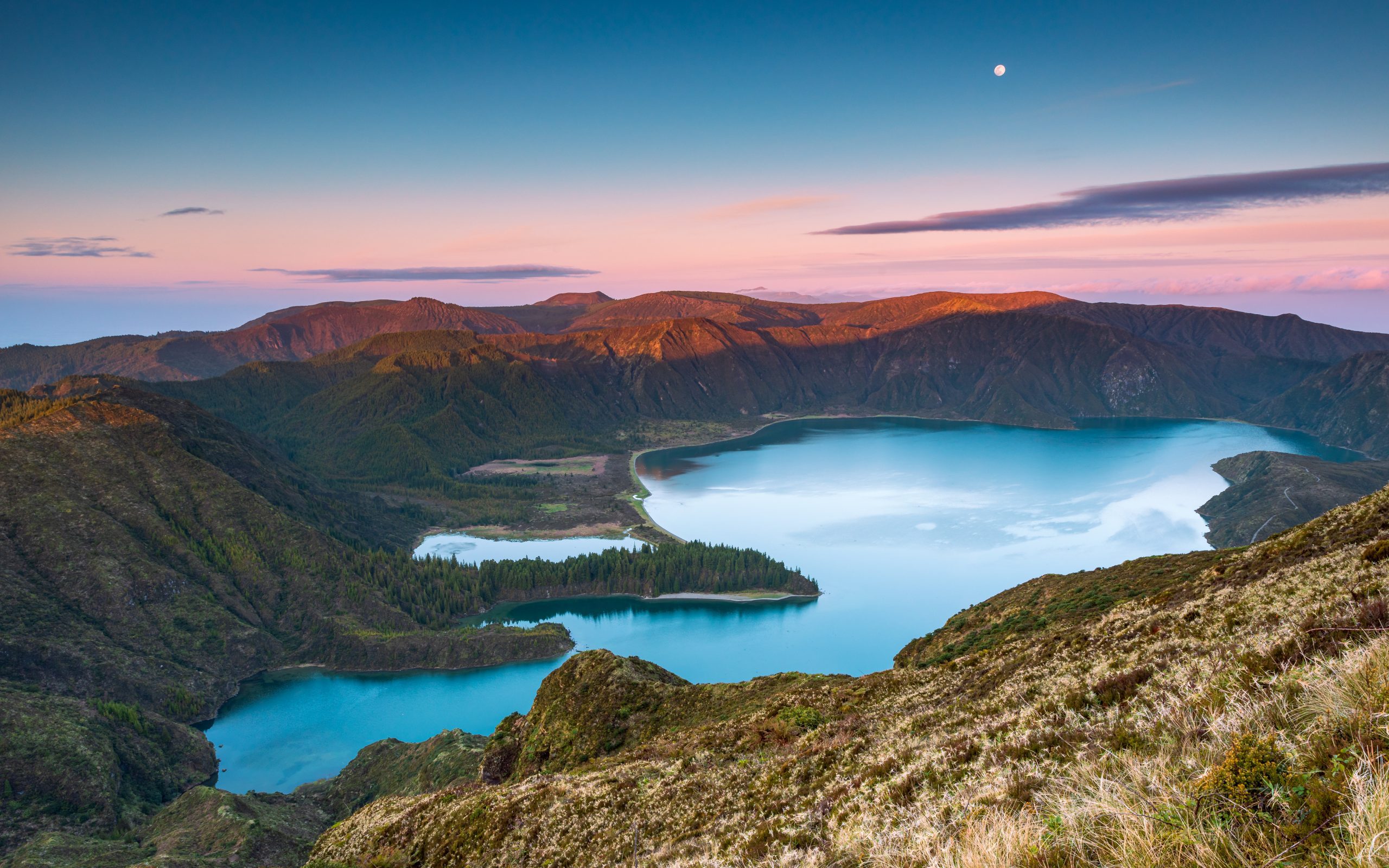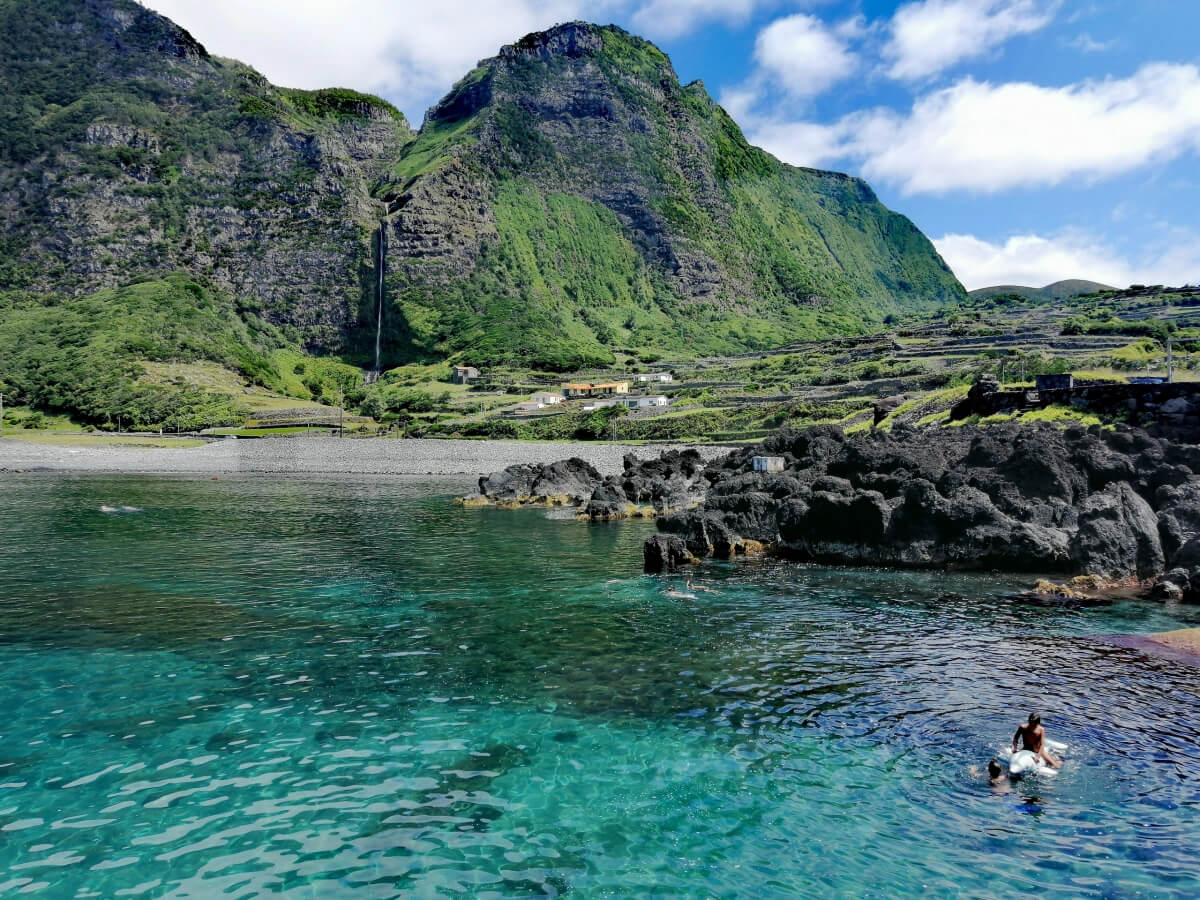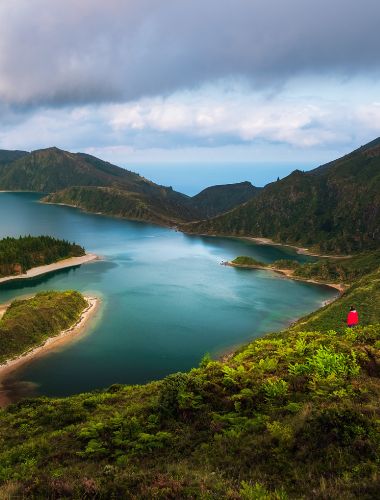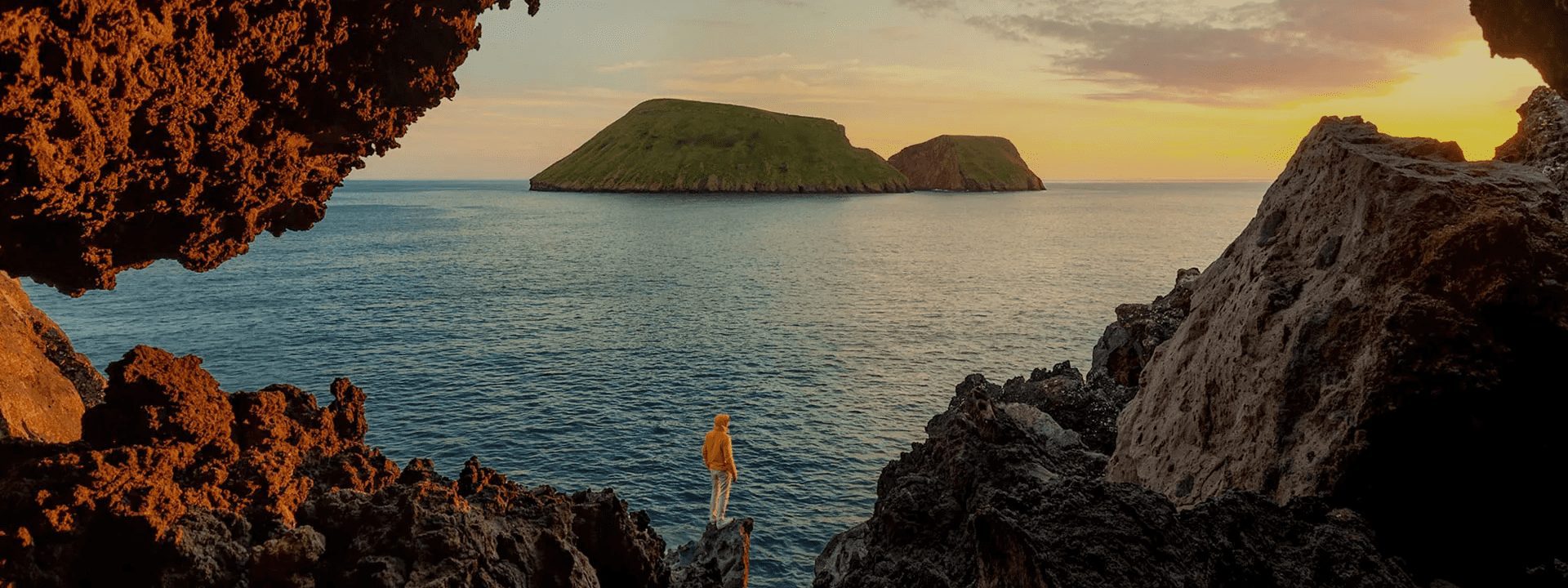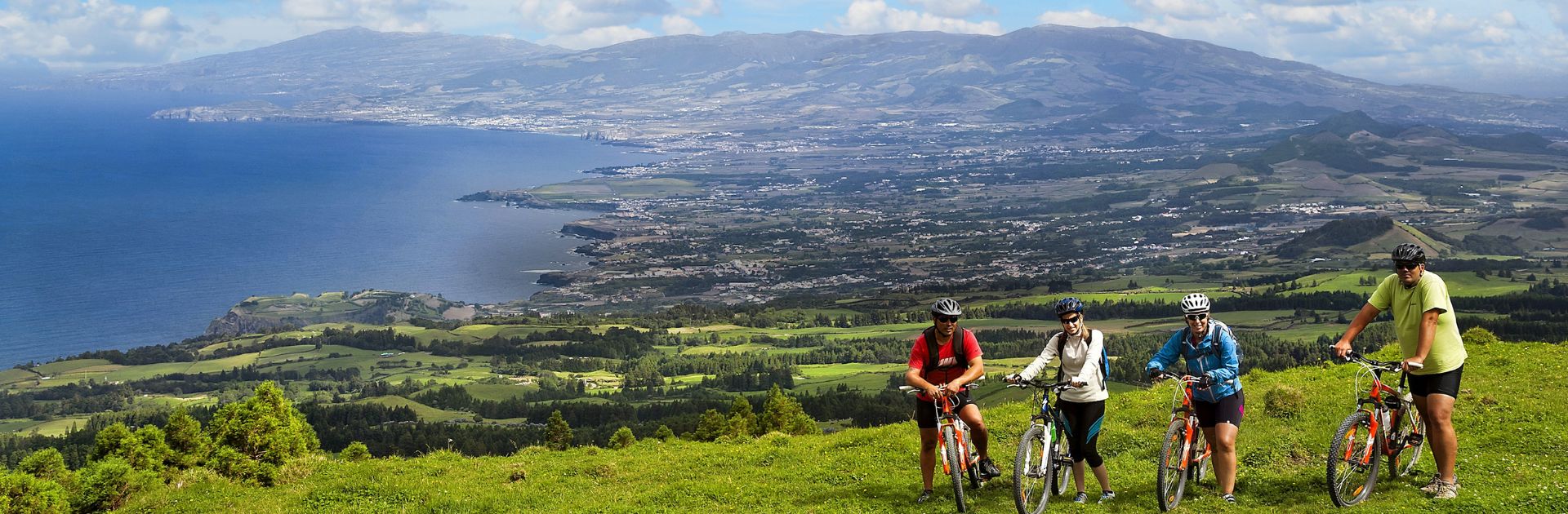




The Piscinas Naturais da Fajã Grande are among the most stunning natural pools on Flores Island, in the Azores. Nestled between the immense Atlantic Ocean and dramatic cliffs filled with lush vegetation, you can enjoy a relaxing and refreshing dip at one of the most remote corners of Europe.
The pools were formed by ancient lava flows, creating sheltered spaces perfect for safe swimming even when the ocean is rough. There is also an option for swimming in the open ocean thanks to a concrete dock.
This guide covers everything you need to know to plan your visit to the pools and explore the beautiful area around Fajã Grande.
What are Piscinas Naturais da Fajã Grande?

The Piscinas Naturais da Fajã Grande are natural pools formed by volcanic rocks, creating small saltwater ponds. Located on the western coast of Flores Island, these natural formations allow visitors to swim in calm, protected waters and enjoy the Atlantic Ocean more safely.
Created by solidified lava along the shoreline, the pools are fed by the sea and refreshed by the tides, so they are basically the same temperature as at a beach. The natural stone walls make the pools more accessible and family-friendly, so this is a good spot to take a dip.
Did you know
There are also natural pools on São Jorge Island called Piscinas Naturais da Fajã Grande. Those are located in the central southern part of the island (near Calheta) and also offer good bathing, sheltered from the waves. They are also made of dry lava stones, so make sure to bring water shoes.
Check all our articles about each one of the most relevant points of interest on São Jorge Island: Urzelina | Fajã das Almas | Fajã do Ouvidor | Fajã de Santo Cristo | Fajã dos Cubres | Poça Simão Dias | Top Places to Visit in São Jorge Island | Miradouro Vigia da Baleia | Best Surf Spots in the Azores
Plan Your Visit to Piscinas Naturais da Fajã Grande

How to Get to Piscinas Naturais da Fajã Grande
When you arrive on Flores Island by plane, you will be at Santa Cruz das Flores, the main town on the East coast. From there, take a taxi or rent a car to go to the opposite side of the island. Note that public transportation is very limited on the island.
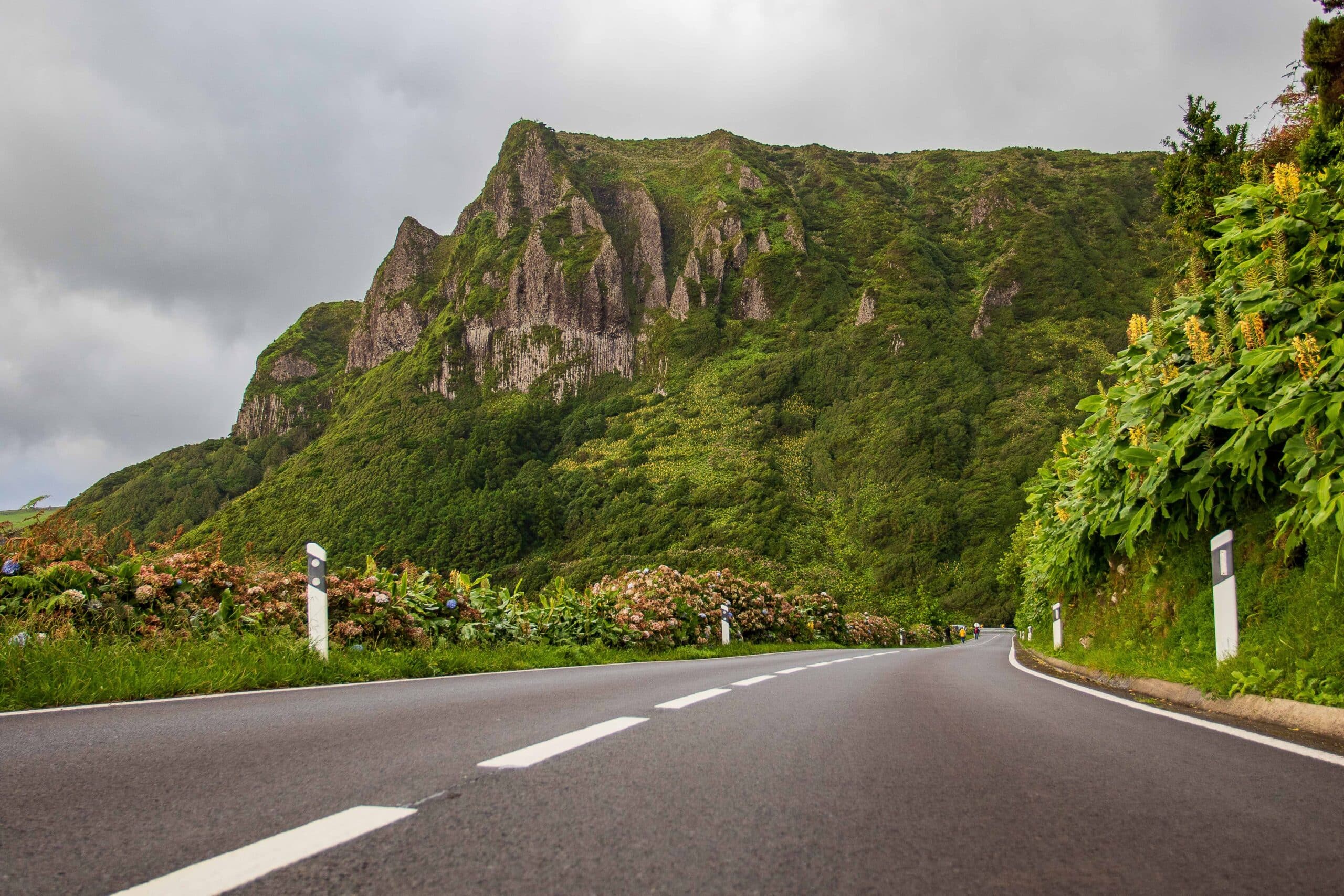
The drive takes about 40 minutes along scenic roads offering dramatic views of cliffs, lakes, and greenery. Once you reach Fajã Grande, get closer to the shoreline to find the natural pools. They are close to a popular bar called Barraca Q’abana. Parking is available nearby, and the walk to the pools is easy and short.
Planning a trip to the Azores? These articles will help you: How to Get to the Azores 🗺️ | Azores airports 🛬 | Flights between islands ✈️ | Ferries between islands ⛴️ | Which island to choose? 🏝️ | What airlines fly to the Azores? 🛩️
Best Time to Visit
The pools themselves are free to access and open year-round, but the mood changes depending on weather, tides, and sea conditions. The best time to enjoy the natural pools is from June to September, when the sea is calmer and the weather gets warmer. Sea temperatures are rising as well, peaking in September.
For fewer crowds and if you don’t mind the cooler temperatures, May and October are good alternatives, as long as the weather is good. Prefer early morning, lunchtime, or late afternoon for fewer people, though Flores Island is not as crowded as the bigger Azorean islands.
Check all our articles about the weather in the Azores throughout the year 🌤️ ☔️: January | February | March | April | May | June | July | August | September | October | November | December
Pro Tips
Although most of the pool access is concrete, some sections are stone. For walking on volcanic rocks, wear water shoes to be more comfortable and avoid slipping. The rocks can be uneven and occasionally sharp, in and out of the water, so proper footwear makes a big difference.
Also, check the sea and weather conditions before you go. While the pools are usually calm, strong waves can affect the area.
There are toilets and showers near the pools. You should also bring sunscreen, especially in the summertime. Take some water and snacks with you, as the nearby restaurant options are few. Last but not least, if you like snorkeling, don’t forget your mask and snorkel! The water can be crystal clear.
Azores Guide Book
Azorean Language & Phrases 🗣️ | Currency & Banks 💵 | Credit Cards & Traveler’s Cheques 🏧 | Driving in the Azores 🚗 | Electricity 🔌 | Experiences & Tours 🗺️ | Health & Safety 🩺 | Internet & Wi-Fi Access 🛜 | Phones & Mobile Service 📞 | Post Offices & Buying Stamps ✉️ | Public Holidays 🏖️ | Shopping 🛒 | Time & Daylight 🕒 | Whale Watching Guide 🐳 | Best Island to Visit 🏞️
Nearby Attractions
Poço do Bacalhau

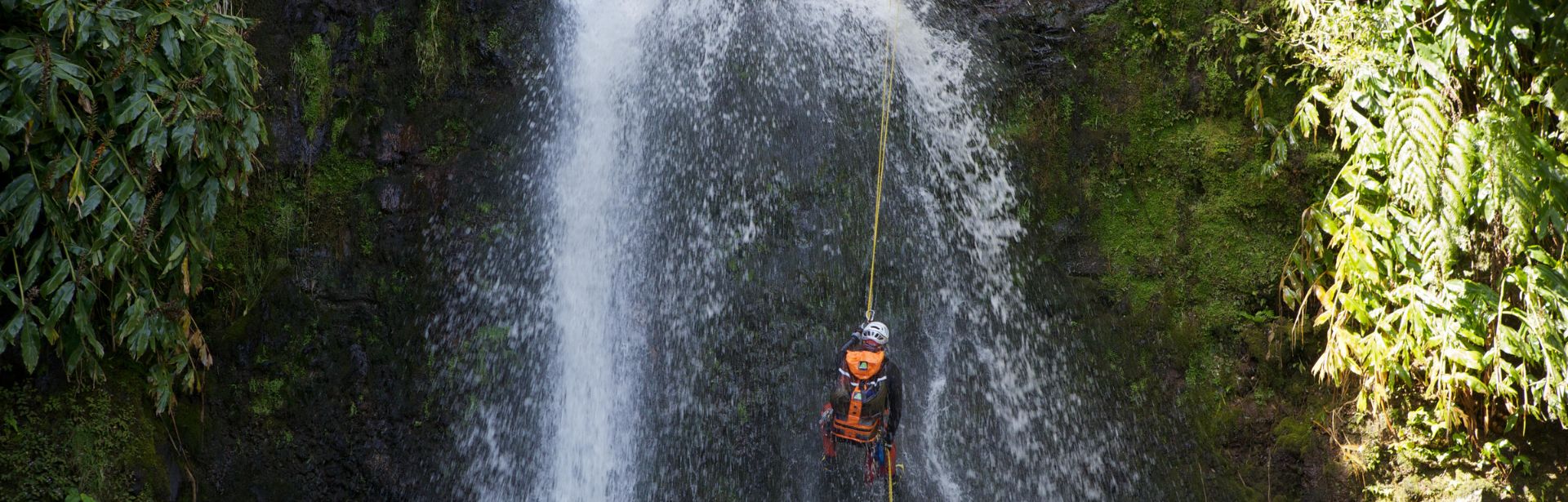
Just a short walk from Fajã Grande, Poço do Bacalhau is one of Flores’ most famous waterfalls, and one of the tallest in the Azores islands, reaching up to 90 meters high.
After the asphalted road, you just need to walk for 5 minutes to get closer to this natural gem, and at the foot of the waterfall, it is possible to swim. From down there, the view is quite impressive! It’s especially breathtaking after periods of rain when the water flow is stronger.
Miradouro das Lagoas

Just a short drive uphill from Fajã Grande, this viewpoint offers one of the most breathtaking panoramas on the island. From the Central High Plateau, you can see the Lagoa Negra and Lagoa Comprida (Black and Long lakes). Lagoa Negra is the deepest lake in all the 9 islands of the Azores, with a depth of 108 m.
This viewpoint is also the start of a 7km trail down to Poço do Bacalhau and Fajã Grande, if you are feeling adventurous. However, at the end, you might need a taxi to get back to the starting point.
Poço da Ribeira do Ferreiro

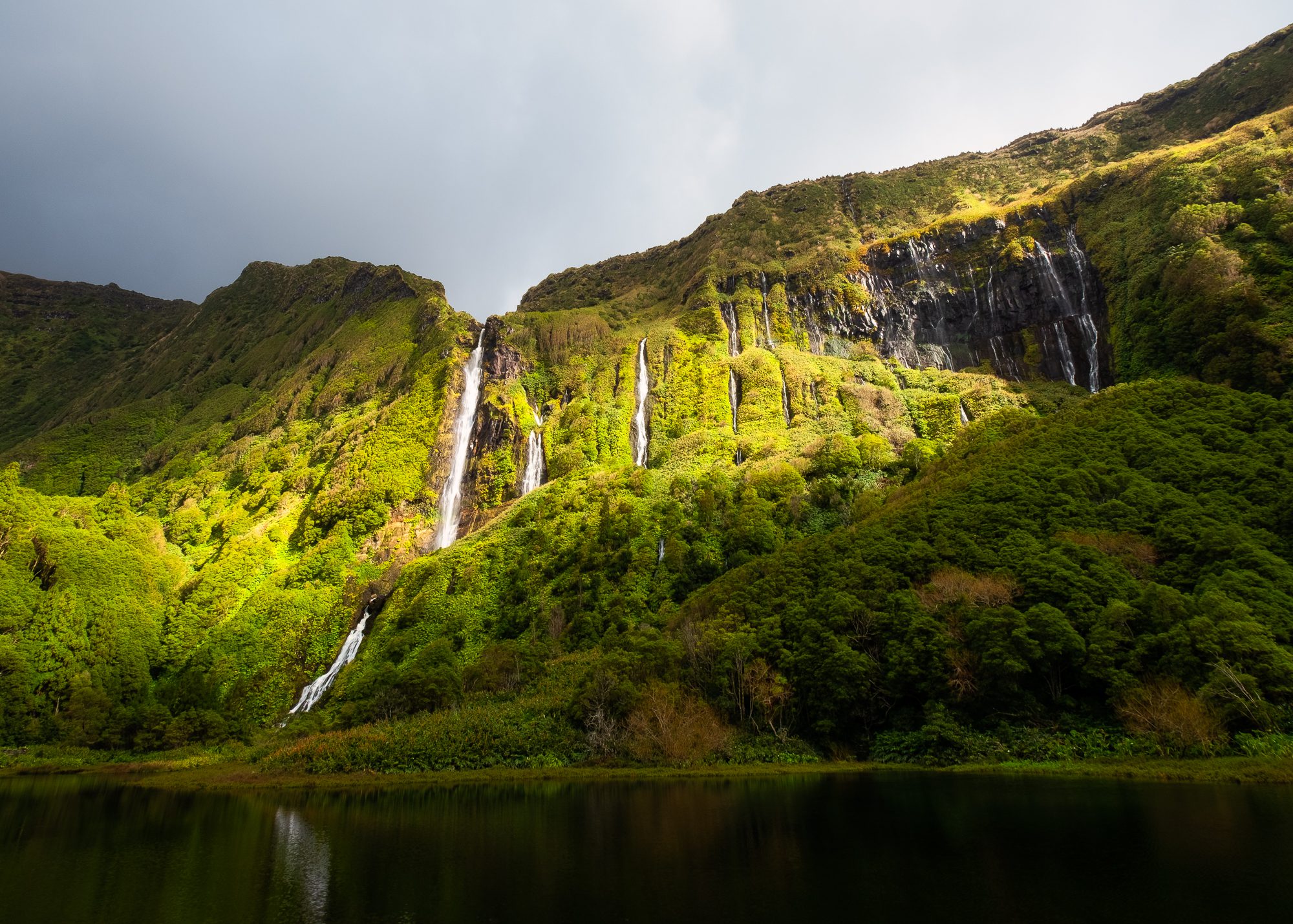
Poço da Ribeira do Ferreiro, also called Lagoinha, is a serene freshwater lake surrounded by dense forest and dozens of high waterfalls. It is a short 15-minute walk in nature from the parking lot and 100% worth it.
This is one of the most iconic and popular spots on Flores. It is an unforgettable place and one of the must-see landscapes of the whole Azores archipelago. Once there, you will feel at peace and one with nature.
Rocha dos Bordões

Rocha dos Bordões is a geological formation made up of large vertical prismatic basalt columns 20 meters high that resemble “bordões”. This tourist attraction has been designated a Regional Natural Monument by the Regional Government of the Azores since 2004.
Did you know
Rocha dos Bordões is approximately 570,000 years old and is located in Cabo Baixo das Casas, in the parish of Mosteiros, in the municipality of Lajes das Flores, approximately 10 kilometers from the Poço do Bacalhau waterfall.
This fantastic rocky monument is part of the Special Conservation Area of the Central Zone — Morro Alto, within the Natura 2000 Network, and is a geosite of the Azores Geopark — UNESCO World Geopark.
In addition, this Natural Monument is home to species of flora and fauna endemic to the Azores, which, together with its geological features, make it an ex libris of the island and a popular observation point for nature photographers.
Check all our articles about each one of the most relevant points of interest on Flores Island: Poço do Bacalhau | Rocha dos Bordões | Piscinas Naturais da Fajã Grande | Poço da Ribeira do Ferreiro
Complementary Information
Best Season to Visit the Azores
The Azores Archipelago boasts a unique climate that shapes its lush landscapes, making it a splendid year-round destination. With mild temperatures and minimal fluctuations, each season offers something unique. Spring averages 16 °C, summer reaches 21 °C, autumn cools to 18 °C, and winter remains mild at 14 °C.
→ For a detailed breakdown of the weather by month, check the following links 🌤️☔️: January | February | March | April | May | June | July | August | September | October | November | December
How to Get to the Azores
The Azorean Archipelago is easily accessible through numerous flight routes. Lisbon and Porto are the main entry points to the continent, with direct flights available to São Miguel (PDL), Terceira (TER), Faial (HOR), Pico (PIX), and Santa Maria (SMA). To find the best flight, use search engines like eDreams or Skyscanner. These platforms let you compare prices and schedules from multiple airlines in one convenient location.
For more details on how to get to the Azores, take a look at our complete guide. But what if you want to explore beyond your arrival island? We’ve got you covered!
- Azores airports 🛬
- Flights between islands ✈️
- Ferries between islands ⛴️
- Which island to choose? 🏝️
- What airlines fly to the Azores? 🛩️
→ Once you’ve found the perfect route, book your tickets and get ready to experience one of the world’s most stunning island groups!
Travel Essentials
Essential Information for your Azores trip: Azorean Language & Phrases 🗣️ | Currency & Banks 💵 | Credit Cards & Traveler’s Cheques 🏧 | Driving in the Azores 🚗 | Electricity 🔌 | Experiences & Tours 🗺️ | Health & Safety 🩺 | Internet & Wi-Fi Access 🛜 | Phones & Mobile Service 📞 | Post Offices & Buying Stamps ✉️ | Public Holidays 🏖️ | Shopping 🛒 | Time & Daylight 🕒 | Whale Watching Guide 🐳 | Best Island to Visit 🏞️
Useful Tools & Apps
The weather in the Azores can be variable, so it’s helpful to use some apps before visiting the islands. Spotazores provides live camera feeds from the main tourist attractions, allowing you to check the weather and plan your visit. For accurate weather predictions, use Windy or Windguru — they provide the most reliable predictions.
Video
Conclusion
The Piscinas Naturais da Fajã Grande on Flores Island offer a unique blend of tranquillity and adventure. The western coast provides an unforgettable experience through its natural pools and stunning waterfalls. Visitors can also explore the picturesque village of Fajã Grande in this remote corner of the Azores.
What makes this area truly special is its untouched nature. It feels like a place where nature remains wild. No visit to Flores Island is complete without experiencing these natural pools and the surrounding attractions.
Ultimately, the Piscinas Naturais da Fajã Grande are a highlight of any trip to Flores Island. This is true whether you are a strong swimmer, a nature lover, or someone seeking a quiet escape. In short, these natural pools offer an unforgettable experience for every visitor in this remote paradise.
Authors’ Note
I am pleased to inform you that all the recommendations in this article are based on my personal experience and observations. As the author, I have personally visited each attraction mentioned, ensuring that every suggestion is grounded in first-hand knowledge and genuine enthusiasm.
FAQs
The Piscinas Naturais da Fajã Grande are saltwater pools formed by ancient volcanic lava flows on the western coast of Flores Island. These natural formations create sheltered ponds where visitors can swim safely in calm waters while enjoying the dramatic backdrop of the Atlantic Ocean and lush cliffs.
To reach the Piscinas Naturais da Fajã Grande, drive approximately 40 minutes from Santa Cruz das Flores across the island’s scenic central roads. Since public transport is limited, renting a car or taking a taxi is recommended. The pools are located near the shoreline in the village of Fajã Grande.
The ideal time to visit Piscinas Naturais da Fajã Grande is from June to September, when the weather is warmer, and the sea is calmest. For a quieter, less crowded experience, May and October are excellent alternatives, though you should always check the sea conditions before swimming.
Near Piscinas Naturais da Fajã Grande, you can explore the 90-meter Poço do Bacalhau waterfall or the iconic Poço da Ribeira do Ferreiro. Other nearby geological wonders include the Miradouro das Lagoas and the massive basalt columns of Rocha dos Bordões, a UNESCO Global Geopark geosite.