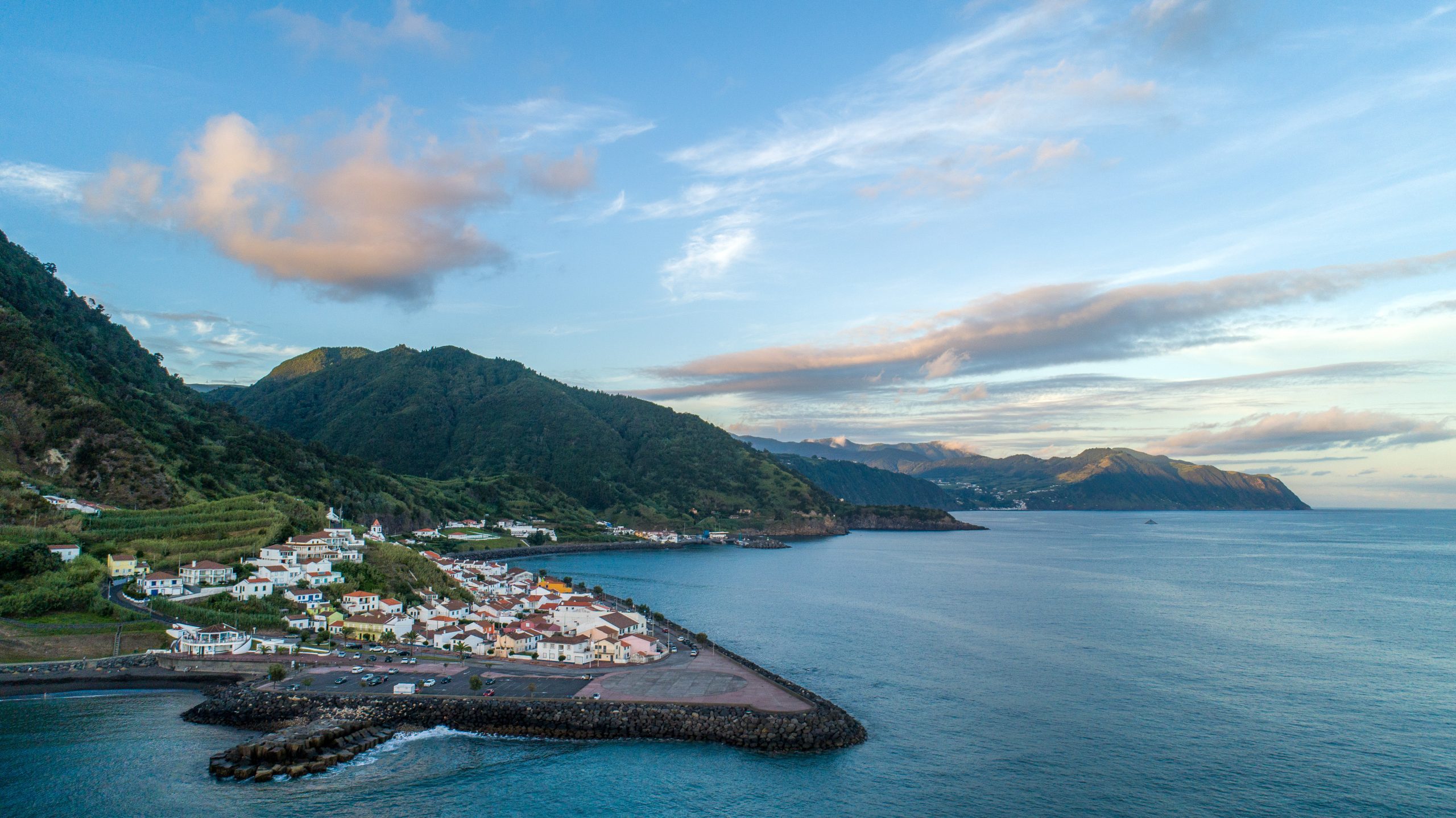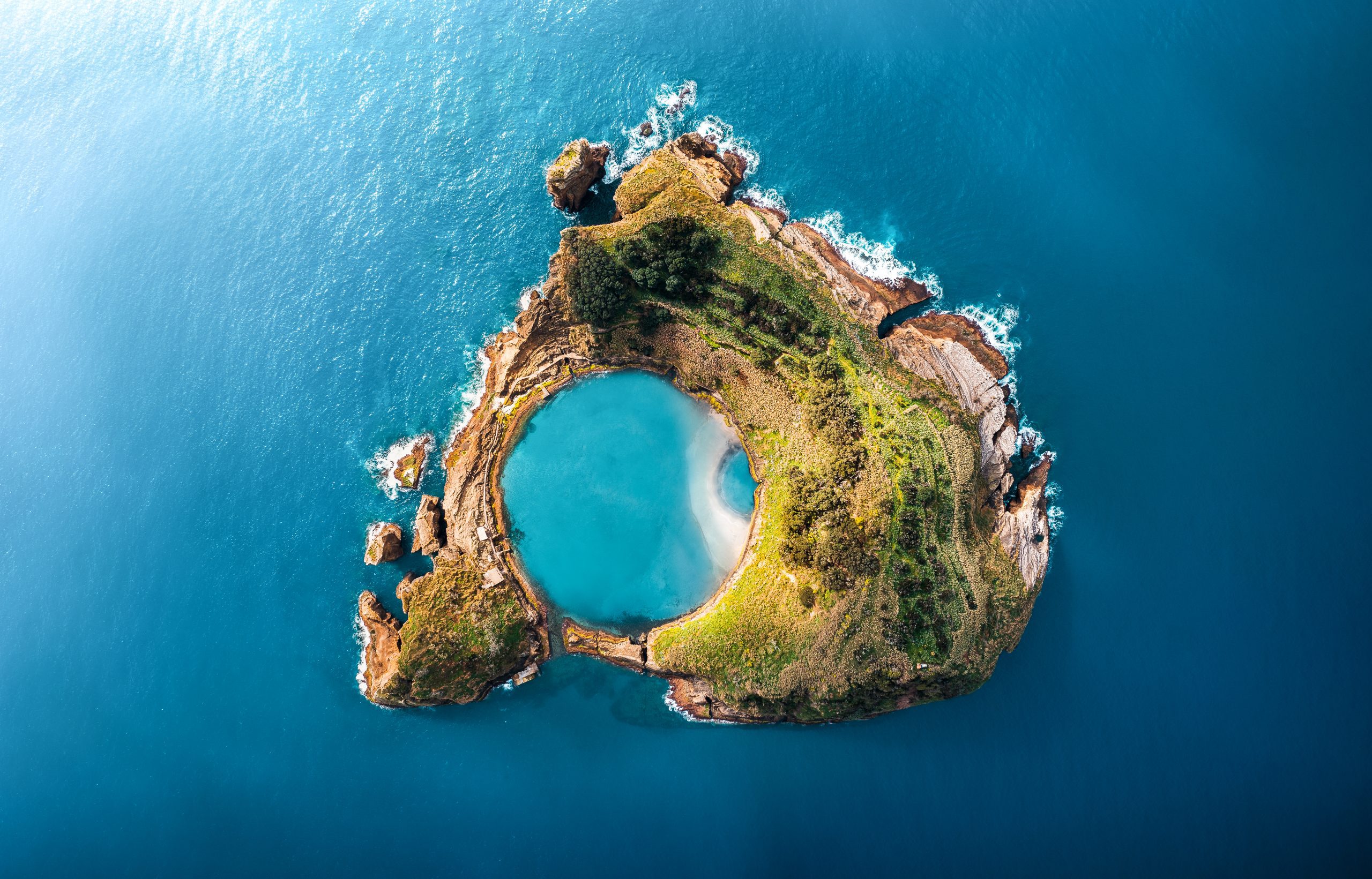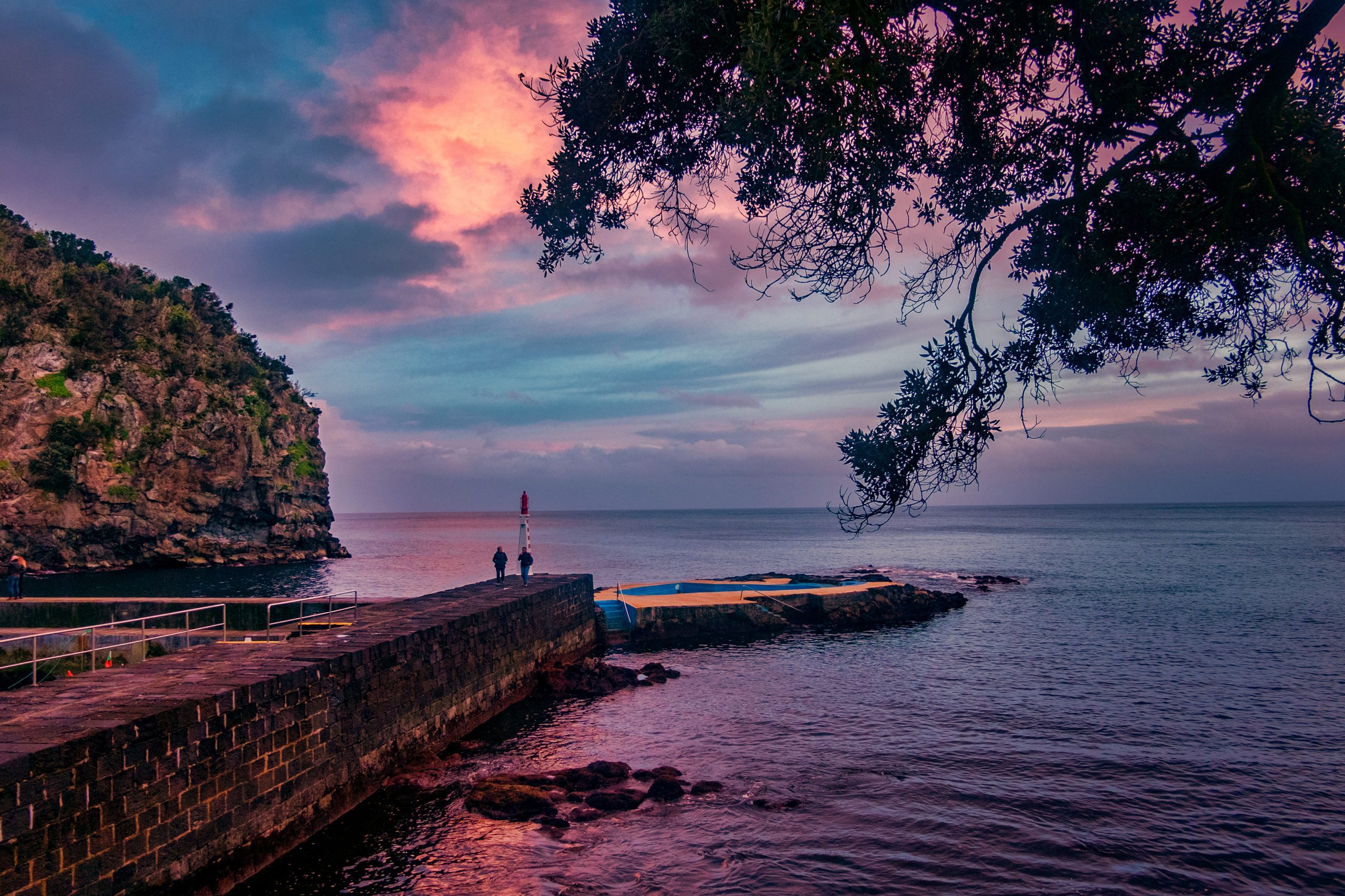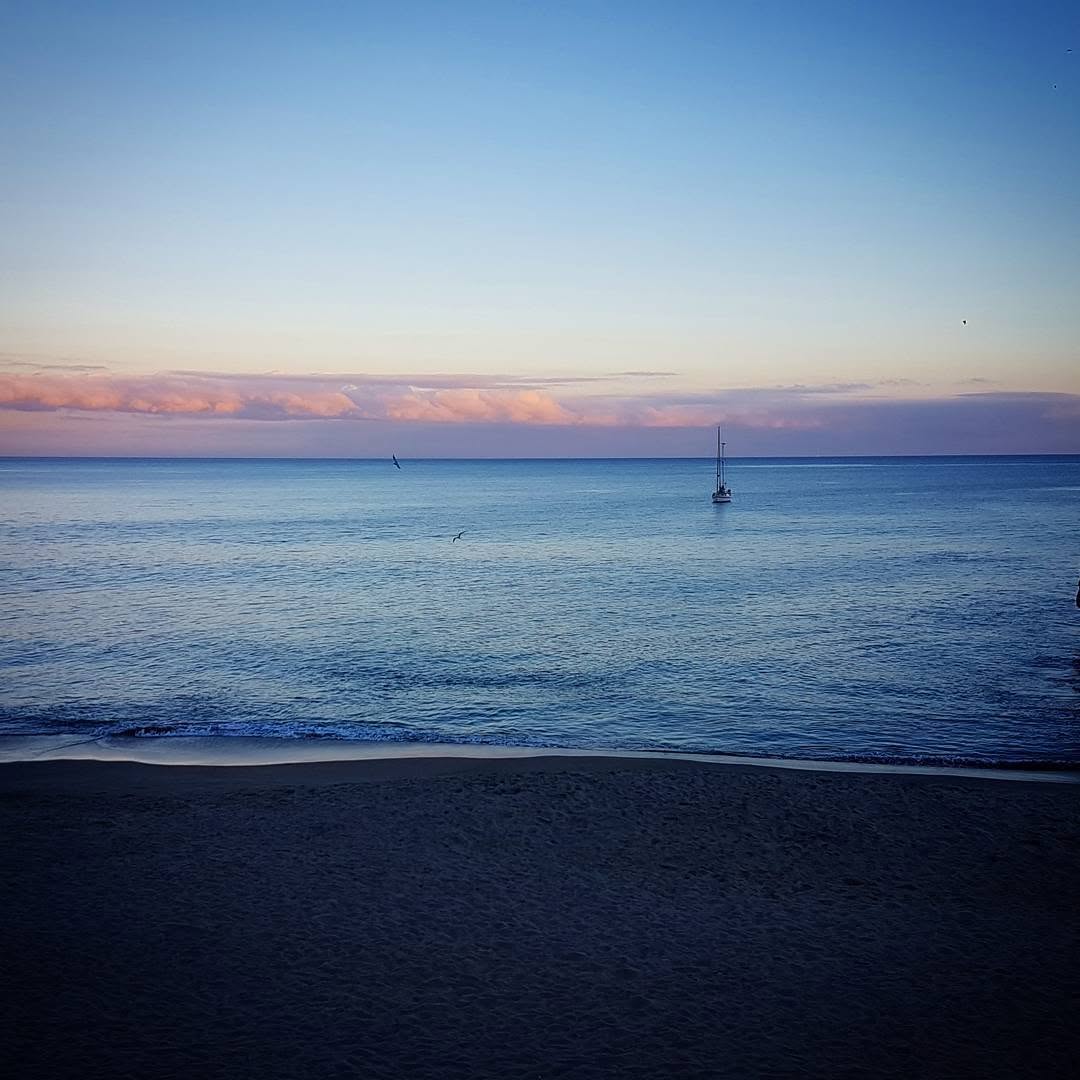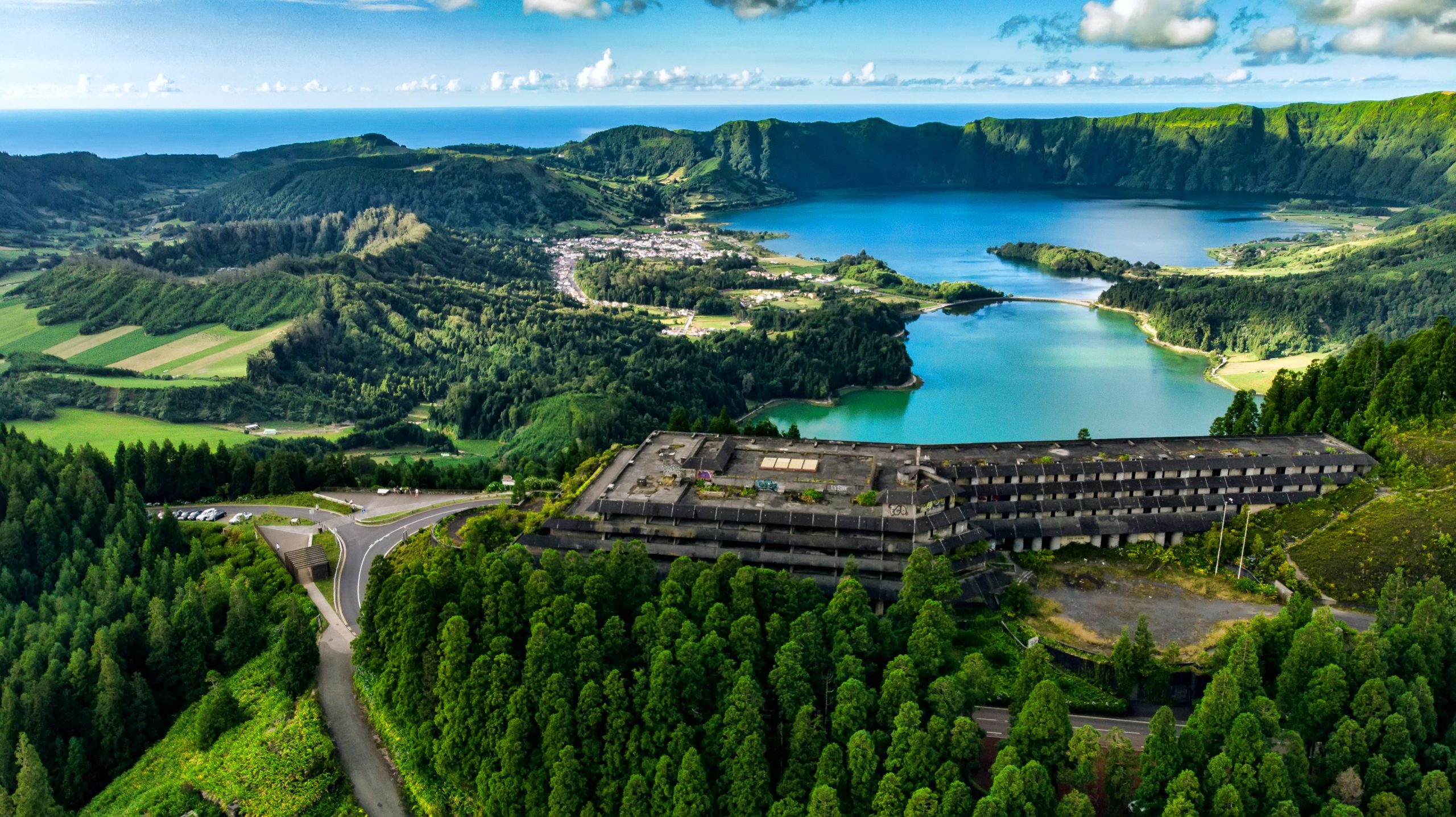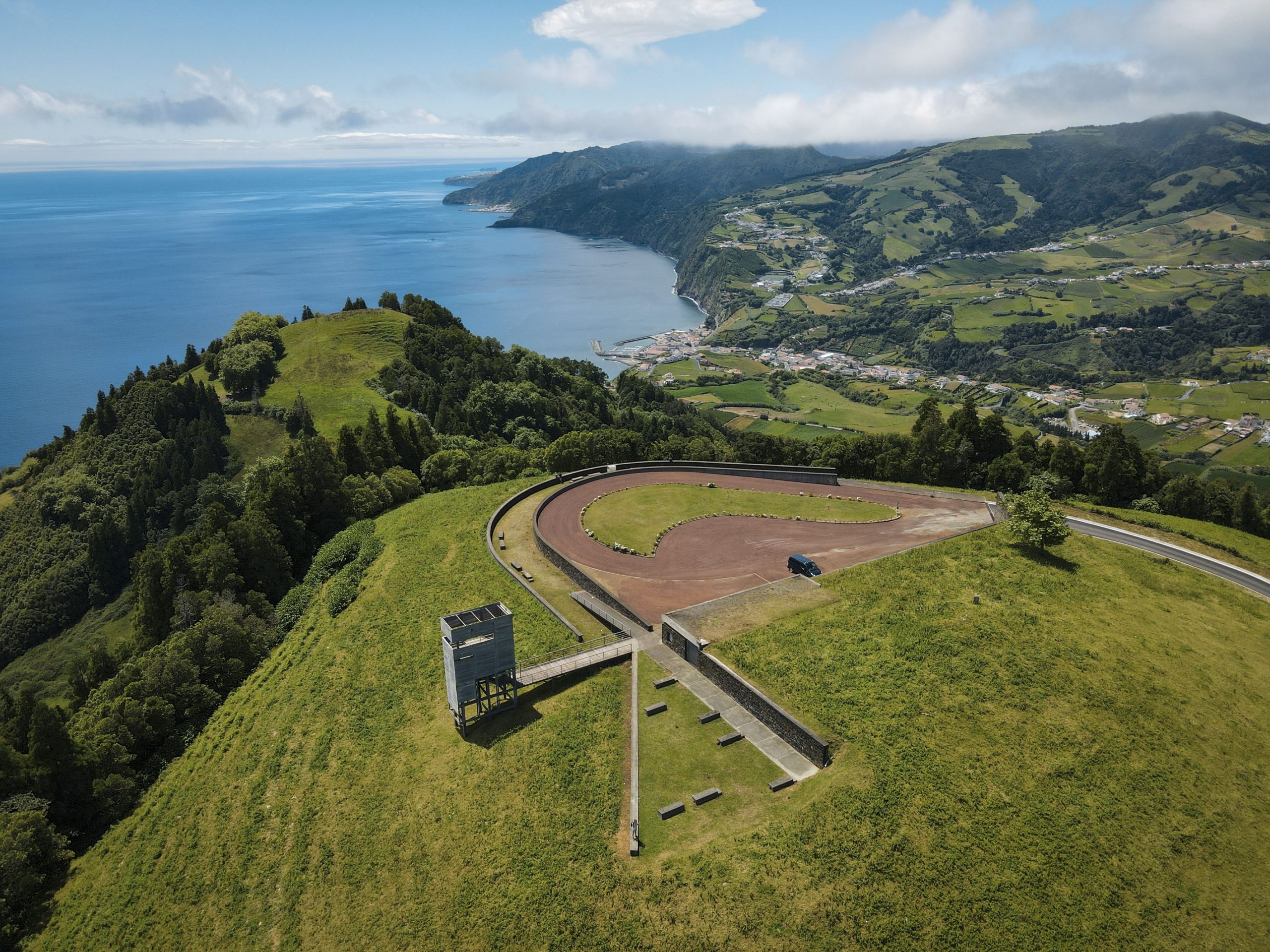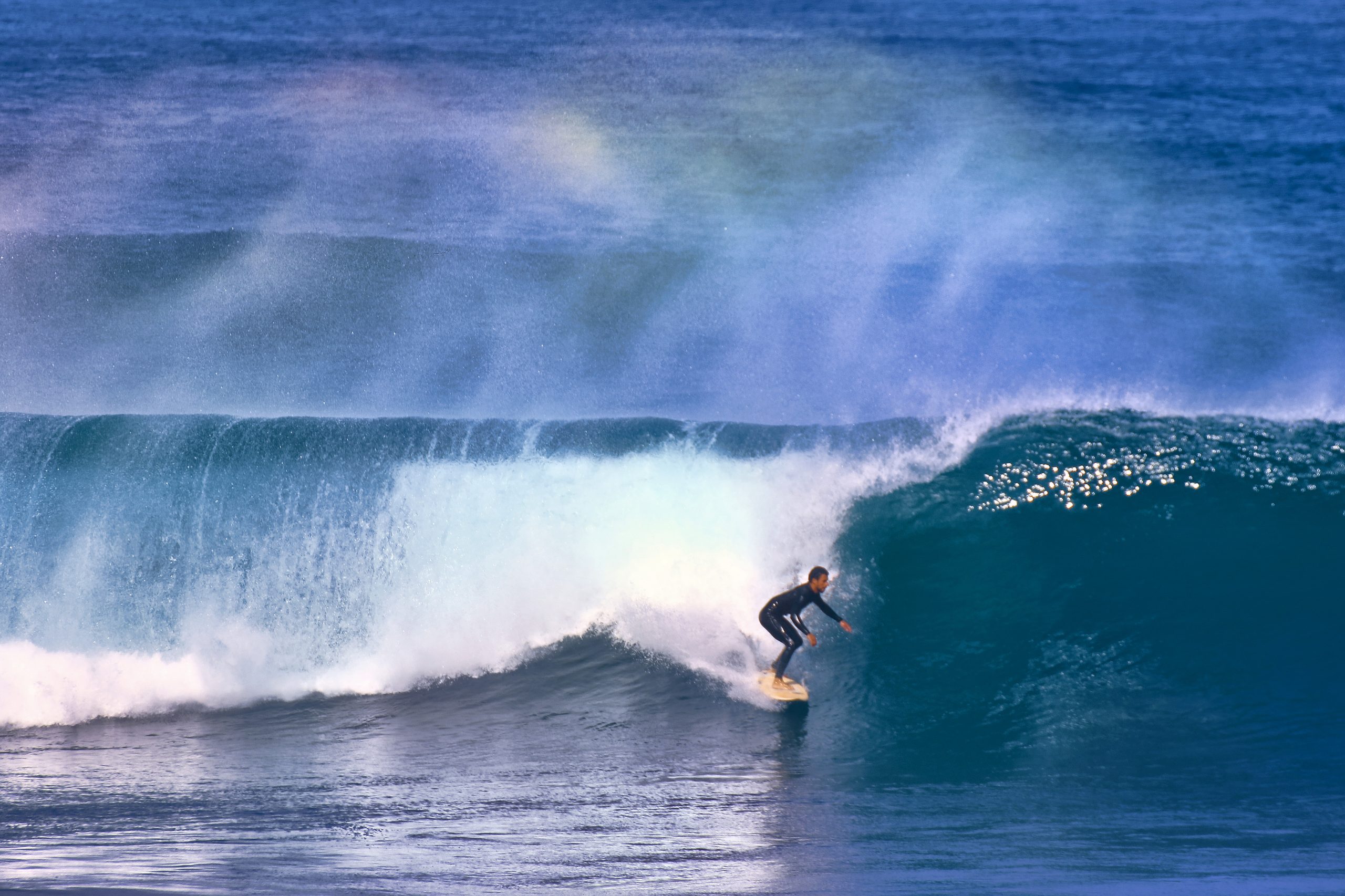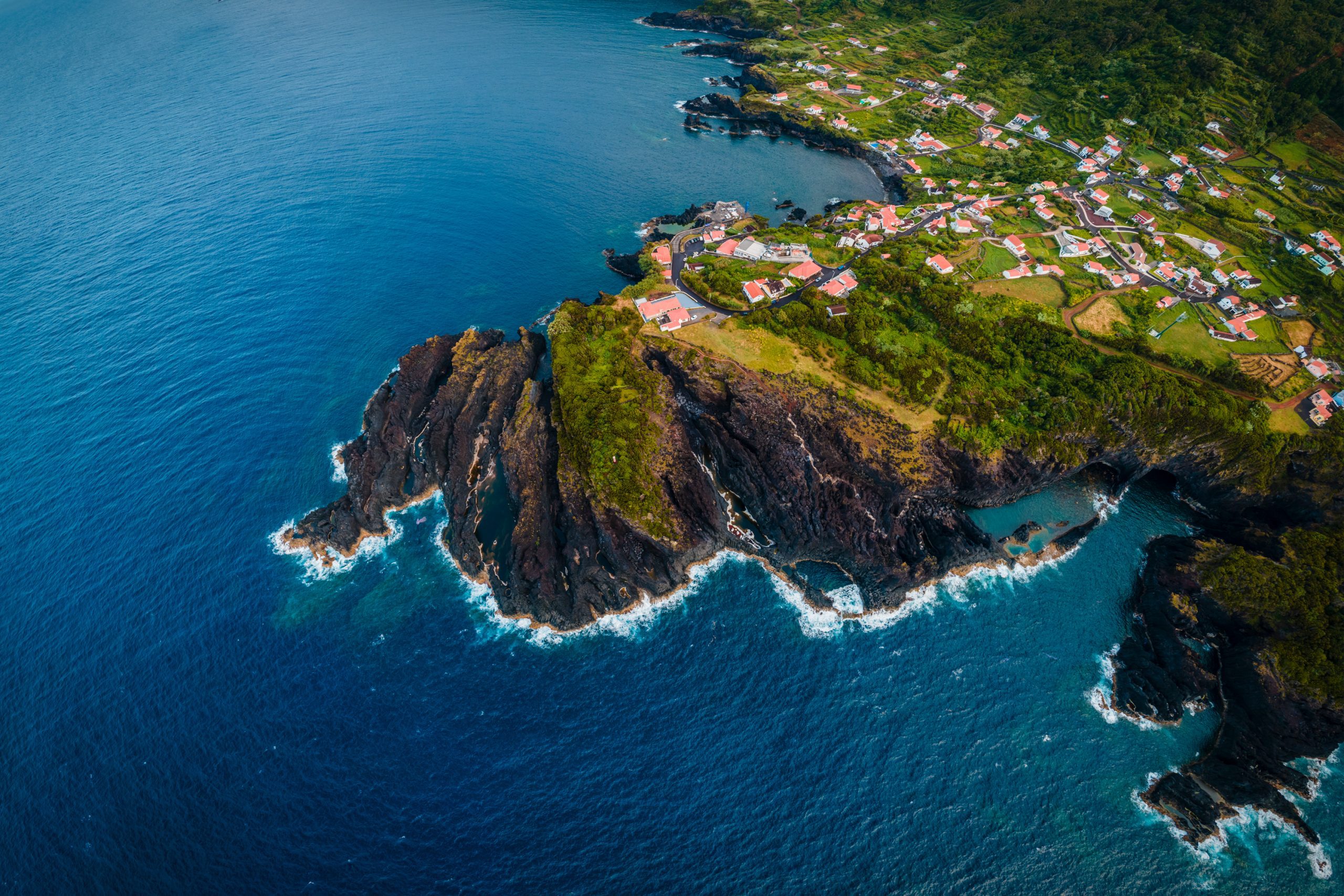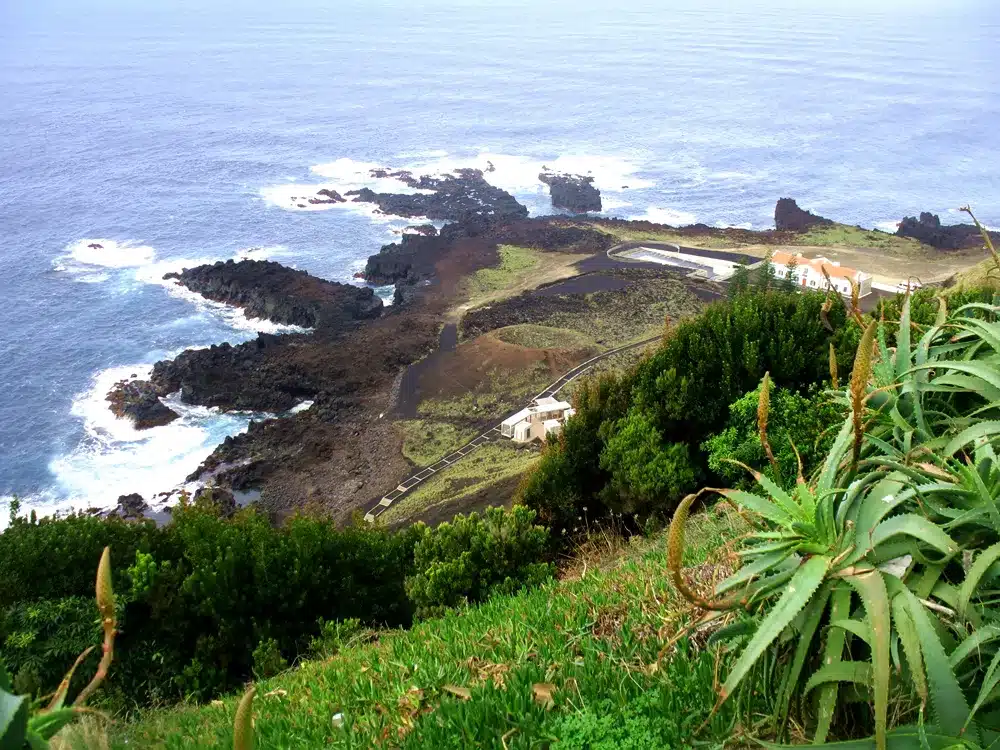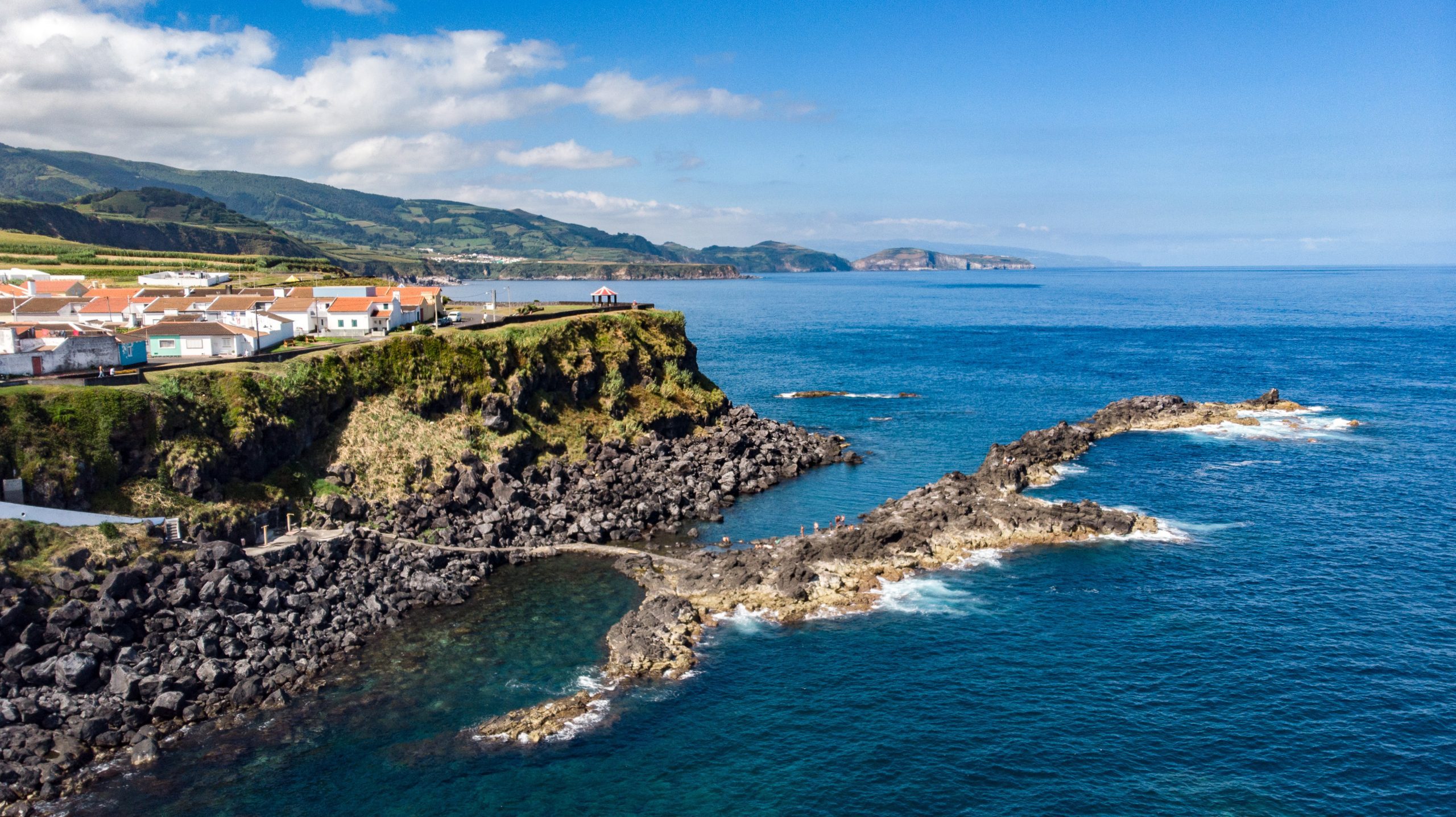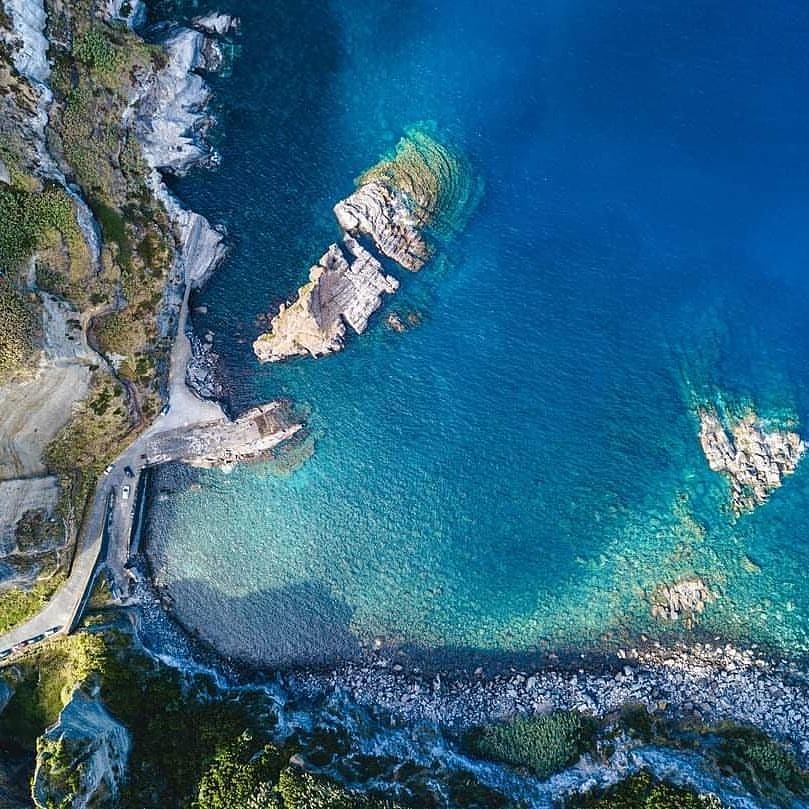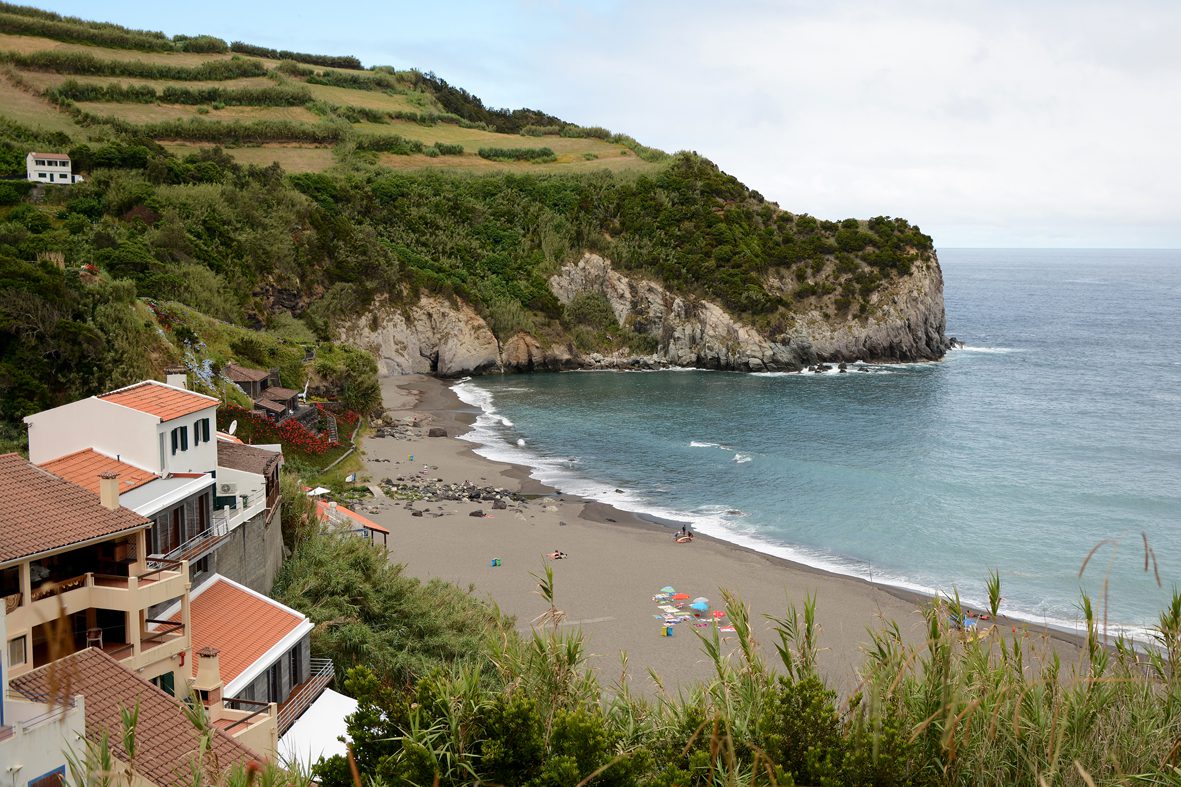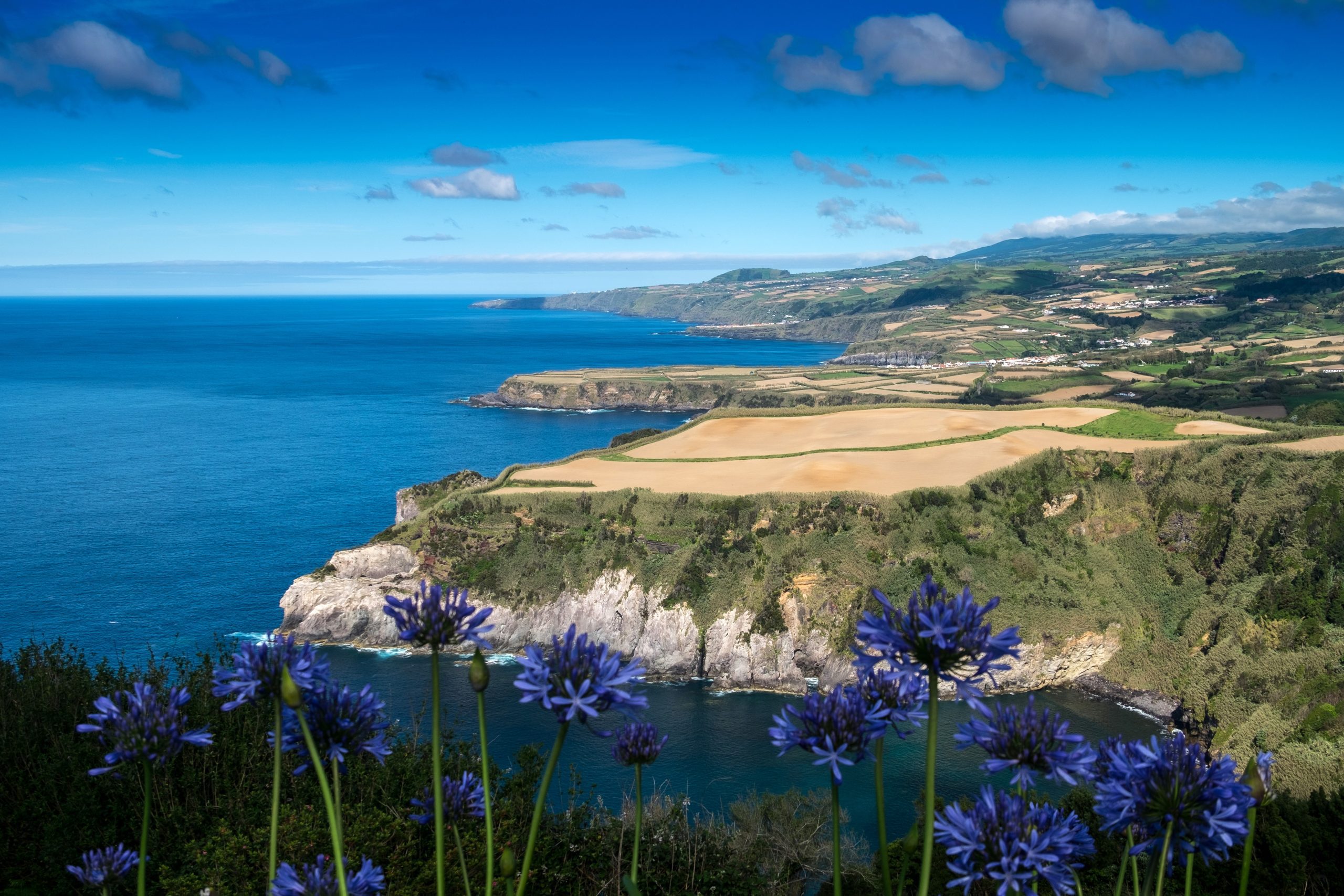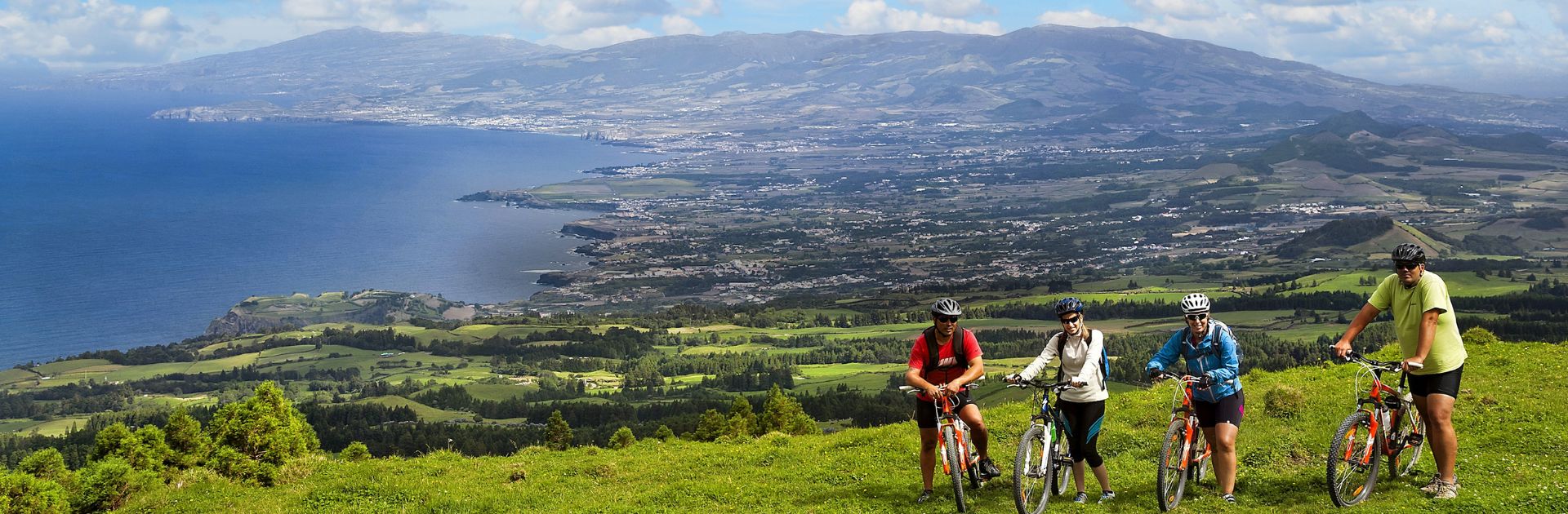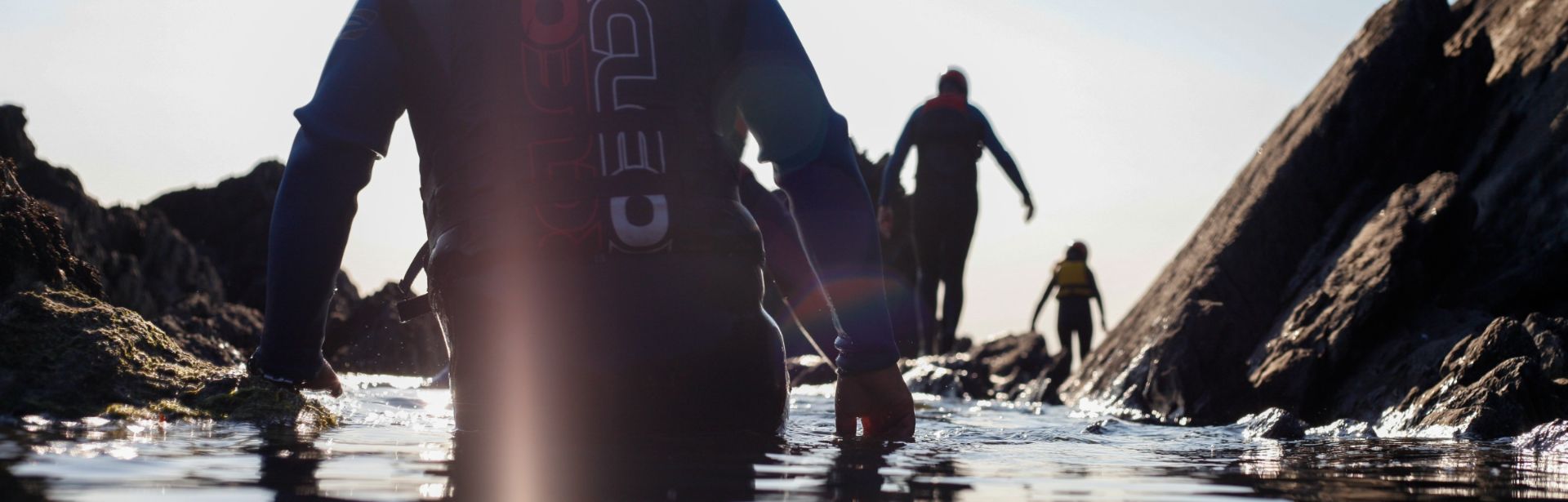






Located on the south coast of São Miguel Island in the Azores, Praia da Amora (literally “Blackberry beach”) is one of the island’s most secluded and untouched beaches. Nestled near the parish of Ponta Garça in the municipality of Vila Franca do Campo, this hidden gem offers a wild and unique beach day far from the usual tourist crowds at more popular spots.
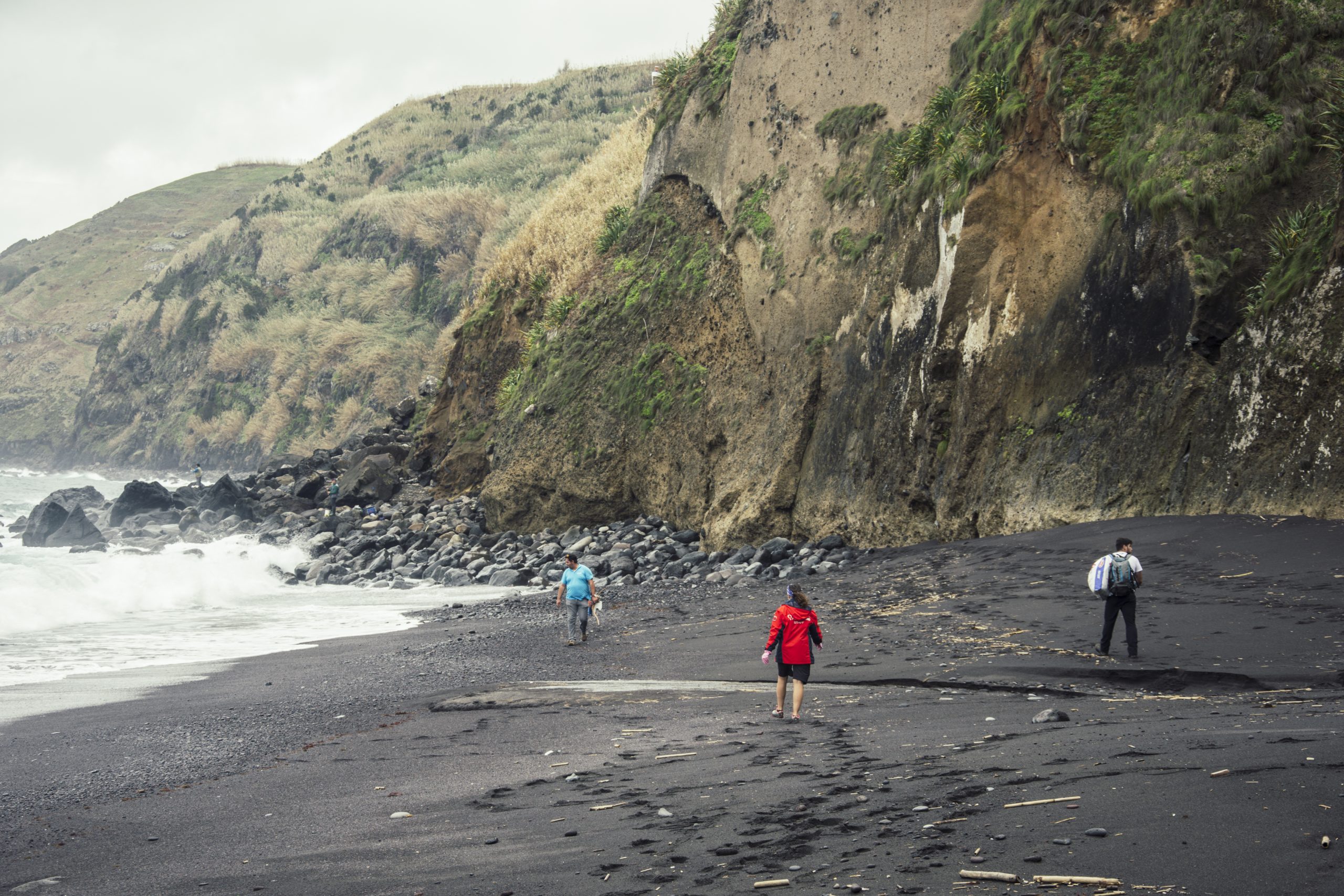
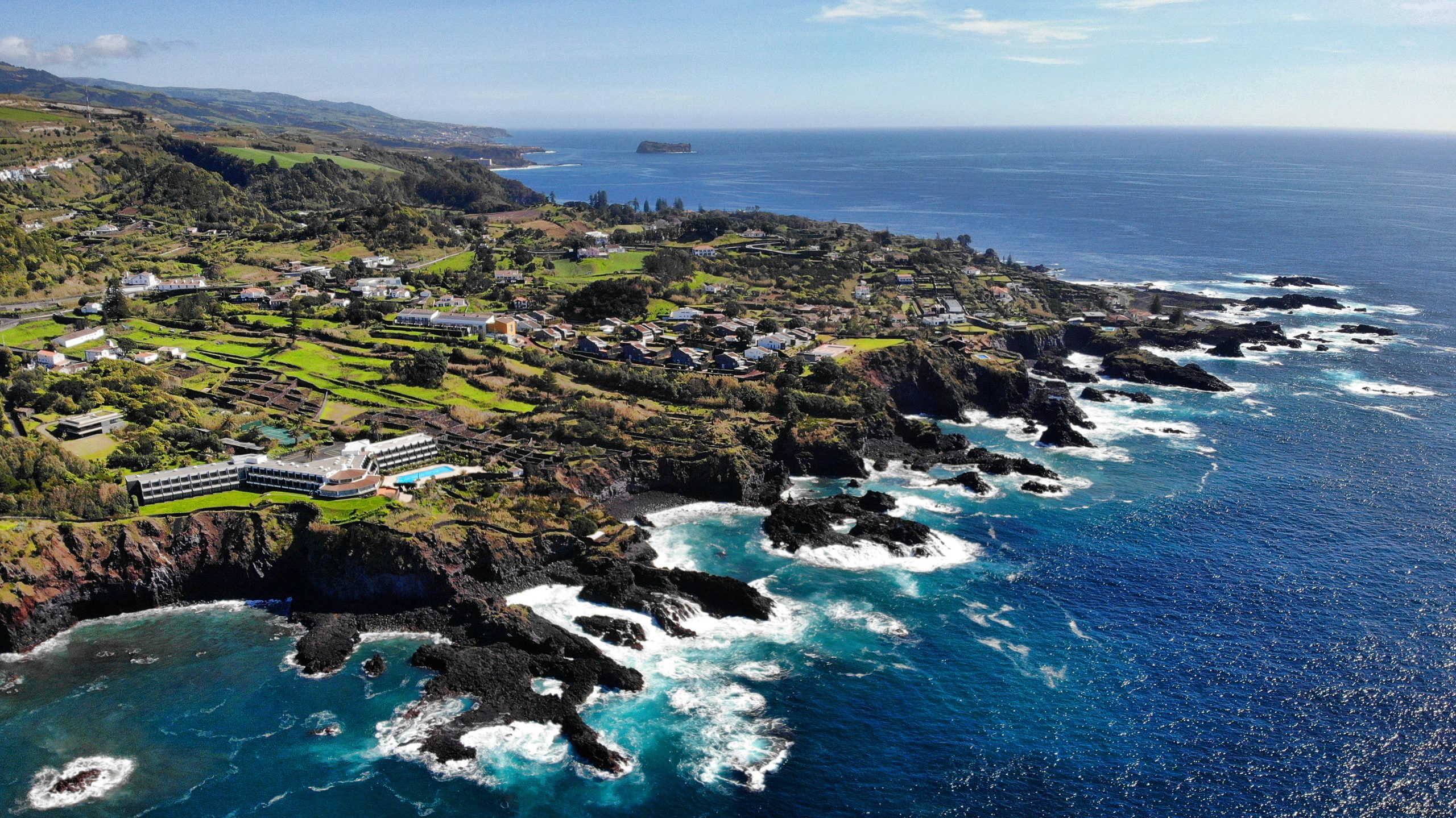
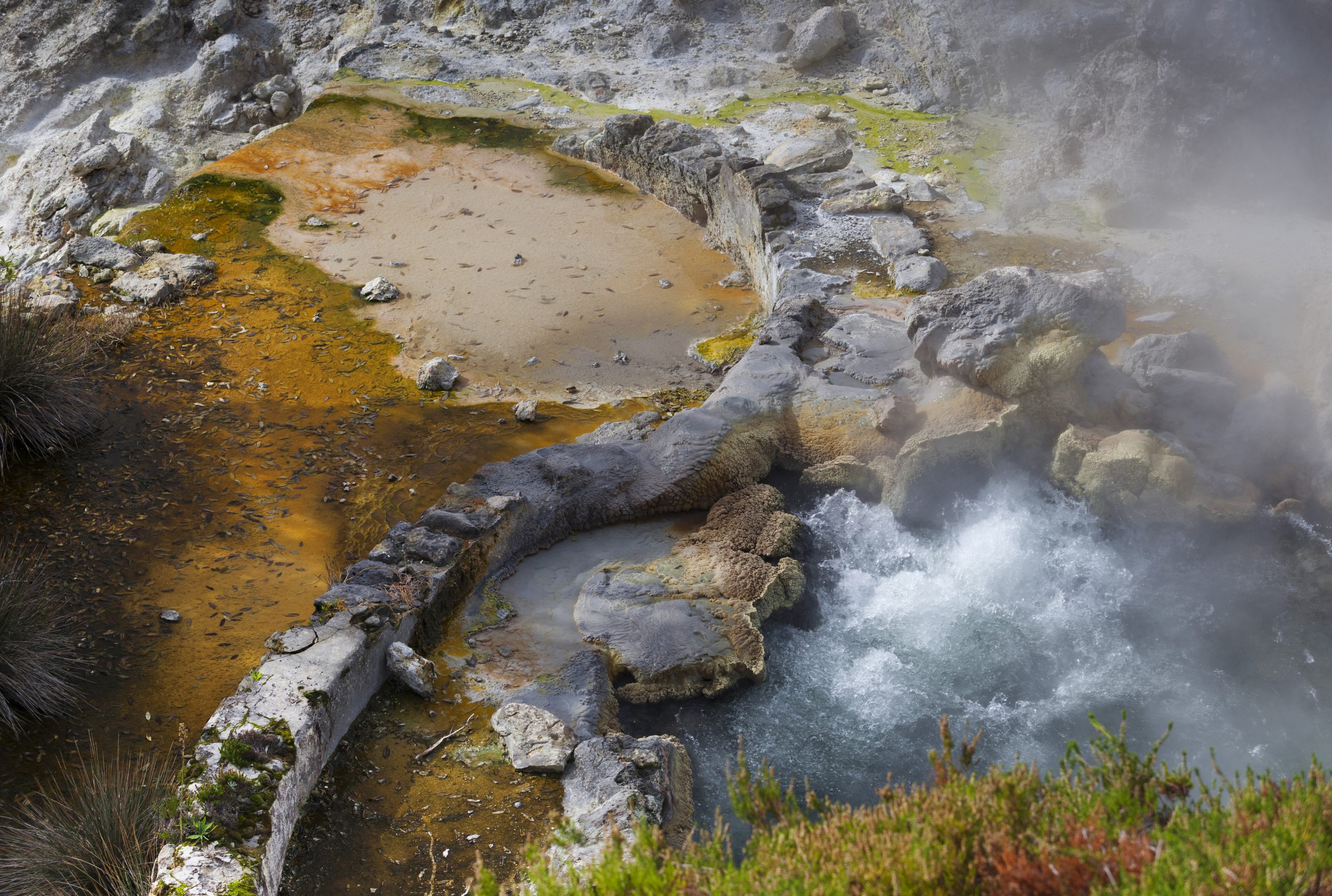
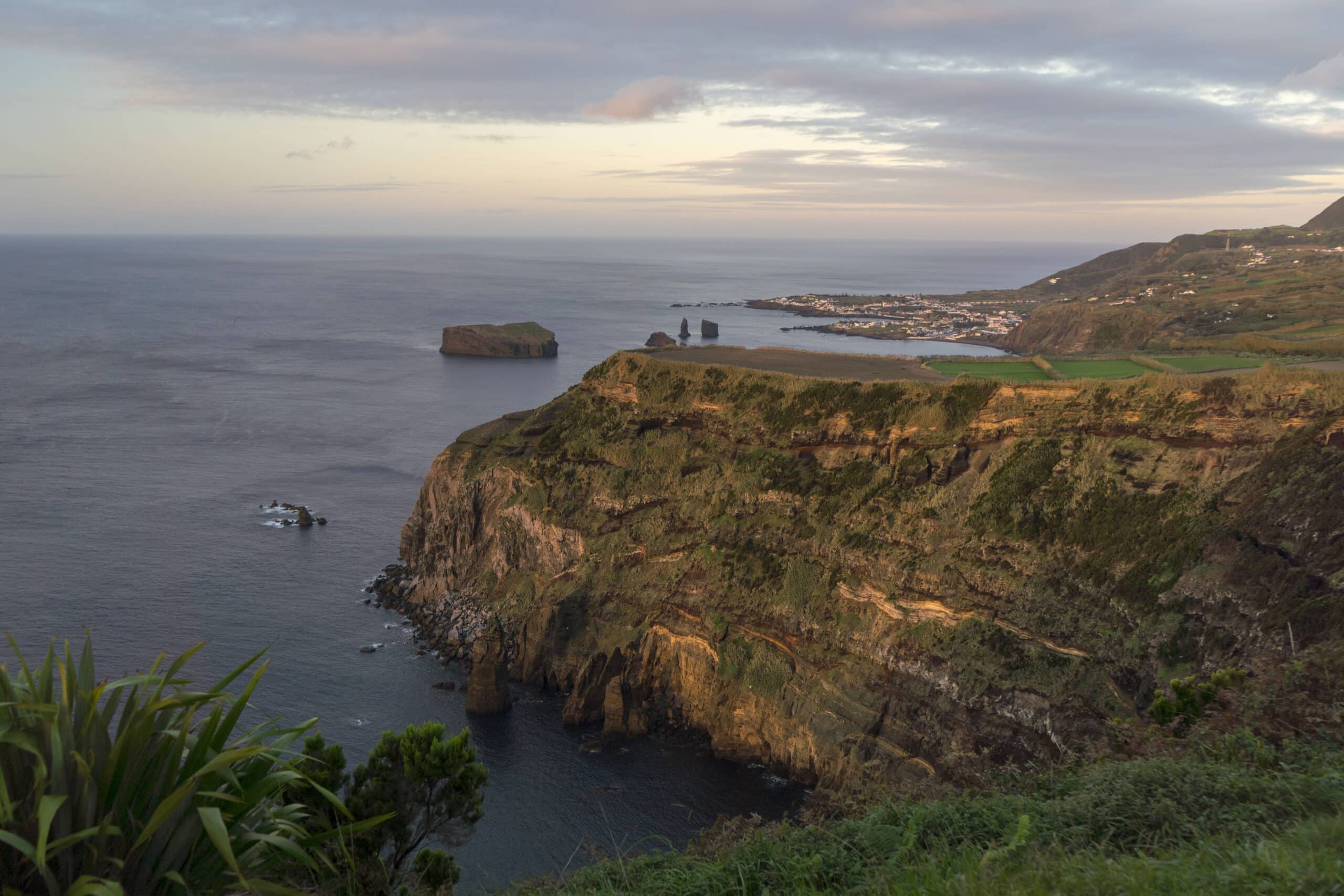
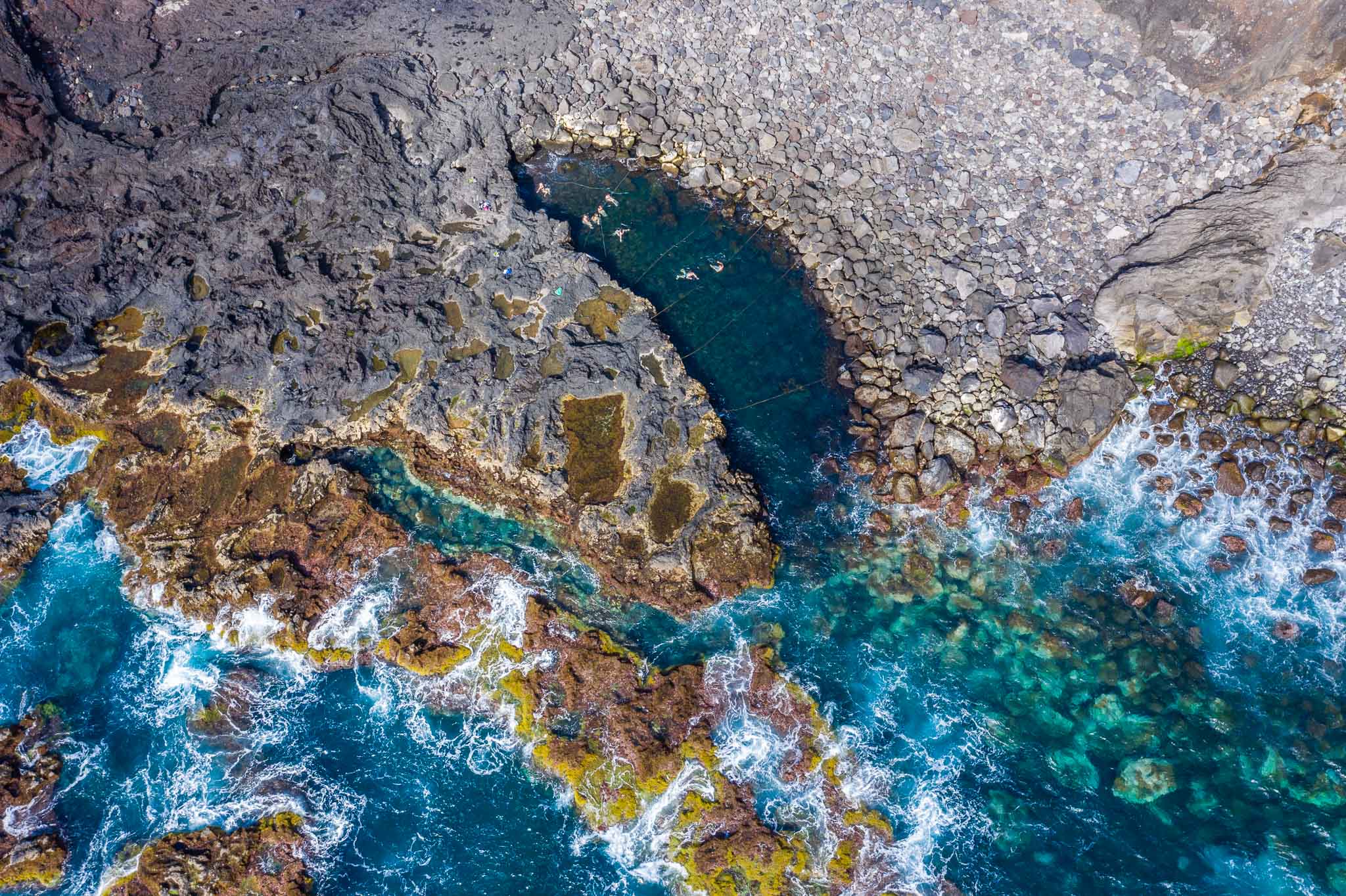
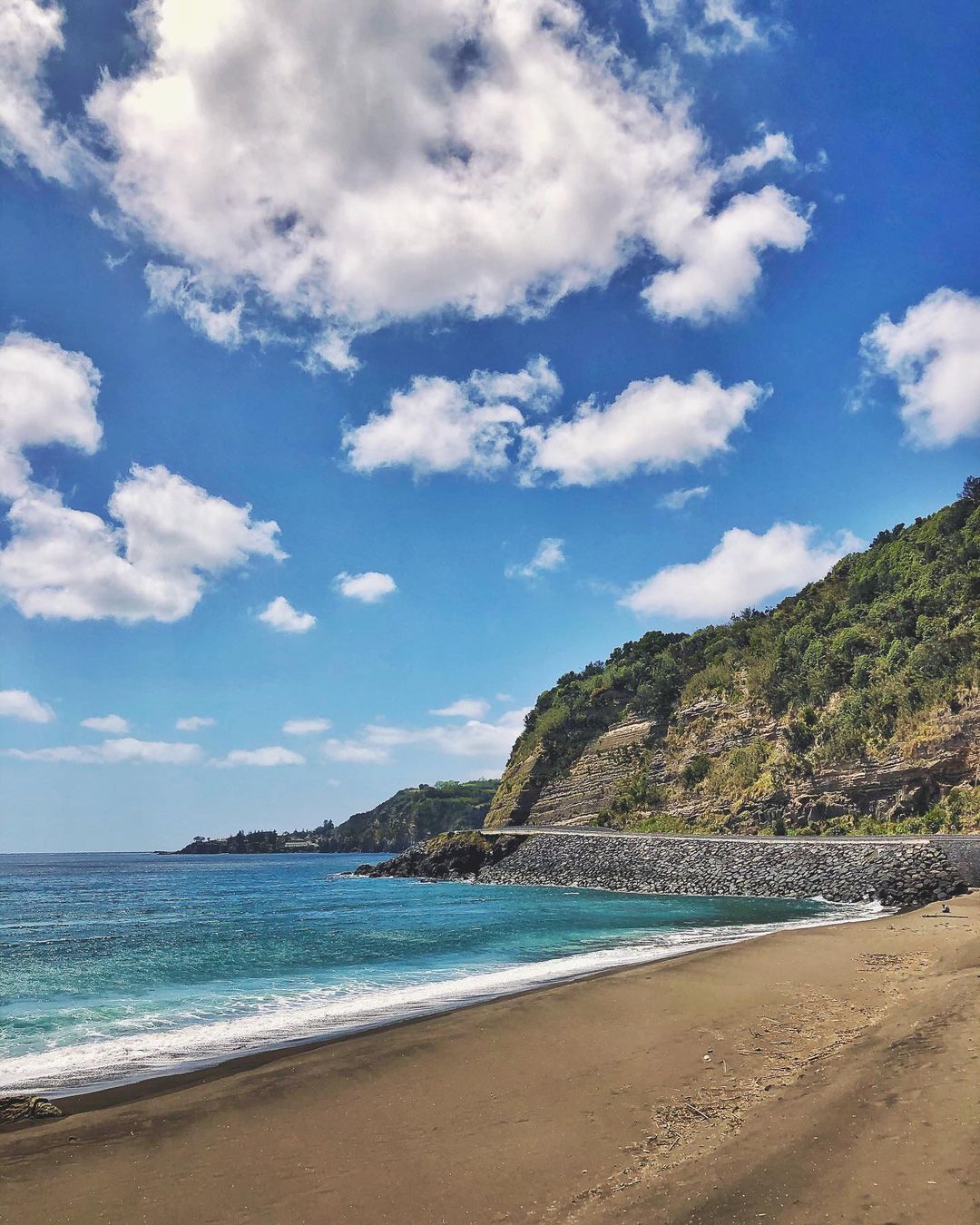
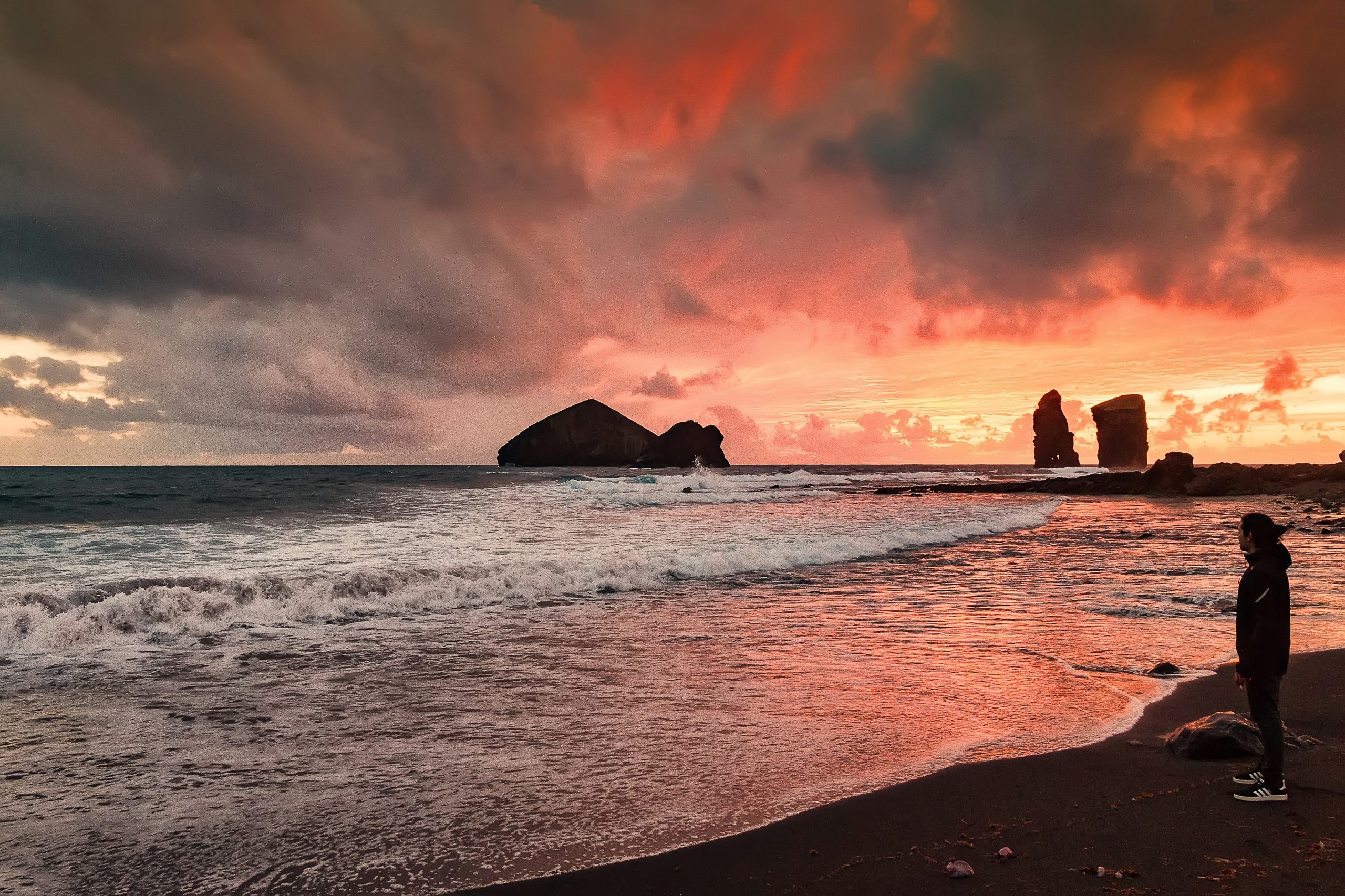
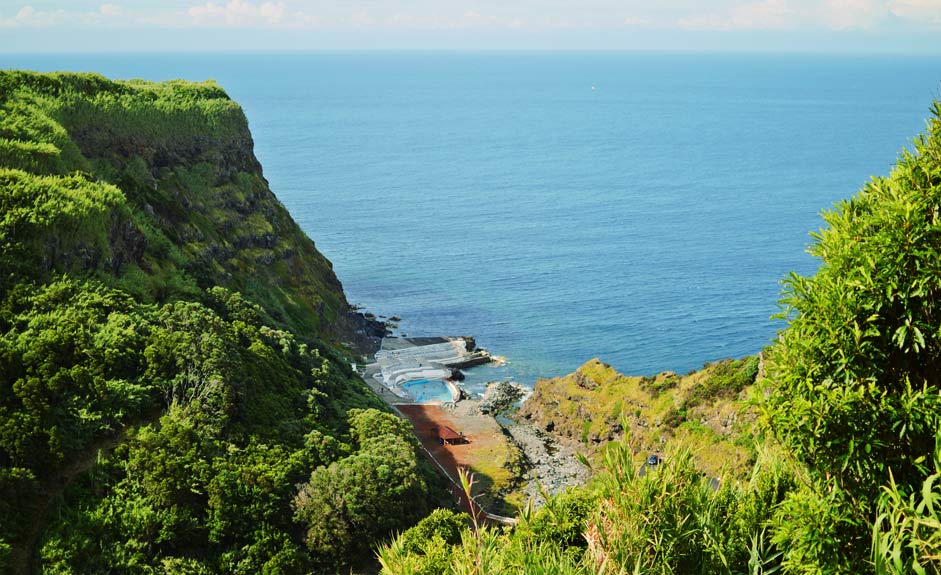
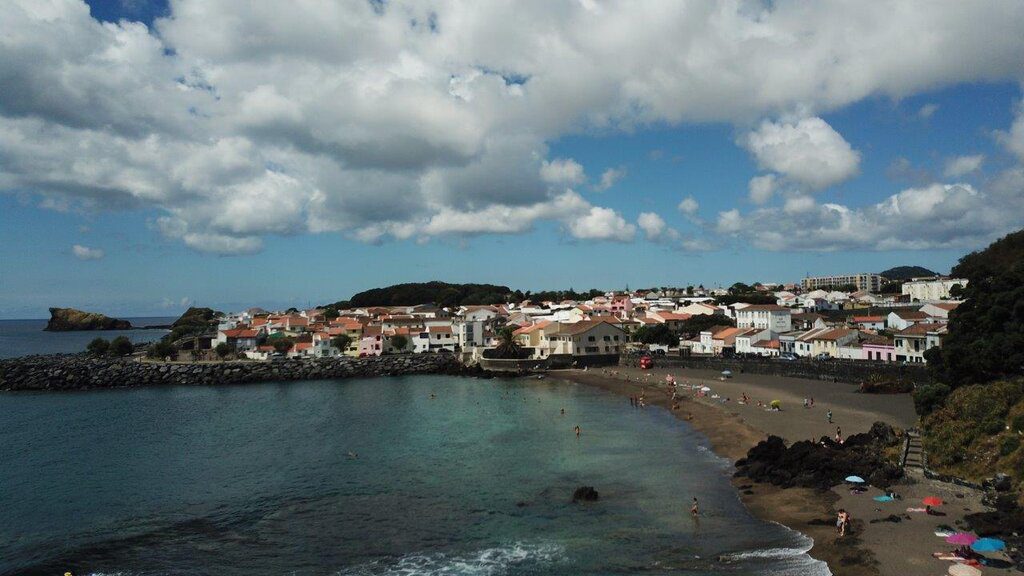
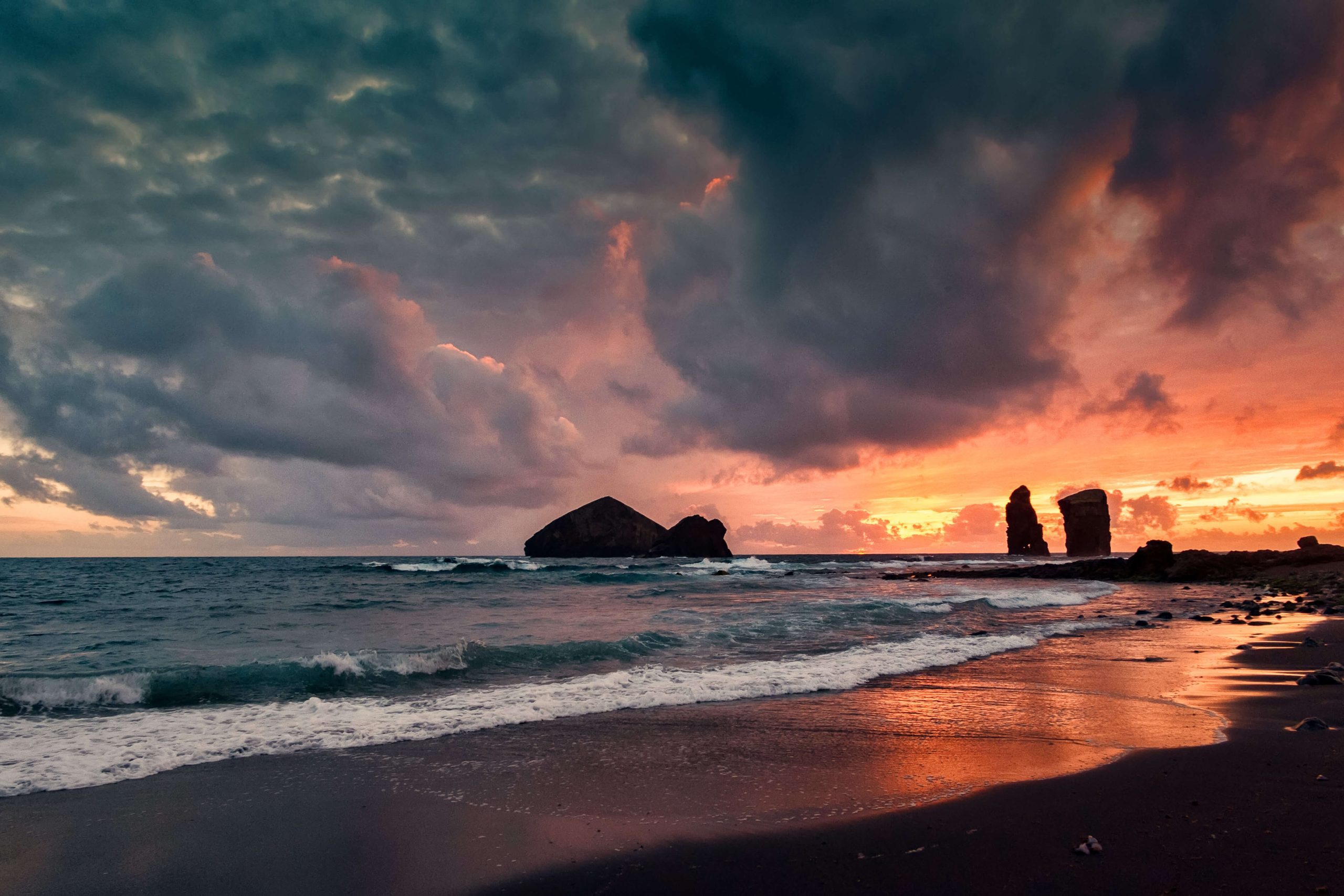
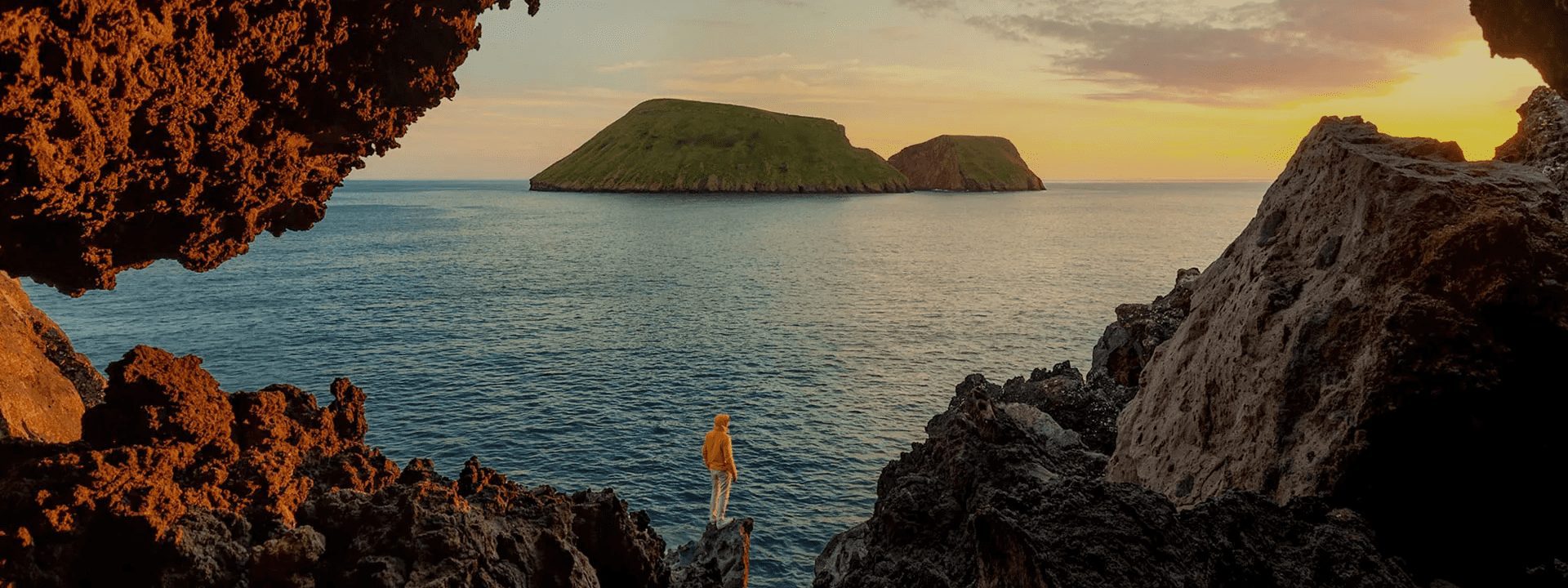
Praia da Amora stands out for its dramatic scenery, featuring high cliffs, beautiful rock formations, and dark volcanic sand. Here, despite the peaceful feeling, you are reminded that you are indeed on a volcanic island.
Although it requires some effort to reach, those who make the descent are rewarded with one of the most beautiful and off-the-beaten-track beaches on São Miguel Island. It is a place where nature is omnipresent, and tranquility is the vibe. Learn more about Praia da Amora in this complete guide.
What is Praia da Amora?

Praia da Amora is a 450-meter-long beach with fine black sand. There are 2 other smaller stretches of sand after Praia da Amora, naturally separated by cliffs and rock formations.
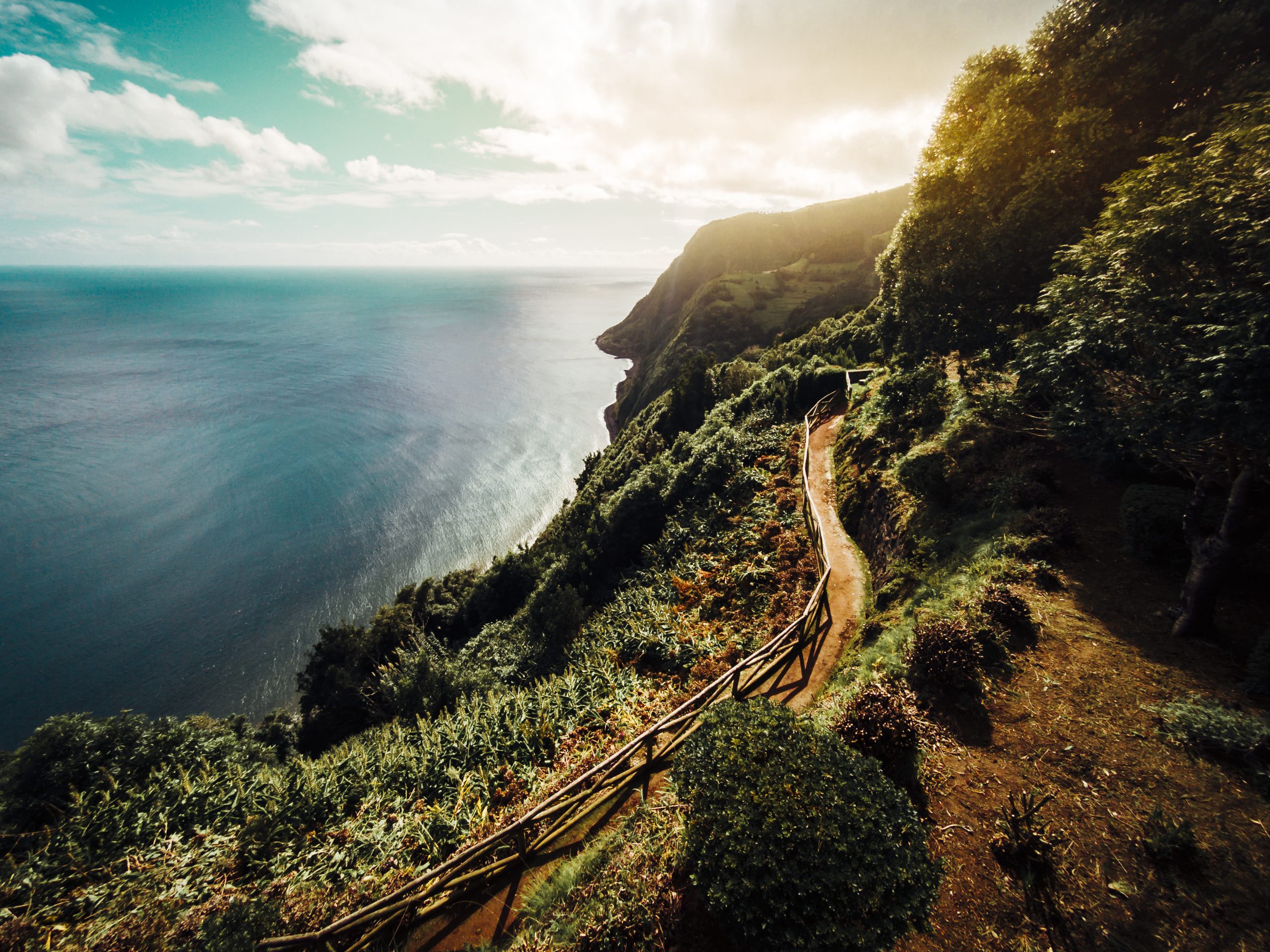
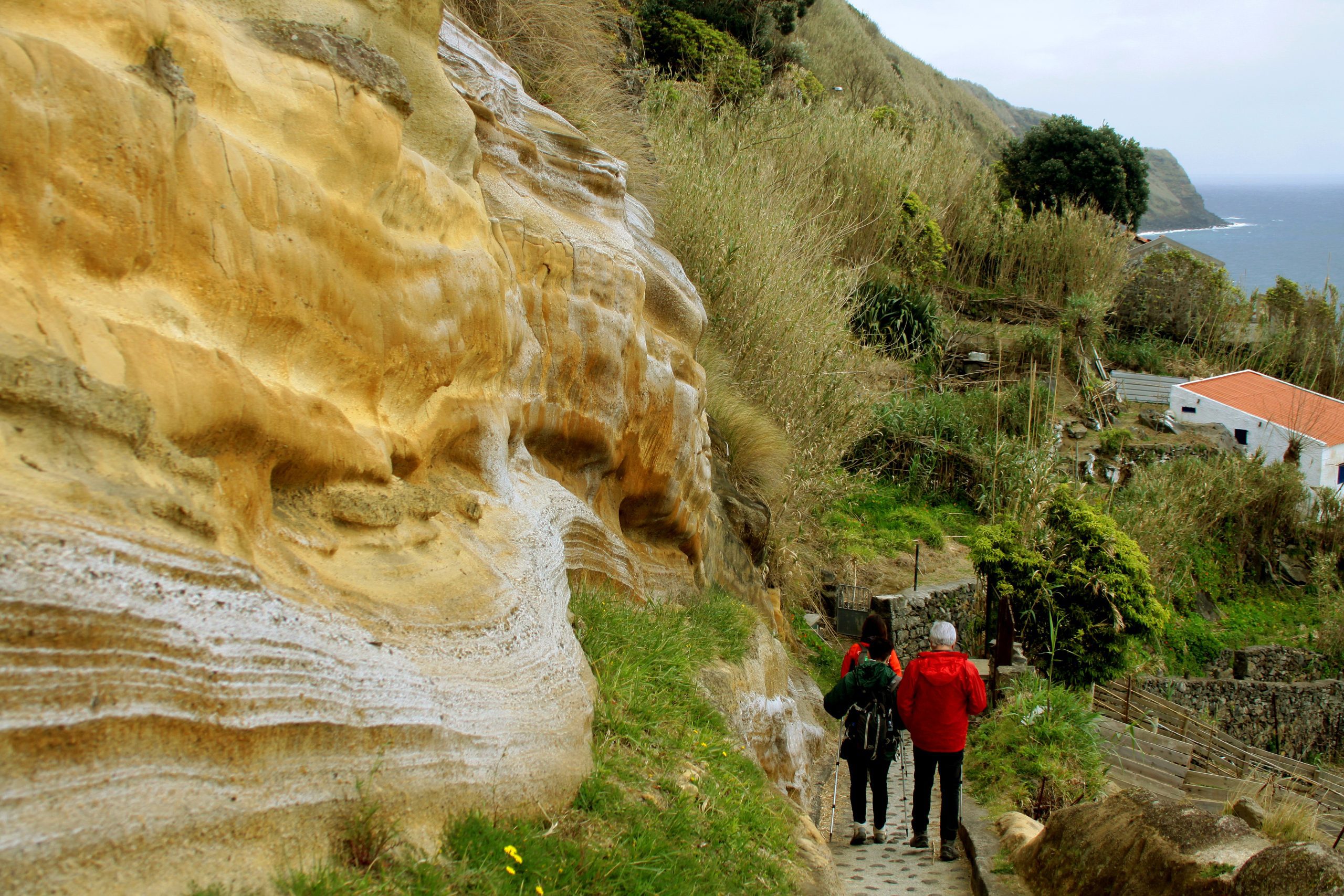
The beach is located at the bottom of a very high cliff, accessible only by a narrow dirt trail. The path down reveals impressive volcanic layers formed by different eruptions that shaped this part of the island. Along the way, you can observe pumice stone, volcanic scoria (bagacina), and basaltic rock, varying in tones from black to red, creating a natural contrast.
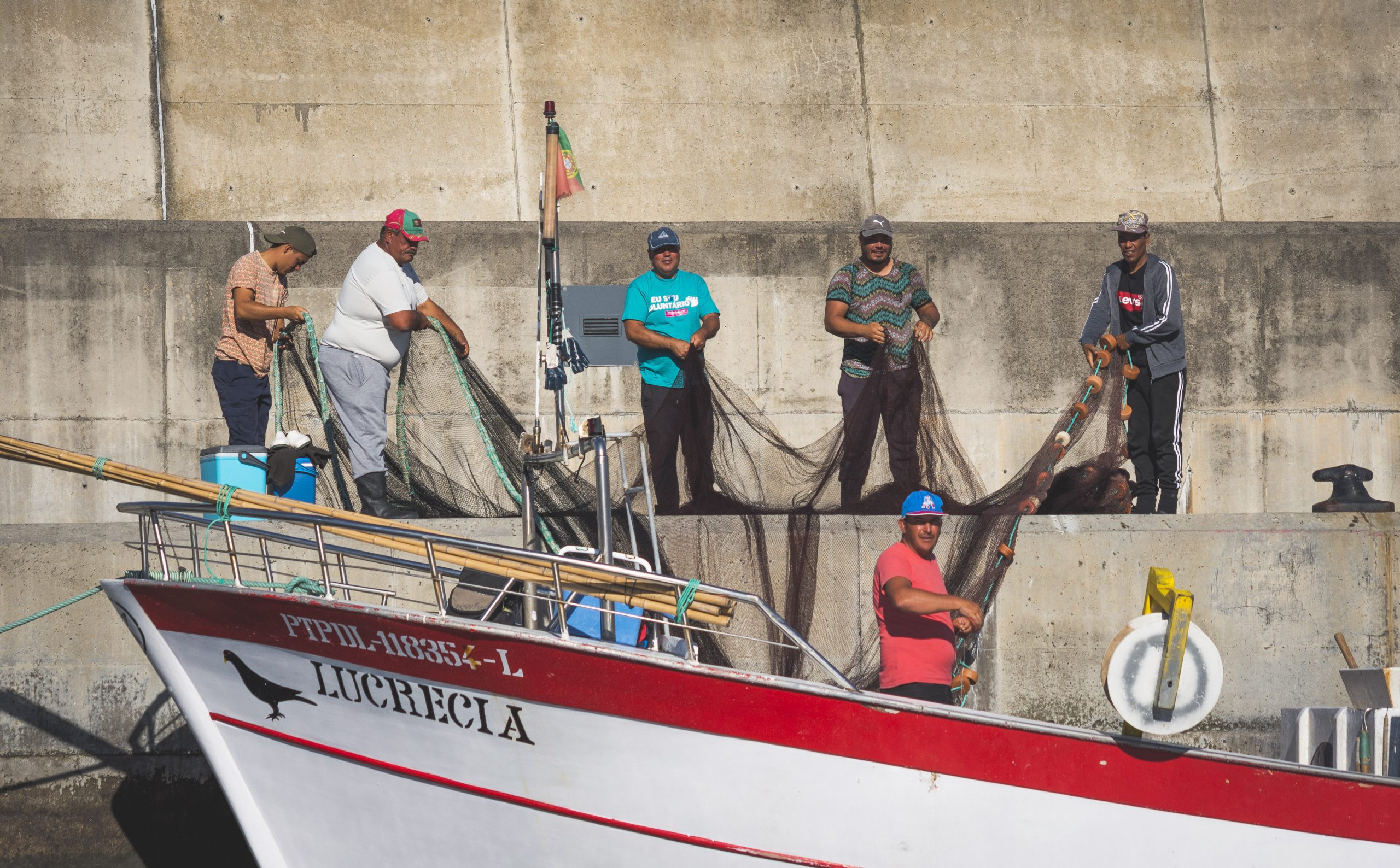
In the cliffs around the beach, you will find small shelters carved into the rock. These were traditionally used by fishermen to store equipment, small boats, and to rest. Some are still closed and locked, indicating they are still in use.
Praia da Amora remains one of the wildest beaches on São Miguel. Its limited accessibility has helped preserve its natural character, making it less crowded and more relaxing than many other spots on the island.
Check all our articles about each one of the most relevant points of interest in Vila Franca do Campo: Vila Franca do Campo | Ermida de Nossa Senhora da Paz | Ilhéu de Vila Franca | Praia da Amora | Praia da Vinha da Areia | Praia de Água D’Alto | Lagoa do Congro | Lagoa dos Nenúfares | Miradouro do Castelo Branco | Praia da Amora
Plan Your Visit to Praia da Amora

How to Get to Praia da Amora
From Ponta Delgada, the drive takes approximately 40 minutes, for 35 km. Simply follow the island’s south coast eastward on the main EN1-1A road and exit toward Ponta Garça, after Vila Franca do Campo. The beach is located on the eastern side of the village and has a small parking area.
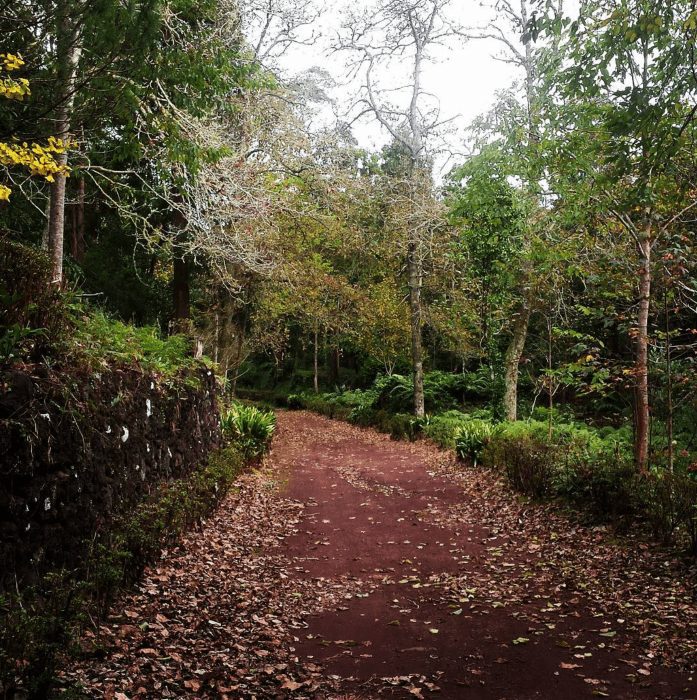
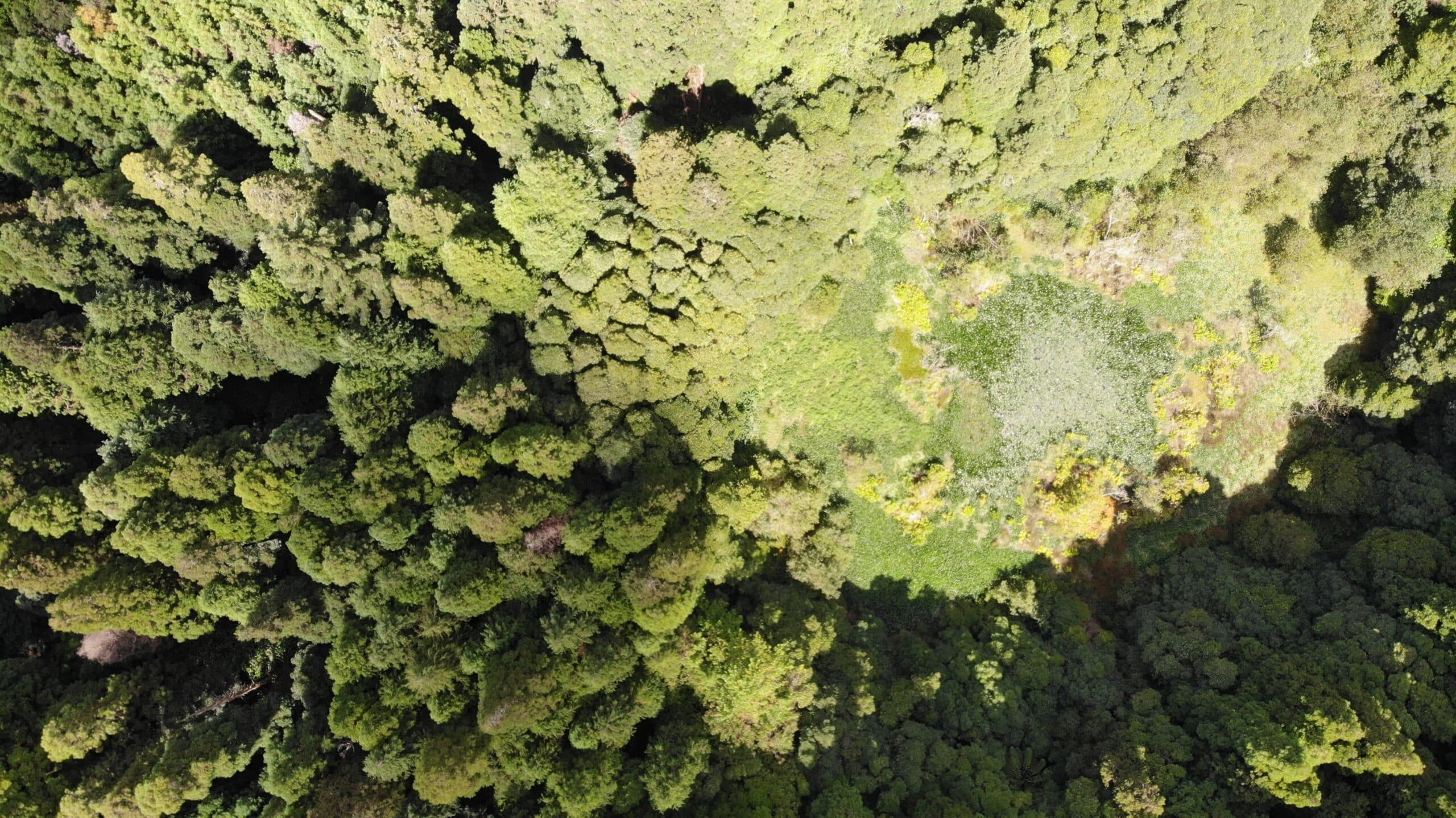
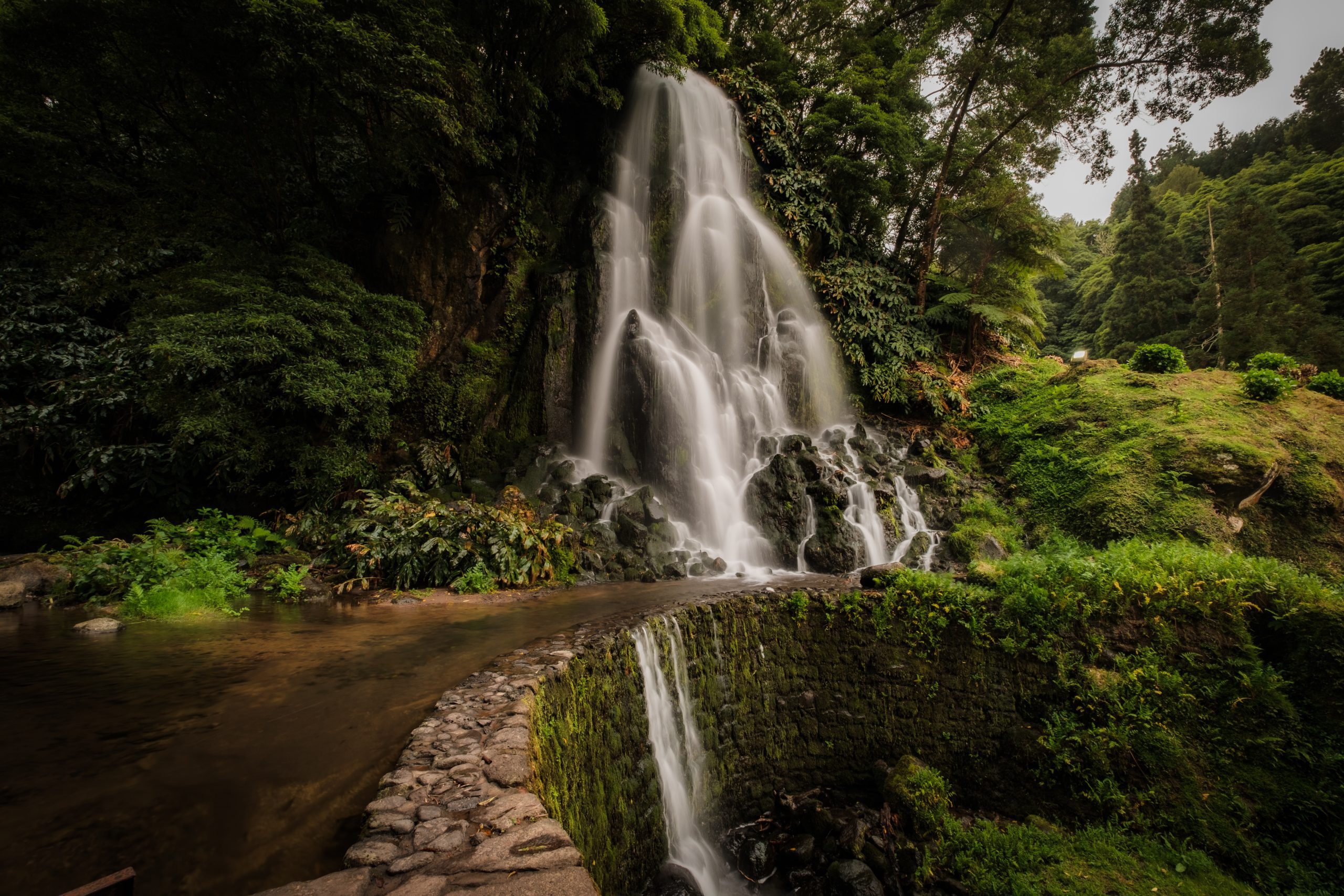
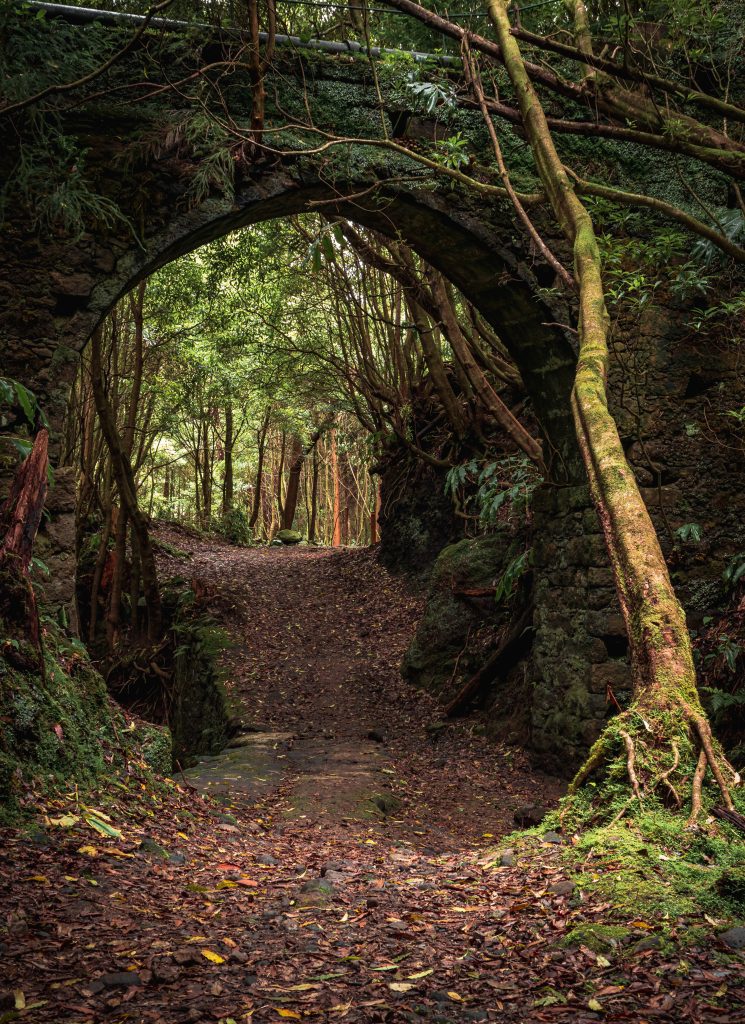
From the parking lot, access is only possible on foot. The descent is about 500 meters long and takes around 20 minutes. The negative elevation is about 120 meters. The dirt path is steep and narrow; you must wear proper hiking shoes for safety reasons. However, it is quite beautiful, with lush vegetation all around and the ocean ahead. Keep in mind that after enjoying the beach, you will need to climb back up the same trail.
Planning a trip to the Azores? These articles will help you: How to Get to the Azores 🗺️ | Azores airports 🛬 | Flights between islands ✈️ | Ferries between islands ⛴️ | Which island to choose? 🏝️ | What airlines fly to the Azores? 🛩️
Best Time to Visit
Summer is when you have a higher chance of good weather and sea conditions, although we do have rainy days in every season. The average seawater temperature throughout the year is around 21°C, making swimming pleasant in most seasons.
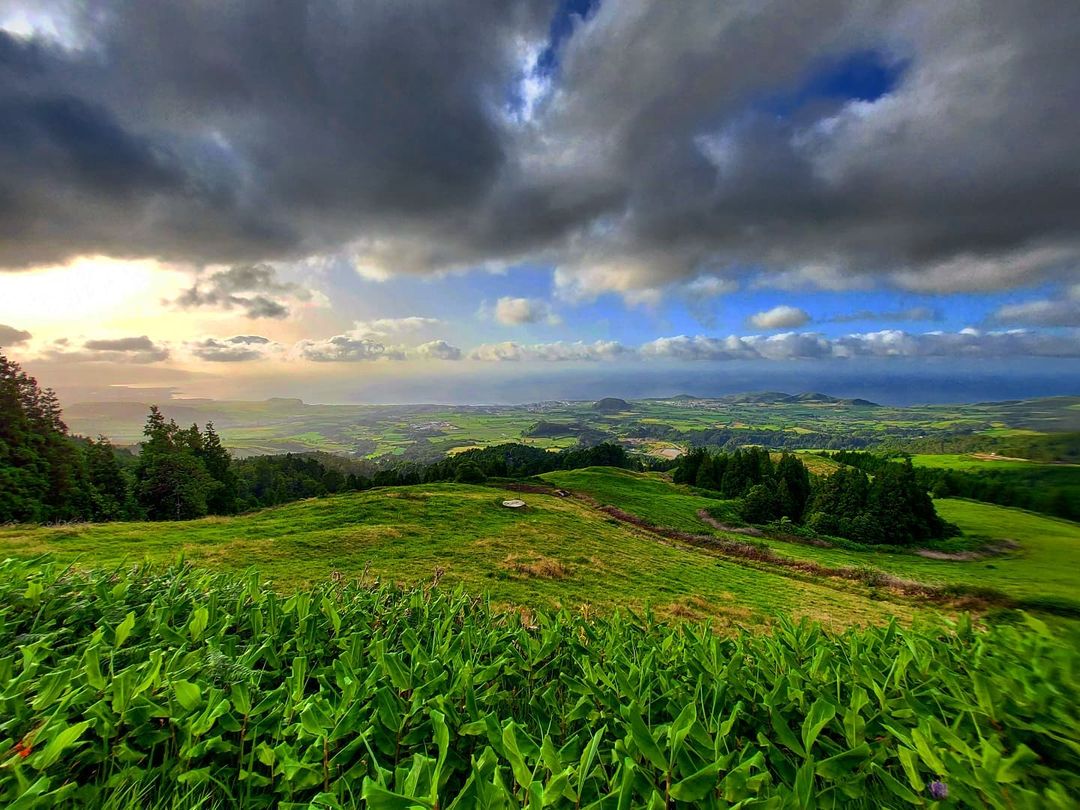
At the beginning of the trail, there is a picnic area set within a lush green landscape. This spot is perfect for a good lunch before heading down to the beach, or for a barbecue after a morning swim.
Check all our articles about the weather in the Azores throughout the year 🌤️ ☔️: January | February | March | April | May | June | July | August | September | October | November | December
Pro Tips
Because the sand is dark, it heats up quickly under the sun. The beach also has some stones, so water shoes can be helpful.
There are no facilities at Praia da Amora, which means no toilets, showers, cafés, or restaurants. You might want to bring water and snacks with you. Also, there is no lifeguard, so swimming can be dangerous if sea conditions are rough or if the infamous Portuguese man-of-war is present. Those mesmerizing creatures sting, and it hurts even more than a regular jellyfish. But, because they float, you can see them quite easily. So, be on the lookout for them.
Due to its isolation, the beach is occasionally frequented by naturists. Nudity is not required, but visitors are expected to be respectful of others and the area’s peaceful atmosphere.
Azores Guide Book
Azorean Language & Phrases 🗣️ | Currency & Banks 💵 | Credit Cards & Traveler’s Cheques 🏧 | Driving in the Azores 🚗 | Electricity 🔌 | Experiences & Tours 🗺️ | Health & Safety 🩺 | Internet & Wi-Fi Access 🛜 | Phones & Mobile Service 📞 | Post Offices & Buying Stamps ✉️ | Public Holidays 🏖️ | Shopping 🛒 | Time & Daylight 🕒 | Whale Watching Guide 🐳 | Best Island to Visit 🏞️
Nearby Attractions
Castelo Branco

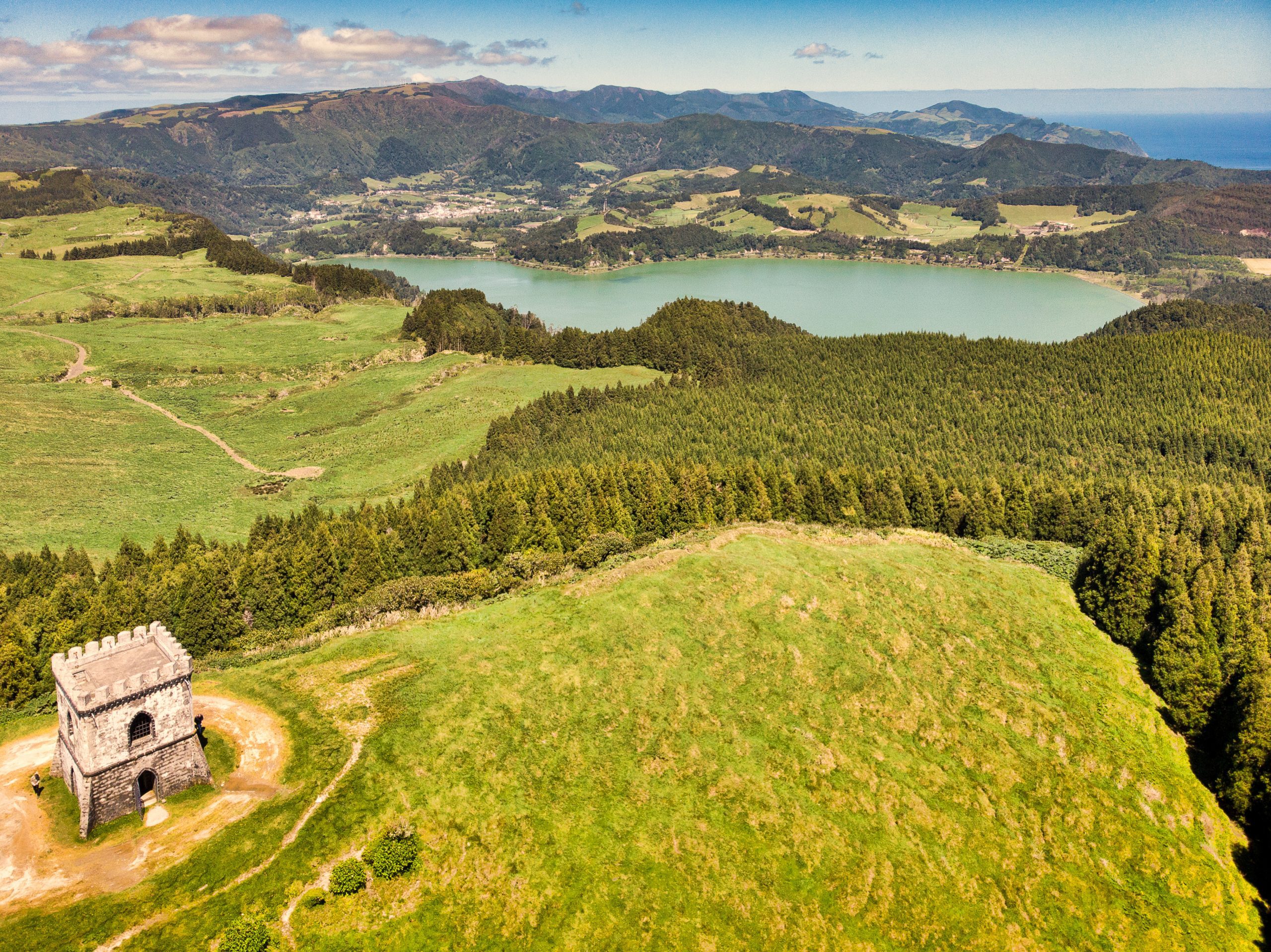
Castelo Branco is a small white tower that nowadays serves as a great viewpoint over the south coast of São Miguel island, with Ilhéu de Vila Franca and the Atlantic Ocean. It also overlooks the Furnas Valley and its lake. You can go inside the tower and climb onto the rooftop for a wonderful view. It is a mandatory stop on your way to the geothermal paradise of Furnas.
Lagoa das Furnas

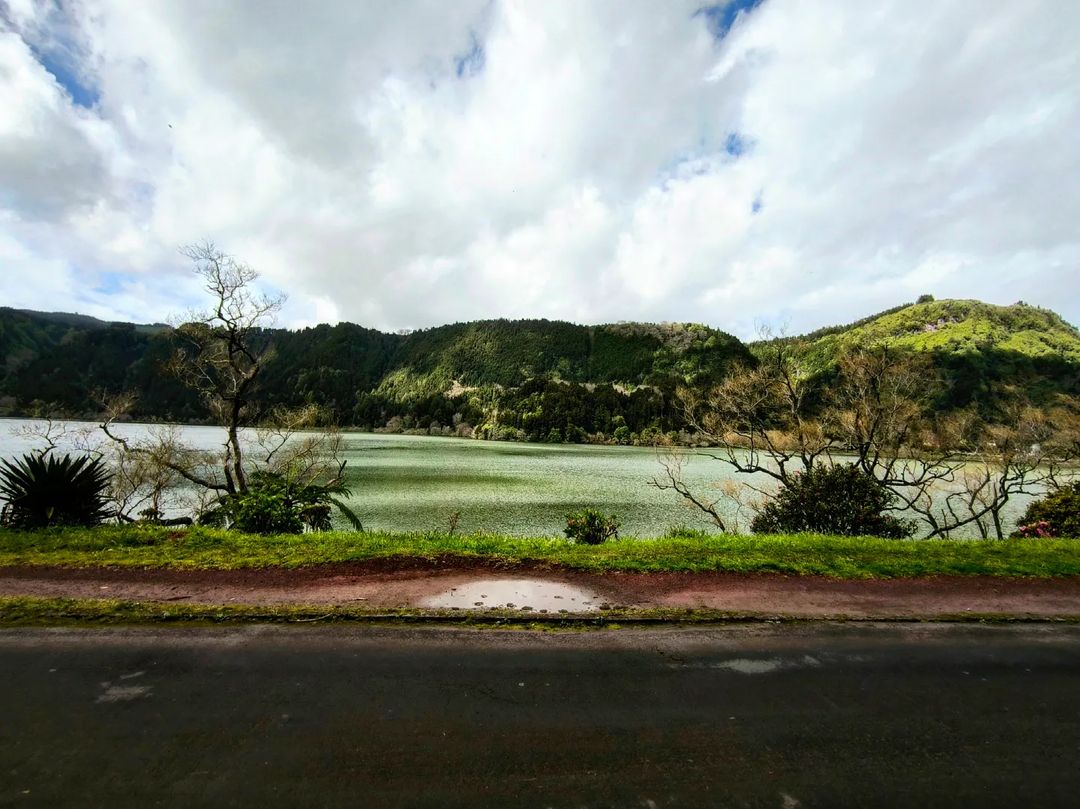
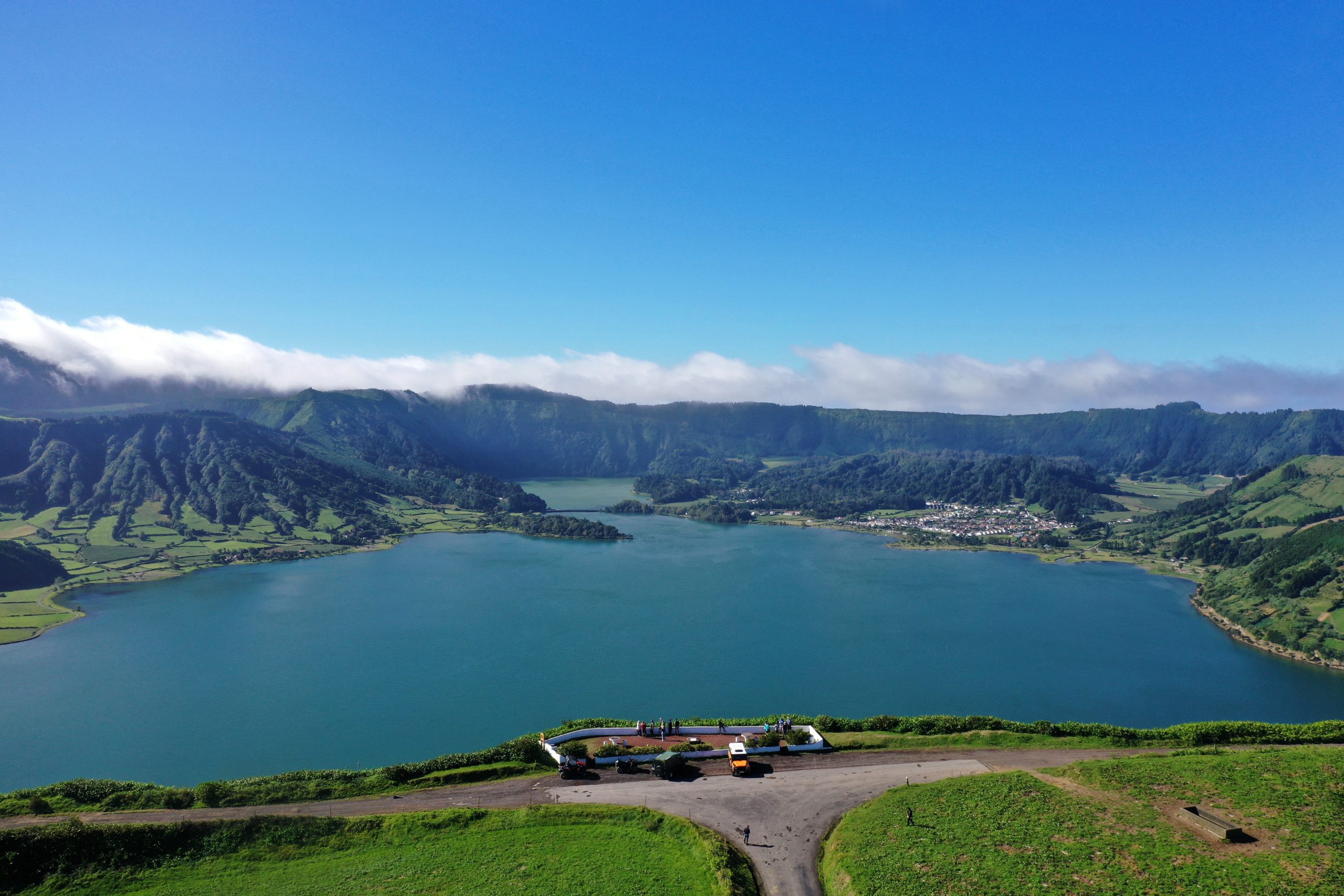
Lagoa das Furnas is an emblem of the island of São Miguel, known for its tranquil setting and constant connection to nature. This is why it attracts thousands of visitors annually who explore the region.
Located in an ancient volcanic crater, Furnas Lake occupies a considerable part of the Furnas Volcano caldera.
Did you know
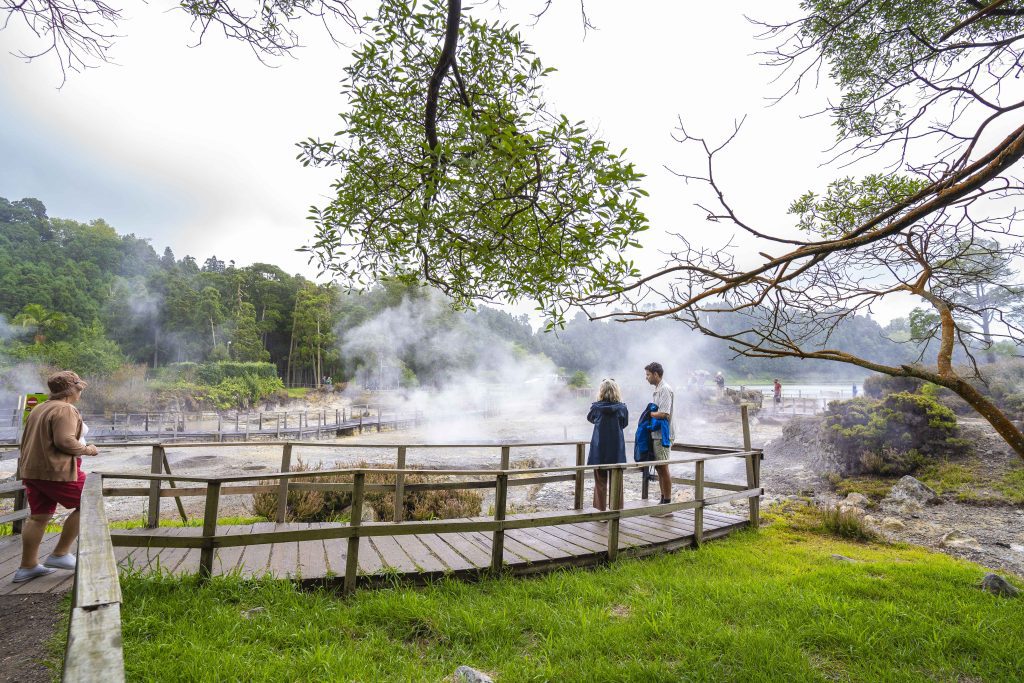
Although constant volcanic activity surrounds Lagoa das Furnas, Furnas Volcano has remained dormant since its last eruption in 1630.
In this landscape, we can still see several intra-caldera volcanic cones and domes, thermal springs with medicinal properties, mud or clear-water boilers at high temperatures, geysers, and volcanic fumaroles. There are also the well-known natural kitchens where the famous Cozido das Furnas is made.
With the large influx of tourists, entry to the lagoon costs €3 per person.
→ Explore the authentic flavors of Azorean gastronomy in our articles: Bolos Lêvedos | Cozido das Furnas | Grilled Limpets | Massa Sovada | Pimenta da Terra | Gorreana Tea | Queijadas de Vila Franca do Campo | Queijadas da Graciosa | Azorean Cracas
Ribeira Quente Beach

Ribeira Quente is a small town on the south side of Furnas, close to Miradouro do Castelo Branco, and right by the ocean. The only ways to get there are by car, passing through the island’s only tunnels, or by hiking from Povoação.
There, you can enjoy the quite unusual, beautiful beach of Ribeira Quente. Indeed, this beach has a particularity: its water is warm in some spots! Thanks to the geothermal activity near the beach, you can feel the warm sand in the water, naturally warming it. This means that the sea at this beach is warmer than on any other beaches on the island, so it’s perfect for the ones who are always cold!
→ Related Post: Best beaches in the Azores. Read more!
Vila Franca do Campo

Vila Franca do Campo is a historic municipality on the southern coast of São Miguel Island. Established in the 15th century, it became the seat of colonial officials and a hub for sugar cane production, the island’s main source of wealth at the time.
In 1582, the town witnessed a pivotal naval battle between Portuguese and Spanish forces, which marked a turning point in Portugal’s history. Following the defeat, the Portuguese lost their independence for 60 years, and the Spanish executed many Portuguese fighters in Vila Franca.
A remarkable milestone occurred in 1900 when Vila Franca became the first place in Portugal to implement public electric lighting, marking the town as a pioneer in modernization. Vila Franca’s rich history, from its colonial roots to its involvement in key historical events, offers a fascinating backdrop for visitors looking to delve into the past.
Check all our articles about each one of the most relevant points of interest on São Miguel Island: 3-day itinerary for São Miguel | 5-day itinerary for São Miguel | Discovery Azores | Traditional Azorean Clothing | Tipping in the Azores | Do People Speak English in the Azores? | Miradouros da Vigia da Baleia | Furnas | Lagoa | Lagoa do Fogo | Mosteiros | Maia | Nordeste | Ponta Delgada | Povoação | Ribeira Grande | Sete Cidades | Vila Franca do Campo
Complementary Information
Best Season to Visit the Azores
The Azores Archipelago boasts a unique climate that shapes its lush landscapes, making it a splendid year-round destination. With mild temperatures and minimal fluctuations, each season offers something unique. Spring averages 16 °C, summer reaches 21 °C, autumn cools to 18 °C, and winter remains mild at 14 °C.
→ For a detailed breakdown of the weather by month, check the following links 🌤️☔️: January | February | March | April | May | June | July | August | September | October | November | December
How to Get to the Azores
The Azorean Archipelago is easily accessible through numerous flight routes. Lisbon and Porto are the main entry points to the continent, with direct flights available to São Miguel (PDL), Terceira (TER), Faial (HOR), Pico (PIX), and Santa Maria (SMA). To find the best flight, use search engines like eDreams or Skyscanner. These platforms let you compare prices and schedules from multiple airlines in one convenient location.
For more details on how to get to the Azores, take a look at our complete guide. But what if you want to explore beyond your arrival island? We’ve got you covered!
- Azores airports 🛬
- Flights between islands ✈️
- Ferries between islands ⛴️
- Which island to choose? 🏝️
- What airlines fly to the Azores? 🛩️
→ Once you’ve found the perfect route, book your tickets and get ready to experience one of the world’s most stunning island groups!
Travel Essentials
Essential Information for your Azores trip: Azorean Language & Phrases 🗣️ | Currency & Banks 💵 | Credit Cards & Traveler’s Cheques 🏧 | Driving in the Azores 🚗 | Electricity 🔌 | Experiences & Tours 🗺️ | Health & Safety 🩺 | Internet & Wi-Fi Access 🛜 | Phones & Mobile Service 📞 | Post Offices & Buying Stamps ✉️ | Public Holidays 🏖️ | Shopping 🛒 | Time & Daylight 🕒 | Whale Watching Guide 🐳 | Best Island to Visit 🏞️
Useful Tools & Apps
The weather in the Azores can be variable, so it’s helpful to use some apps before visiting the islands. Spotazores provides live camera feeds from the main tourist attractions, allowing you to check the weather and plan your visit. For accurate weather predictions, use Windy or Windguru — they provide the most reliable predictions.
Video
Conclusion
Overall, Praia da Amora is a must-visit destination for travelers seeking a purer, more untouched side of São Miguel Island. Its scenery is truly unique, and most of the time you will be completely alone on this picturesque beach.
The beach remains largely unspoiled, offering a peaceful experience and direct contact with nature. Unlike more accessible beaches like Praia do Pópulo, Praia das Milícias, or Areal de Santa Barbara, Praia da Amora provides a sense of adventure and exclusivity that makes the effort worthwhile.
For those willing to venture off the beaten path, Praia da Amora offers visitors raw natural beauty, silence, and one of the island’s most memorable coastal landscapes.